 3 images
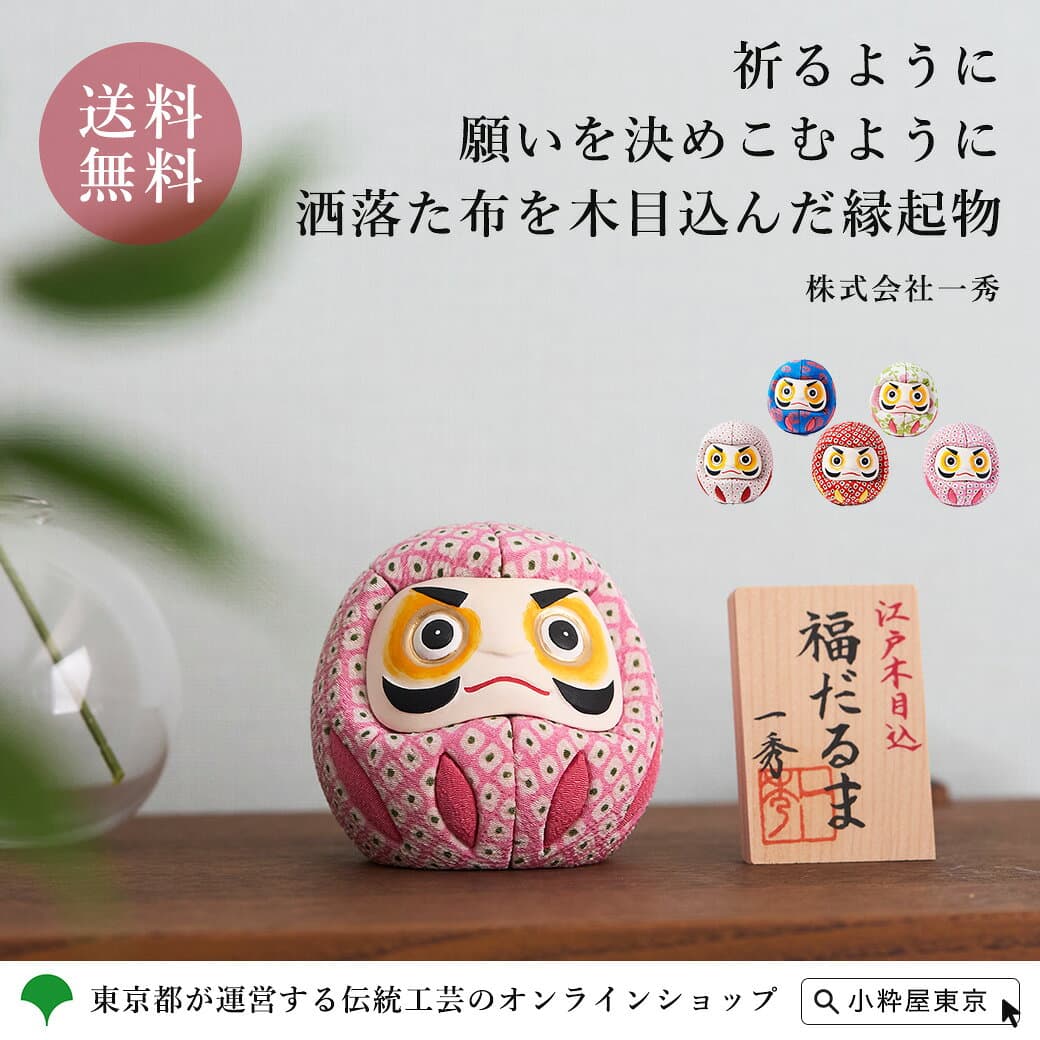
Ichishu Edo Kimekomi Fuku Daruma Doll in Chirimen Yuzen
江戸木目込人形 福だるま 縮緬友禅 インテリア 置物 伝統工芸品 株式会社一秀
Chirimen Yuzen小粋屋東京
5.0 / 2 reviews
¥9,020
View on Rakuten →Japanese · new tab
Japanese name江戸木目込人形
In Sumida’s Mukojima, paulownia powder and paste become a doll form, grooves are cut into the clothing areas, and fabric is tucked into the cuts. Edo Kimekomi Ningyo carries that process across hina dolls, zodiac figures, Noh and Kabuki motifs, and newer objects held in the hand.
Information updated 63 days ago
3 images江戸木目込人形 福だるま 縮緬友禅 インテリア 置物 伝統工芸品 株式会社一秀
Chirimen Yuzen小粋屋東京
5.0 / 2 reviews
¥9,020
View on Rakuten →Japanese · new tab
 3 images
人形屋ホンポ(NINGYOYA HOMPO)
4.7 / 7 reviews
¥139,800
View on Rakuten →Japanese · new tab
 3 images
江戸木目込人形 桃山雛敷板(会津塗)・屏風(金沢箔)付【木村一秀作 ひな人形 雛人形】
with Aizu lacquer base board and Kanazawa foil screenせともの屋みさ伝
5.0 / 1 reviews
¥66,000
View on Rakuten →Japanese · new tab
 3 images
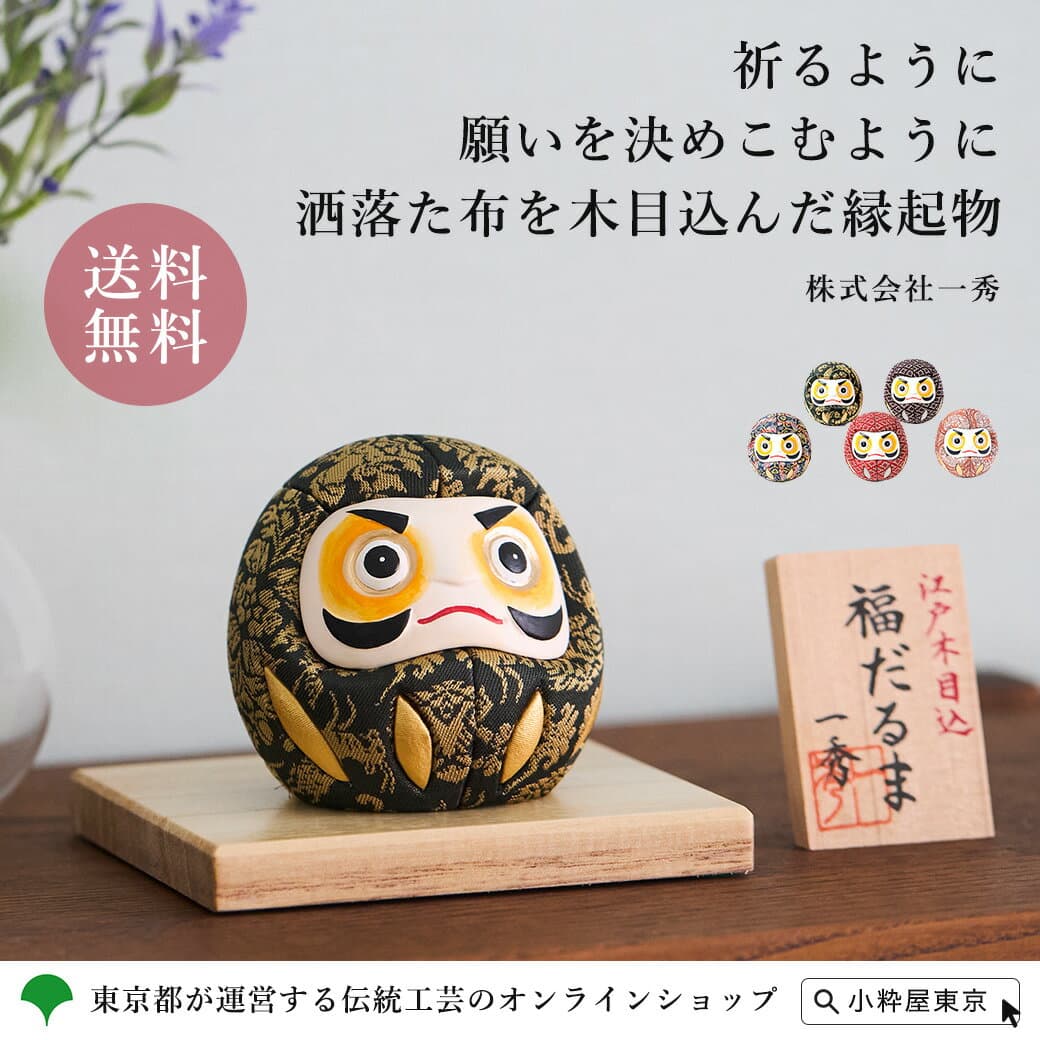
江戸木目込人形 福だるま 龍村美術織物 甲州印伝 化粧箱入り 株式会社一秀
decorative box小粋屋東京
5.0 / 1 reviews
¥18,040
View on Rakuten →Japanese · new tab
 3 images
人形屋ホンポ(NINGYOYA HOMPO)
5.0 / 3 reviews
¥129,800
View on Rakuten →Japanese · new tab
 3 images
小粋屋東京
4.8 / 6 reviews
¥9,350
View on Rakuten →Japanese · new tab
Edo Kimekomi Ningyo begins with a small physical decision: the clothing is built into grooves. At Tsukada Workshop in Mukojima, Sumida, forms made from paulownia powder mixed with paste are incised, then fabric is fitted into the cuts from the prototype stage onward. Nearby, the Edo Kimekomi Ningyo Museum at 2-11-7 Mukojima shows about fifty items, including hina dolls from the Meiji period to today, doll prototypes, tools, materials, and process panels, placing the finished figure beside the work that shapes it.
Kimekomi is a making method before it is a craft name. In the clothing areas of the doll, the maker cuts grooves and embeds fabric with paste; Tsukada Workshop makes each Edo Kimekomi Ningyo from the prototype stage with a form of paulownia powder and paste, incised lines, and fitted cloth.
The material boundary continues inside the body. Heads may be made from kiriso or unglazed ceramic, while bodies and parts of the limbs use kiriso. The groove, paste, fabric, and compact body together make the surface read as clothing set into the figure.
The technique moved from Kyoto to Edo, and many Kyoto doll makers had already come down to Edo during the Shotoku years, 1711 to 1715. As Edo developed as a cultural center, kimekomi dolls changed into an Edo style, with the Okamoto Gyokusui and Nagawa Shunzan lineages carrying the craft in the city.
One concrete point in that lineage is the first Nagawa Iwajiro, who became independent from the Asakusa Sukamachi doll maker Seyama Kinzo in Tenpo 3, 1841, at age twenty-eight, and opened in Honjo Ryogoku. That history connects today’s Mukojima workbench to eastern Edo neighborhoods where doll making took root.
The Edo Kimekomi Ningyo Museum and Tsukada Workshop stand at 2-11-7 Mukojima in Sumida. The displays include works by the fourth Nagawa Shunzan, hina dolls from the Meiji period to the present, prototypes, tools, materials, and process panels with English translations, for a total of about fifty items.
Seen this way, a hina doll sits beside the steps that make it legible. A visitor can move visually from a prototype to tools, from material to process panel, and from those workbench elements back to the finished doll, seeing how the paulownia form, grooves, and cloth surface belong to the same sequence.
The worktable begins with paulownia powder mixed with paste, then incised clothing lines and fabric fitted into those lines. Some hina dolls at Tsukada Workshop use rare old cloth from Edo- and Meiji-period kimono, so the fabric surface can carry older textile patterns into a new doll form.
The face gives the Edo style another boundary. The fuller Kyoto-made face differs from an Edo face described as slightly slender, with fine, small features. Here, tradition means visible choices: head shape, narrow facial detail, body balance, groove placement, and cloth pressed cleanly into the clothing areas.
Hina dolls are central to the family, and the Mukojima workshop and museum also point to a wider set of motifs. The range includes zodiac pieces and dolls based on Noh and Kabuki, while Tsukada Eishun mainly makes hina dolls, Takasago, Renjishi, and zodiac works today.
The same groove-and-cloth process carries different postures and occasions. Takasago and Renjishi bring Noh and Kabuki references into doll form; zodiac figures change with the year; hina dolls remain tied to seasonal display. The link between them is the balance of form, fabric pattern, and finely made face.
Tsukada Masahiro extends the Edo Kimekomi technique into objects that can be touched and used. A sumo wrestler paperweight, magnets, and smartphone stands show the carved-and-fabric surface outside a purely display setting.
The change in use does not erase the method. A paperweight still depends on a shaped body, grooves, fabric, and paste; the difference is that the object is felt in the hand and used on a desk, giving the same technique a route beyond a hina platform or museum case.
Tsukada Eishun’s path has concrete dates and places: born in Mukojima, Sumida, in 1949; apprenticed after high school in 1968 to his uncle, the fifth Nagawa Shunzan; and became independent at the current Mukojima site in 1973. Apprenticeship, lineage, and address meet in the same workshop place.
The Tokyo Hina Doll Industrial Cooperative gives a wider craft-community view, with entries naming Edo Kimekomi Ningyo craftspeople such as Kanabayashi Takeshi, Kimura Aya, Takano Hiroshi, Sakura Mitsuhiro, Kakunuma Tomonori, Kimura Kohei, Tsukada Susumu, and Kakunuma Masashi. Alongside demonstrations and hands-on experiences at Tsukada Workshop, those names show the craft as a learned practice inside Tokyo’s doll-making community.
The clearest way into Edo Kimekomi Ningyo is the order of work in Mukojima: paulownia powder and paste form the body, grooves mark the clothing, cloth is set into the cuts, and face and body are balanced into a finished figure. A technique that moved from Kyoto to Edo remains legible today through Nagawa Shunzan lineage displays, Meiji-to-present hina dolls, zodiac and performance motifs, and newer paperweights that carry the same grooved cloth surface into the hand.
Compiled from public records and official sources; see the recognition links below. Details may change over time.
Where this selection is officially registered, designated, or recognized in Japan.
It is written 江戸木目込人形 in Japanese. Search Rakuten and other Japanese sites with that spelling — the English name will not return the listings.
Keep craft pieces out of direct sunlight, damp, and sharp temperature swings, and store them where they won't knock against anything. Wood, bamboo, lacquer, and paper don't tolerate water — wipe any moisture off immediately. Specific care notes are on the listing.
Edo kimekomi dolls is a craft objects from Tokyo. We compile its regional connection and characteristics against official registries, local sources, and live Rakuten listings.
Most options are shelf-stable, boxed, and travel well, so they suit gifting or bringing home. Confirm the final storage and delivery terms on the Rakuten listing.
We don't sell directly. This page compiles Rakuten listings and affiliate links; purchase, payment, stock, and delivery all happen on the Rakuten listing.