 3 images
Tokyo Hand-Carved Seal by Tokyo Meister Yoshinori Tanaka, Matsushima Seikodo
東京マイスター田中義則が彫刻する 東京手彫り印章 株式会社松島清光堂
小粋屋東京
Japanese name東京手彫り印章
In Tokyo seal workshops, character layout, surface preparation, rough carving, and finishing remain handwork, turning a small seal face into balanced letters, strong lines, and a clear impression.
Information last updated 121 days ago
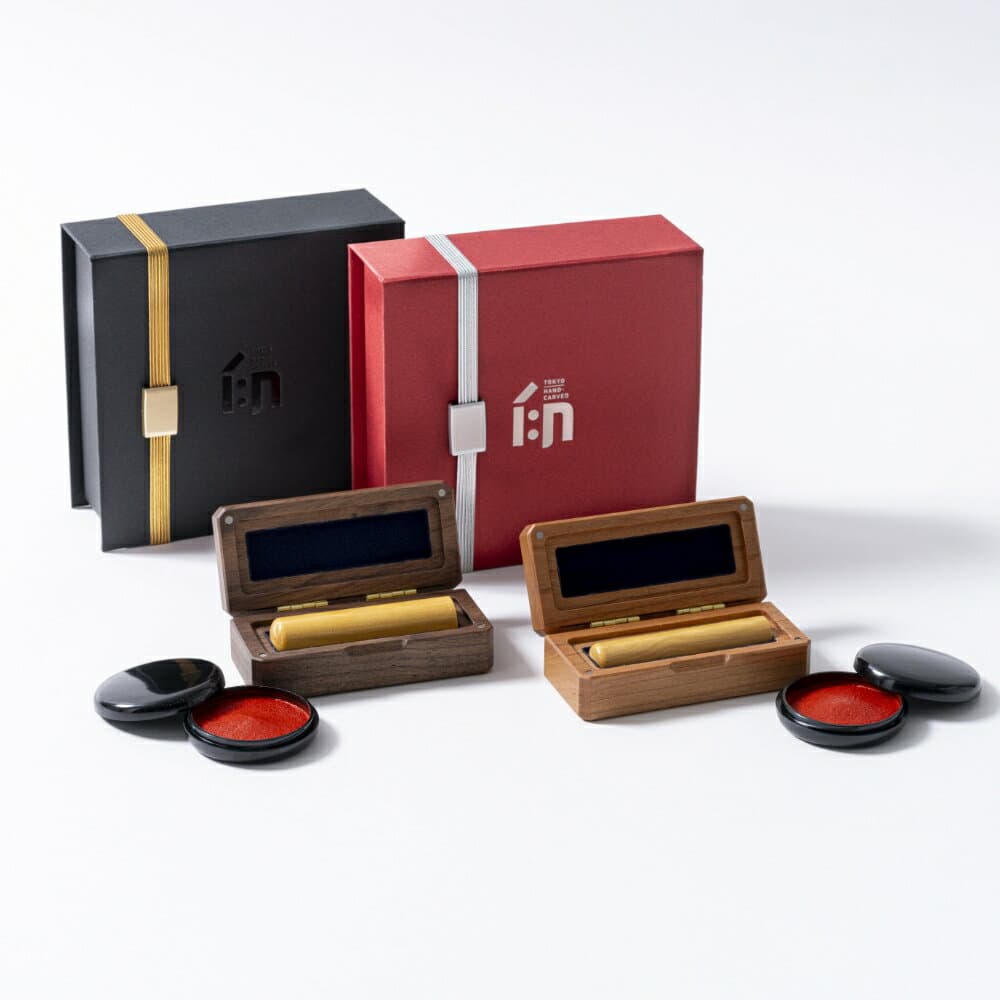
3 images東京マイスター田中義則が彫刻する 東京手彫り印章 株式会社松島清光堂
小粋屋東京
 3 images
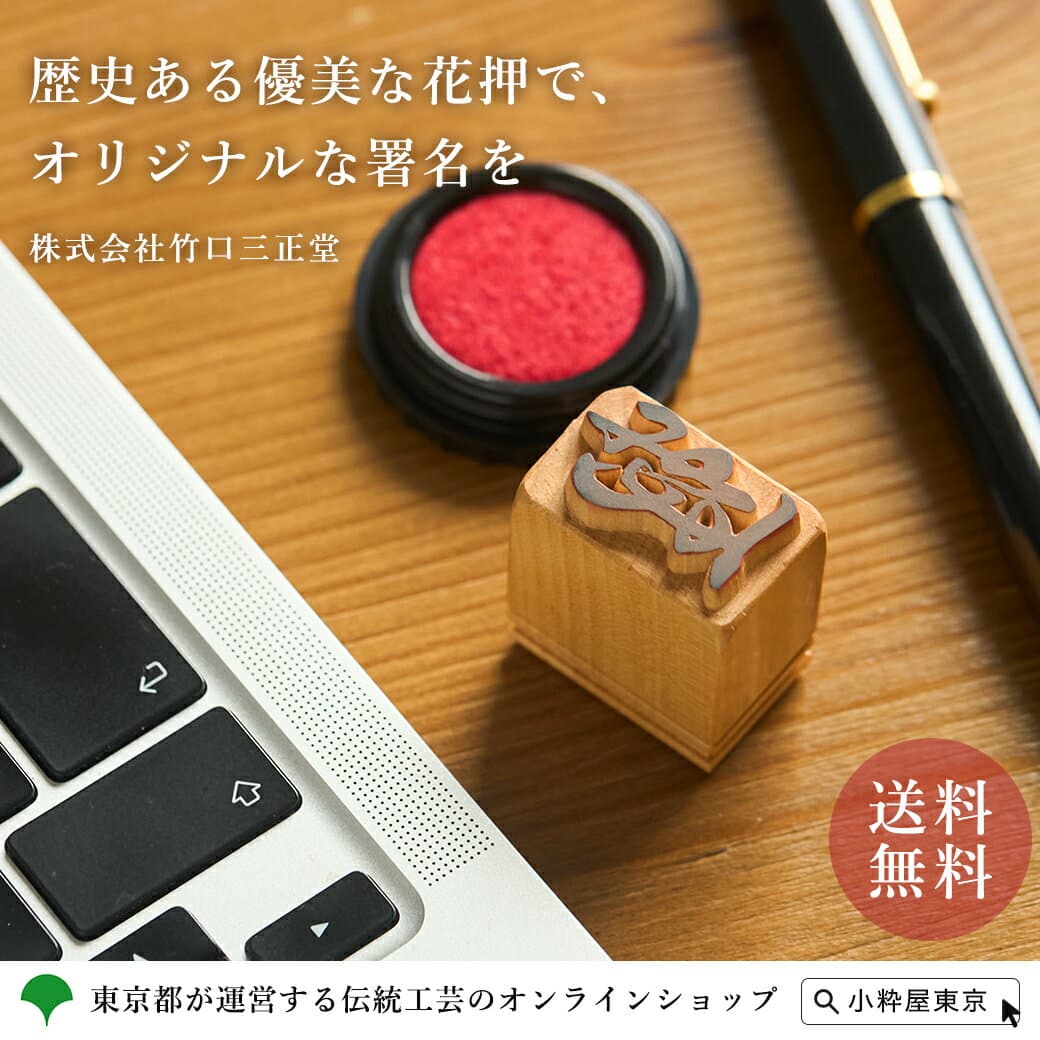
東京手彫り印章 花押印 株式会社竹口三正堂
Mikurajima boxwood, paulownia box小粋屋東京
 3 images
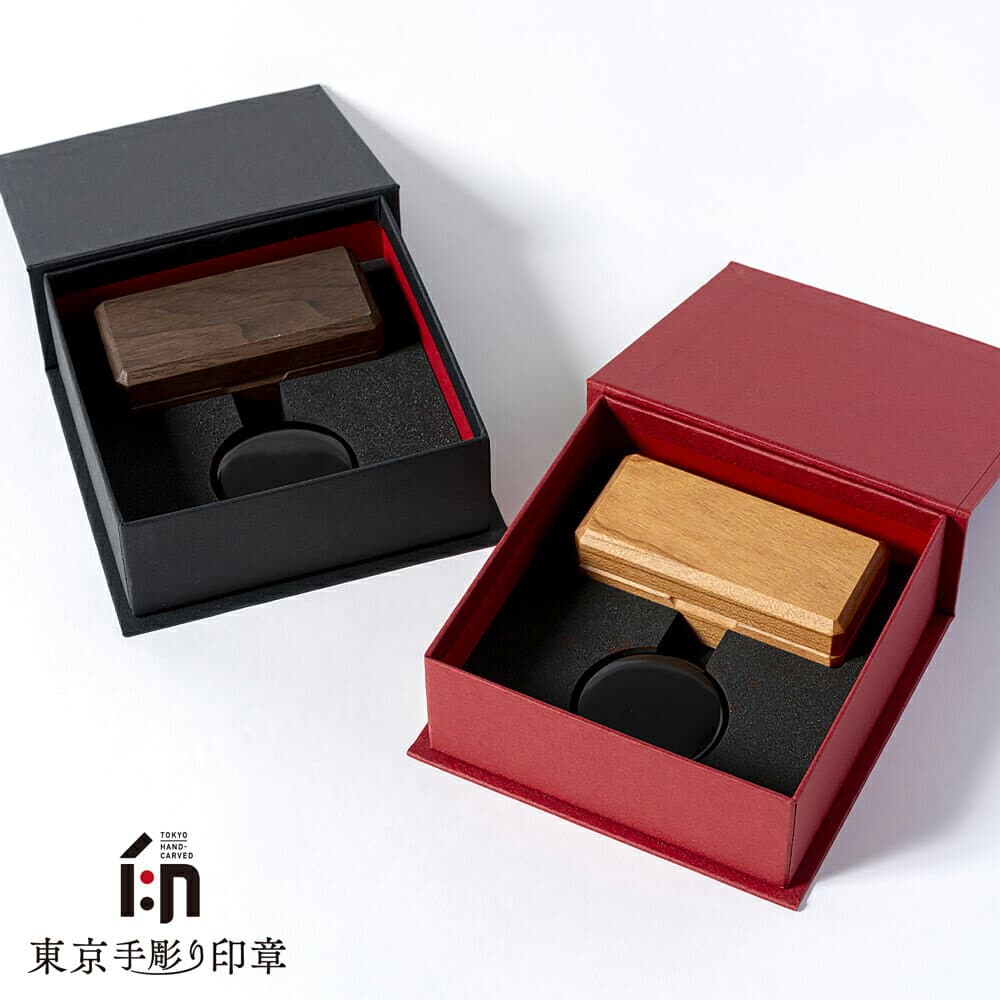
東京 手彫り 印章 赤 黒 印鑑 ハンドメイド 伝統工芸品 東京印章協同組合
red / black packaging小粋屋東京
First time buying on Rakuten? How residents in Japan order →
Tokyo Tebori Insho begins with the seal face. A craftsperson plans the characters, prepares the surface, places the lettering, rough-carves the form, and finishes the lines by hand. The work is tied to Tokyo seal carvers using traditional tools, and its visible aim is practical clarity: balanced characters, forceful lines, and an impression that can be read cleanly on paper.
The name Tokyo Tebori Insho points to hand-carved seals made in Tokyo by craftspeople engaged in seal carving within the city. Traditional tools are used on the seal face, and the work runs from lettering composition through rough carving and final finishing. The Tokyo Seal Cooperative also frames the work around approved skilled engravers; here, tradition means a concrete chain of hands, tools, seal faces, and controlled cuts.
The urban history reaches back to the early Edo period. Around 1624, seal makers moved from Kyoto to Edo and began making seals for the shogun, the bakufu, and daimyo. As commerce and administration developed, seals appeared in shop contracts, public documents, and village and merchant ledgers. Tokyo Tebori Insho therefore belongs to both an Edo workshop lineage and the everyday act of marking identity and approval on documents.
A seal face is not completed by simply cutting a name into material. The craftsperson first designs and composes the characters so that size, direction, and open space work together; then the surface is adjusted, the letters are placed, the rough carving begins, and final finishing refines the lines. This hand sequence supports balanced characters, strong strokes, and a beautiful clear impression when the seal meets paper.
In one Tokyo Seal Cooperative showcase, Mikurajima tsuge, or boxwood from Mikurajima, is named as the material. The detail connects a seal object to plant material associated with Tokyo’s islands, and it also keeps attention on touch: the body held in the hand, the seal face at the end, and the carved line that meets ink and paper. That material should be read as a specific showcased example, not as a rule for every Tokyo Tebori Insho seal.
The role of the seal is larger than its carved pattern. The Tokyo Seal Cooperative describes a seal as a tool that shows who the user is and what the user has approved, while the historical accounts place seals in public documents, merchant ledgers, contracts, and administrative exchange. When the impression is pressed onto paper, its clear lines carry a person’s or organization’s approval, which is why clarity and durability matter in the craft description.
Recent changes in work habits have altered the place of stamping. The cooperative points to telework and reduced stamp requirements as pressures on both seal-use knowledge and carving skill. A 2025 craft designation note still counts 95 businesses and 103 workers connected with the craft. Those numbers bring continuity back to people and workshops: someone lays out the characters, someone prepares the seal face, and someone finishes the final line by hand.
Tokyo Tebori Insho is held together by the small surface in front of the Tokyo craftsperson. From the seal makers who entered Edo around 1624 to the present sequence of lettering, rough carving, and finishing, the craft carries document habits, acts of approval, and the hand control needed for a clean impression into one object that can be held between the fingers.
Compiled from public records and official sources; see the recognition links below. Details may change over time.
Where this product is officially registered, designated, or recognized in Japan.
Regional collective trademark
Registered as a Regional Collective Trademark with the Japan Patent Office.
Sources1
It is written as 東京手彫り印章 in Japanese. Search Rakuten and other Japanese sites with that spelling — the English name will not bring up the listings.
Tokyo Tebori Insho is a Tokyo craft of hand-carved seals, with character composition, surface preparation, lettering, rough carving, and finishing all done by hand. Seal makers moved from Kyoto to Edo around 1624 to make seals for the shogun, bakufu, and daimyo, and later use spread to commerce, administration, documents, contracts, and ledgers. The Tokyo Seal Cooperative cites telework and fewer stamp requirements as challenges for passing on carving skill and seal-use knowledge.
As of a 2025 designation record, the craft counted 95 businesses and 103 workers. The Japan Patent Office lists balanced characters, powerful lines, beautiful impressions, clear imprint quality, and durability as characteristics of the seals. A Tokyo Seal Cooperative showcase names Mikurajima boxwood as a material, though the material does not state this applies to every Tokyo Tebori Insho seal. A seal is described as a tool for showing personal identity and public approval, a role that applies to both individuals and corporations.
Seals are stamped onto official documents, contracts, and ledgers to show approval by an individual or a corporation.
Keep wood, bamboo, and lacquer out of prolonged soaking, dishwashers, and direct sun — wipe dry after use and let them air out in the shade. For metal and fabric goods, follow the care notes on the listing.
Most options are shelf-stable, boxed, and travel well, so they suit gifting or bringing home. Confirm the final storage and delivery terms on the Rakuten listing.
On Rakuten: the shops listed here right now are 小粋屋東京. We don't sell directly; purchase, payment, stock, and delivery are all handled on the Rakuten product page.