 3 images
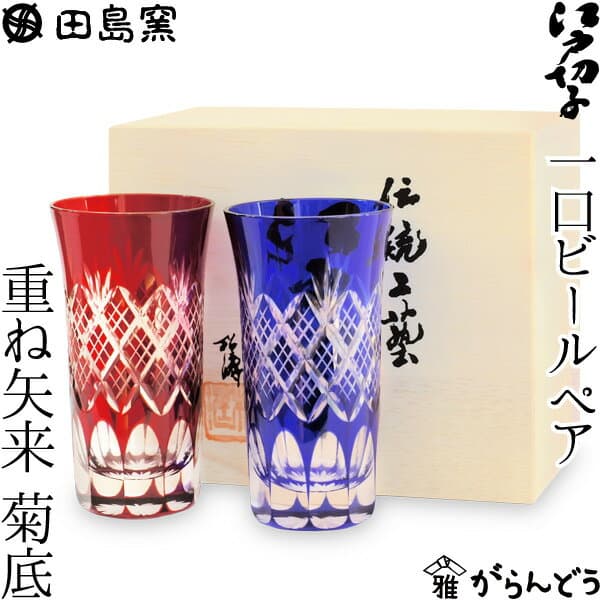
Edo Kiriko Small Beer Glass Pair by Tajima Glass
江戸切子 一口ビール 重ね矢来 菊底 切子グラス ペア 瑠璃 赤 田島硝子 ビールグラス ビアグラス 父の日 ギフト 贈り物 木箱入
lapis and red, paulownia boxがらんどう
4.8 / 38 reviews
Japanese name江戸切子
Across eastern Tokyo, Edo Kiriko turns clear and colored overlay glass into tableware through hand marking, rotating cutting tools, stone smoothing, polishing, and patterns such as yarai, nanako, asa-no-ha, and shippo.
Information last updated yesterday
3 images江戸切子 一口ビール 重ね矢来 菊底 切子グラス ペア 瑠璃 赤 田島硝子 ビールグラス ビアグラス 父の日 ギフト 贈り物 木箱入
lapis and red, paulownia boxがらんどう
4.8 / 38 reviews
 3 images
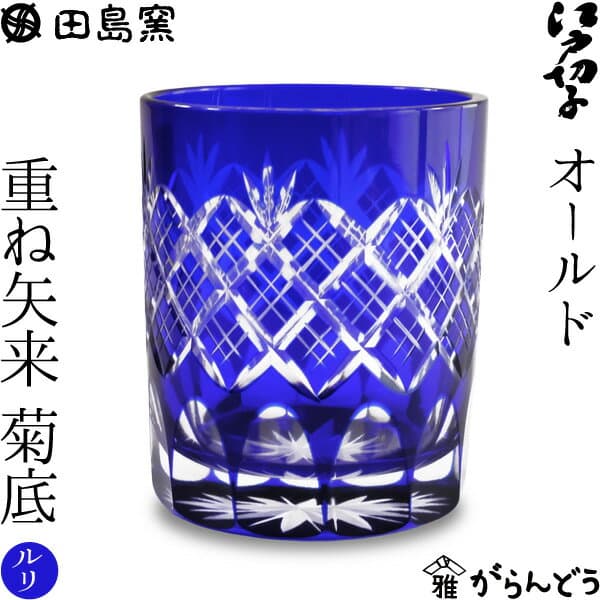
江戸切子 オールド 重ね矢来 菊底 ルリ 田島硝子 切子グラス オールドグラス 父の日 ギフト 贈り物 紙箱入
Ruri blue, paper boxがらんどう
5.0 / 10 reviews
 3 images
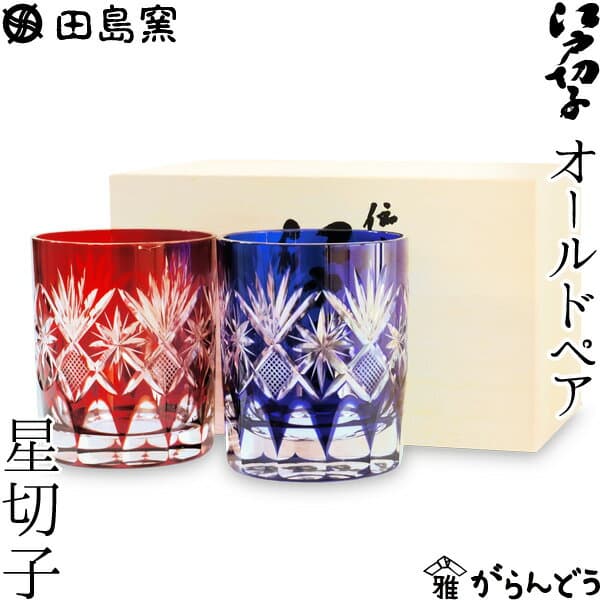
江戸切子 オールド 星切子 ペア 瑠璃 赤 切子グラス 田島硝子 父の日 ギフト 贈り物 木箱入
blue and red pair in paulownia boxがらんどう
5.0 / 6 reviews
 3 images
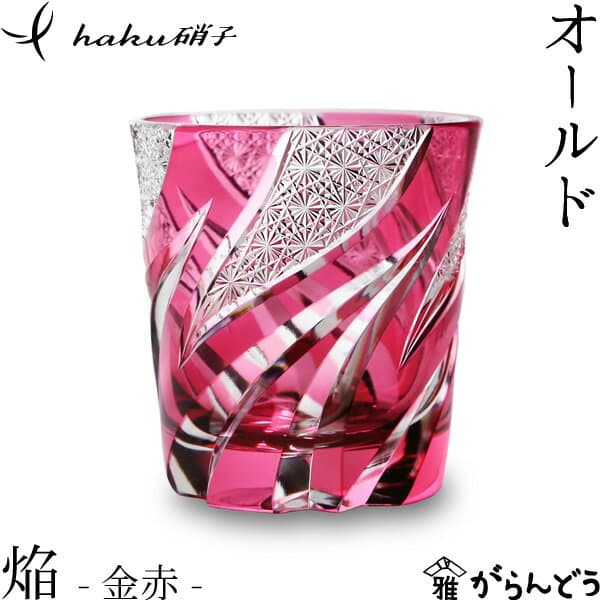
江戸切子 オールド 焔 金赤 haku硝子 homura オールドグラス 切子グラス 酒器 退職祝い 還暦祝い
Kin-aka red, paulownia boxがらんどう
5.0 / 3 reviews
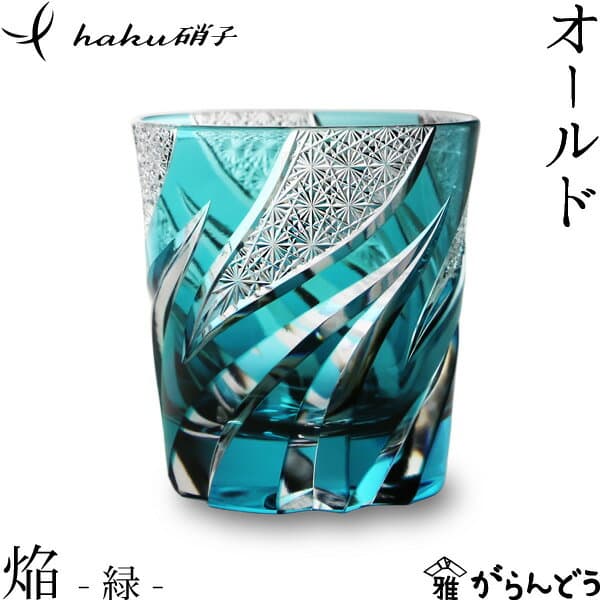 3 images
江戸切子 オールド 焔 緑 haku硝子 homura オールドグラス 切子グラス 酒器 退職祝い 還暦祝い
greenがらんどう
5.0 / 22 reviews
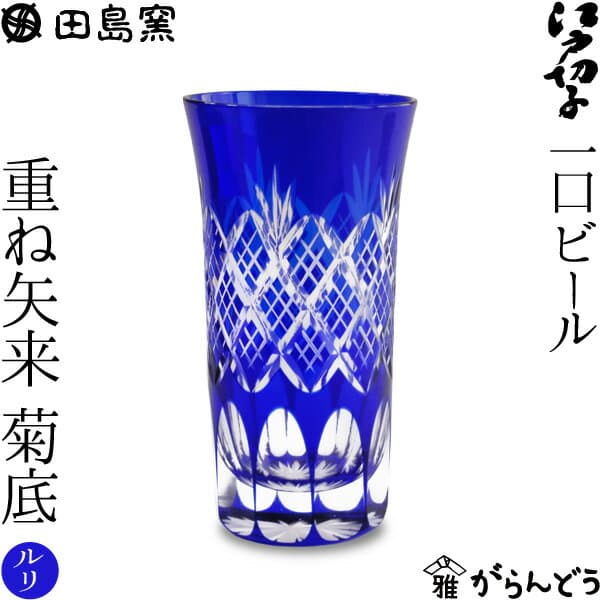 3 images
江戸切子 一口ビール 重ね矢来 菊底 ルリ 切子グラス 田島硝子 ビールグラス ビアグラス 父の日 ギフト 贈り物 紙箱入
Ruri, paper boxがらんどう
4.8 / 10 reviews
First time buying on Rakuten? How residents in Japan order →
All 6 listings of this product on Rakuten, lowest price first.
| Listing | Price | Shop | Reviews | Open listing |
|---|---|---|---|---|
Tajima Glass Edo Kiriko Ruri One-Sip Beer Glass, Layered Yarai and Chrysanthemum Base Ruri, paper boxLowest priceGift-ready | ¥5,500 | がらんどう | 4.8 / 10 reviews | View on Rakuten → |
Tajima Glass Edo Kiriko Old Fashioned Glass, Kasaneyarai & Kikuzoko, Ruri Blue Ruri blue, paper boxGift-ready | ¥9,900 | がらんどう | 5.0 / 10 reviews | View on Rakuten → |
Edo Kiriko Small Beer Glass Pair by Tajima Glass lapis and red, paulownia boxMost reviewedGift-ready | ¥11,000 | がらんどう | 4.8 / 38 reviews | View on Rakuten → |
Tajima Glass Edo Kiriko Hoshi Kiriko Old-Fashioned Glass Pair blue and red pair in paulownia boxGift-ready | ¥22,000 | がらんどう | 5.0 / 6 reviews | View on Rakuten → |
Edo Kiriko Homura Old-Fashioned Glass by haku硝子, Kin-aka Red Kin-aka red, paulownia box | ¥33,000 | がらんどう | 5.0 / 3 reviews | View on Rakuten → |
Edo Kiriko Homura Old-Fashioned Glass by haku硝子 green | ¥33,000 | がらんどう | 5.0 / 22 reviews | View on Rakuten → |
Japanese · new tab
Edo Kiriko begins most clearly in eastern Tokyo. The cooperative is based in Ojima, Koto Ward; Tokyo’s craft listing names Koto, Edogawa, Sumida, and nearby areas as main production places, and says about 80 percent of Tokyo cut-glass workshops are now concentrated in Koto and Sumida. The name rests on glass, handwork, mainly rotating tools, and production in a defined area centered on Koto Ward; what the eye meets first is the cut line, the polished facet, and the way light moves through a glass vessel.
The Edo Kiriko Cooperative Association is located at 2-40-5 Ojima in Koto Ward, where its showroom presents about 400 pieces, including works by traditional craftspersons, cooperative products, and member-commissioned items. That address ties the vessels to a neighborhood near Nishi-ojima Station, not only to the table where a glass is used.
Tokyo’s craft listing places the main production areas in Koto, Edogawa, Sumida, and other districts, and notes that about 80 percent of Tokyo’s cut-glass workshops are concentrated in Koto and Sumida. Sumida’s craft events have also included Edo Kiriko production demonstrations, placing cut glass among local displays, demonstrations, and hands-on craft settings.
The beginning of Edo Kiriko is traced to 1834, when Kagaya Kyubei, a glass dealer in Edo Odenmacho, engraved the surface of glass with emery. In 1873, the Shinagawa Kogyosha glassworks opened; in 1881, the British cutting instructor Emanuel Hauptmann taught more than ten Japanese workers, helping establish techniques that carried into modern Edo Kiriko.
From the Taisho era into the early Showa period, glassware spread more widely, cutting techniques advanced, and makers researched glass materials and crystal-glass polishing. The tradition is concrete here: glass surfaces are worked with wheels, stones, and hand-guided cutting until precise patterns catch light.
The practical boundary of Edo Kiriko can be understood through its workflow. A glass piece is first marked with layout lines, then rough-cut with a wet diamond wheel, refined through finer cutting, and smoothed with artificial or natural whetstones. The facets are polished with abrasives on wooden disks or resin pads; some pieces receive acid polishing, followed by final buffing with cerium oxide on felt or cotton wheels.
These steps explain why a glass can show both depth and sharp reflection. Water, diamond wheel, whetstone, wooden disk, resin pad, and cerium oxide each belong to the route from a marked surface to a vessel whose cuts can be seen and felt.
In Edo Kiriko, color is not painted onto the outside. A thin layer of colored glass sits over thicker clear or other glass; when the outer layer is cut, the clear and colored layers create contrast across the vessel. Blue is linked with cobalt, dark red with copper, and bright red with gold, tying color to the material itself.
Pattern names offer a way to look slowly: yarai, nanako, asa-no-ha, shippo, kagome, kiku, sasa-no-ha, spiderweb, kikko, and grape motifs. These are not vague ornaments; they are arrangements of line direction, fine dotted texture, six- or eight-sided grids, flowers, leaves, shells, and repeated geometry on the glass surface.
As glass tableware, Edo Kiriko should be kept away from sudden temperature changes and impact, and it is not suited to microwave ovens, dishwashers, dryers, ovens, or direct flame. For dirt caught in the cut surfaces, the cooperative recommends careful hand washing with something softer than glass, such as a brush or toothbrush.
That care places the vessel back on the everyday table. A rim, wall, and pattern can be lifted, washed, and used again; the continuity of Edo Kiriko is visible in glass cut in eastern Tokyo and handled with attention after it leaves the workshop.
The cooperative describes craftsperson numbers, women’s participation, student internships, classes, and events. In Sumida, a traditional craft preservation group was formed in 1978, and a 2024 craft event included an Edo Kiriko production demonstration. These people and settings keep cut-glass work present in Tokyo’s public craft spaces.
Edo Kiriko has also been included among Tokyo and national traditional craft designations; in reader terms, that points back to the place, producer community, glass material, hand cutting, rotating tools, and recognizable patterns that define the craft family.
The brightness of Edo Kiriko comes from place, glass, and sequence. From the 1834 account of glass engraving in Odenmacho to the cooperative in Ojima, from the concentration of workshops in Koto and Sumida to wet diamond-wheel cutting, stone smoothing, polishing, and cerium-oxide buffing, each vessel keeps the marks of making visible. Once yarai, nanako, asa-no-ha, and shippo can be recognized, the glass reads as a meeting of hand, tool, pattern, and eastern Tokyo streets.
Compiled from public records and official sources; see the recognition links below. Details may change over time.
Where this product is officially registered, designated, or recognized in Japan.
It is written as 江戸切子 in Japanese. Search Rakuten and other Japanese sites with that spelling — the English name will not bring up the listings.
Edo Kiriko is Tokyo cut glass associated with eastern Tokyo, especially Koto, Edogawa, Sumida, and nearby areas; about 80 percent of Tokyo cut-glass workshops are concentrated in Koto and Sumida. Its origin is traced to 1834 glass engraving by Kagaya Kyubei in Edo Odenmacho. The modern workflow moves from layout marking to wet diamond-wheel cutting, stone smoothing, polishing, and cerium-oxide buffing, often on clear or colored overlay glass.
The Edo Kiriko Cooperative Association’s showroom is located at 2-40-5 Ojima, Koto Ward, Tokyo, and displays about 400 Edo Kiriko pieces. The Shinagawa Kogyosha glassworks opened in 1873, and in 1881 Emanuel Hauptmann instructed more than ten Japanese workers in cutting techniques. Colored overlay glass places a thin colored layer over thicker glass rather than painting the surface; blue, dark red, and bright red are linked with cobalt, copper, and gold. Representative Edo Kiriko patterns include yarai, nanako, asa-no-ha, shippo, kagome, kiku, sasa-no-ha, spiderweb, kikko, and grape motifs.
Edo Kiriko glassware is mainly hand washed and should avoid sudden temperature change and impact. Microwaves, dishwashers, dryers, ovens, and direct flame are not suitable; cut surfaces can be cleaned with a brush or toothbrush softer than the glass. For larger orders such as commemorative or wedding gifts, the cooperative advises inquiring well in advance since delivery can take time.
Porous earthenware is usually given a "medome" treatment first — simmer it gently in rice-rinsing water (or water with a little flour), then cool, rinse, and air-dry. This reduces staining and odour absorption. Porcelain normally just needs a wash. Follow the listing where it says otherwise.
Handmade earthenware, pieces with gold or silver overglaze, and lacquerware generally should not go in a dishwasher, microwave, or heated drying cabinet; heat-resistant porcelain usually can. Check the Rakuten listing for the specific piece.
Most options are shelf-stable, boxed, and travel well, so they suit gifting or bringing home. Confirm the final storage and delivery terms on the Rakuten listing.
On Rakuten: the shops listed here right now are がらんどう. We don't sell directly; purchase, payment, stock, and delivery are all handled on the Rakuten product page.