 3 images
Komiya Shoten Three Koshu-ori Rain/Sun Long Umbrella
傘 レディース 雨傘 雨 雨晴兼用「Three‐スリー-」 日本製 長傘 60cm 8本骨 UVカット 軽量 軽い 大きい 国産 丈夫 修理 カーボン 傘専門店 職人 上品傘 人気 上品 甲州織 ボーダー おしゃれ 名入れ ギフト 贈り物 東京洋傘 小宮商店
60cm, 8 ribs小宮商店
4.9 / 10 reviews
Japanese name東京洋傘
In Taito City’s Asakusabashi, 23 cooperative members gather around umbrella making. An industry that begins in the early Meiji period, and the ordinary habits of opening, rinsing, shade-drying, and dark storage, bring Tokyo umbrellas into view.
Information last updated 121 days ago
3 images傘 レディース 雨傘 雨 雨晴兼用「Three‐スリー-」 日本製 長傘 60cm 8本骨 UVカット 軽量 軽い 大きい 国産 丈夫 修理 カーボン 傘専門店 職人 上品傘 人気 上品 甲州織 ボーダー おしゃれ 名入れ ギフト 贈り物 東京洋傘 小宮商店
60cm, 8 ribs小宮商店
4.9 / 10 reviews
 3 images
【アウトレット】【数量限定】傘 レディース 雨傘 雨 雨晴兼用「Plaid‐プレイド-」 日本製 長傘 60cm 8本骨 UVカット 軽量 軽い 大きい 国産 丈夫 修理 カーボン 傘専門店 職人 上品傘 人気 上品 甲州織 チェック おしゃれ 東京洋傘 小宮商店
60cm, 8 ribs小宮商店
5.0 / 8 reviews
 3 images
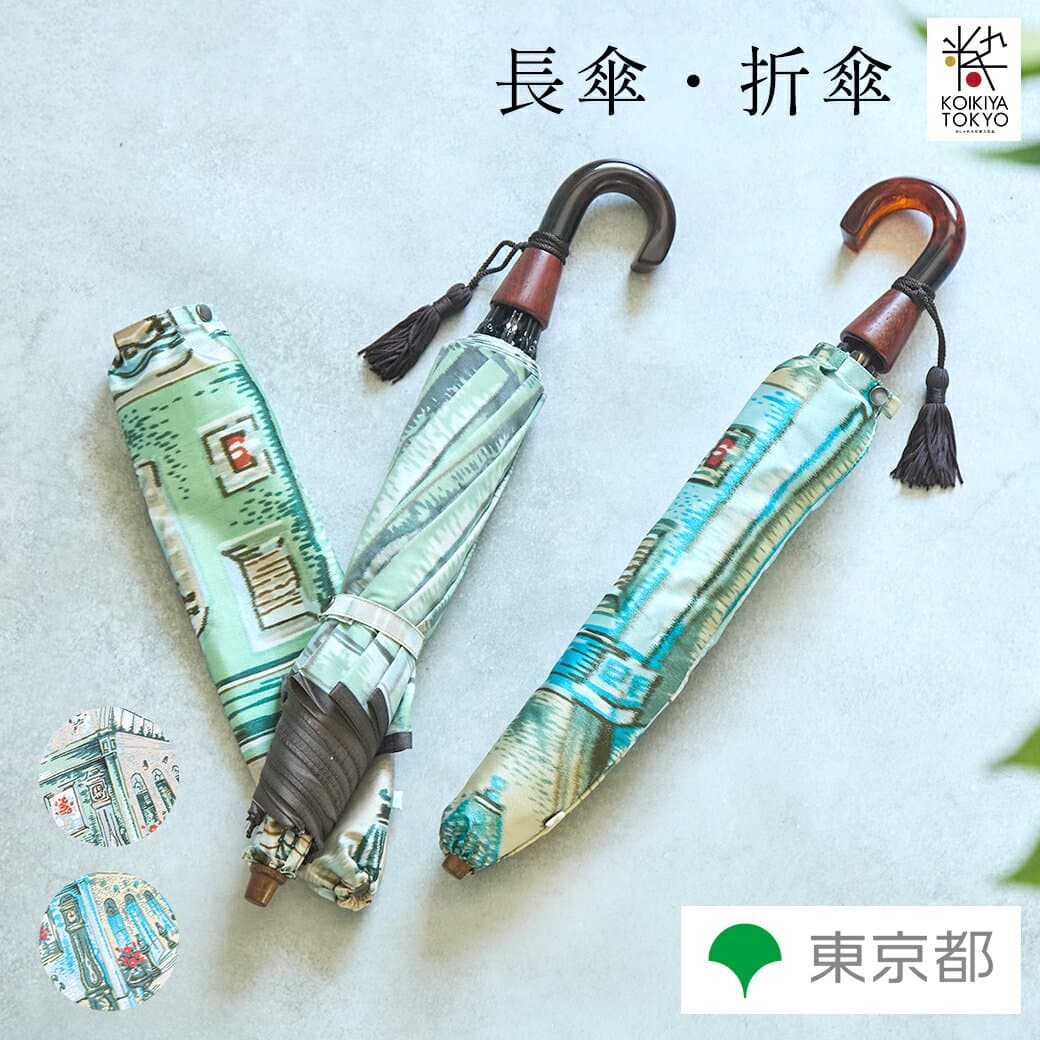
ほぐし織 シャンデリア 東京洋傘 株式会社モンブラン
小粋屋東京
5.0 / 1 reviews
First time buying on Rakuten? How residents in Japan order →
Tokyo umbrellas start from a street address: 5-8-1 Asakusabashi, Taito City, Tokyo. The Tokyo Umbrella Cooperative is based there, with 23 member companies. It holds training sessions and lectures, shares umbrella-related knowledge, and introduces its members. A Western-style umbrella is raised over the head against rain, snow, or sunlight. One umbrella contains about 40 to 50 parts, and its ribs sit against the fabric to support the canopy, so the way it opens, dries, and rests after use belongs to the object’s working life.
Asakusabashi gives Tokyo umbrellas a setting you can walk to. The cooperative’s address is 5-8-1 Asakusabashi in Taito City, about six minutes on foot from the west gate of Asakusabashi Station on the JR Sobu Line, and about seven minutes from the A4 exit on the Toei Asakusa Line.
A Taito City street, the station area, a cooperative address, and a group gathered around umbrellas make the Tokyo production area concrete.
The cooperative has 23 member companies. Its activities include training sessions, lectures, umbrella-related learning, and member introductions, so Tokyo-area umbrella making sits in repeated occasions where people gather to learn, explain, and pass along practical detail.
The direction of highly attuned, high-quality umbrella making is grounded in those members, those meetings, and the umbrella expertise gathered at the Asakusabashi address.
The industry line reaches back to the foundations of Western-style umbrella making in the early Meiji period. It carries a century of history, and many long-established businesses have continued through three generations. October 1949 adds a second fixed point, when the Tokyo Umbrella Cooperative was founded.
Early Meiji foundations, older shops, a cooperative start date, and 23 member companies still gathered around umbrellas: that is the time scale Tokyo umbrellas sit on.
A Western-style umbrella is a tool held above the head to protect against rain, snow, or sunlight. The category includes portable rain umbrellas and parasols. For Tokyo umbrellas, that use keeps the object close to the hand: a canopy lifted, ribs opened under fabric, and weather met through a portable tool connected to the Asakusabashi umbrella community.
One umbrella contains about 40 to 50 parts. The ribs are the main bones that lie against and support the fabric, and the frame asks for a measured opening. If fabric or ribs are tangled and the umbrella is forced open, ribs can break and the whole umbrella can be strained.
The pause before opening is small: loosen the fabric, let the ribs separate cleanly, then raise the canopy.
Care starts as the umbrella comes indoors. Rainwater is shaken off gently; with the umbrella open, the surface can be rinsed to remove grime. It then dries open in the shade indoors, is tied with its name band once fully dry, and rests in a dark place.
Strong water removal, wet storage, spinning the umbrella, or using it as a cane can burden the ribs, fabric, handle, or runner. Water, fabric, shade, the band, and storage become the daily sequence of touch around Tokyo umbrella making.
Tokyo umbrellas hold together a place and a set of handling habits: 5-8-1 Asakusabashi, 23 member companies, an industry line from early Meiji to October 1949, and a structure of roughly 40 to 50 parts. Their character is easiest to read in practical motions: loosening tangled fabric before opening, raising ribs under the canopy, rinsing away rain grime, drying the umbrella open indoors, and putting it away in the dark.
Compiled from public records and official sources; see the recognition links below. Details may change over time.
Where this product is officially registered, designated, or recognized in Japan.
Regional collective trademark
Registered as a Regional Collective Trademark with the Japan Patent Office.
Sources1
It is written as 東京洋傘 in Japanese. Search Rakuten and other Japanese sites with that spelling — the English name will not bring up the listings.
Tokyo umbrellas are anchored in Asakusabashi, Taito City, where the Tokyo Umbrella Cooperative is located at 5-8-1 Asakusabashi with 23 member companies. The industry traces its roots to the early Meiji period, and the cooperative was founded in October 1949. Each umbrella has about 40 to 50 parts, with ribs supporting the fabric, and after use it is gently shaken, rinsed, dried open in the shade indoors, and stored in a dark place.
The Tokyo Umbrella Cooperative is about six minutes on foot from JR Sobu Line Asakusabashi Station's west gate and about seven minutes from Toei Asakusa Line Asakusabashi Station's A4 exit. The cooperative's activities include training sessions, lectures, umbrella-related learning, and member introductions. The cooperative presents Tokyo-area umbrella making as highly attuned and high quality. Many long-established umbrella businesses have been carried through three generations.
An umbrella (kasa) is held above the head to protect against rain, snow, or sunlight, including portable rain umbrellas and parasols. Before opening, tangled fabric or ribs should be loosened, and strong shaking, spinning the umbrella, or using it as a cane should be avoided to prevent strain or damage. After use, an umbrella is gently shaken, its surface rinsed, dried open in the shade indoors, then tied and stored in a dark place once dry.
Keep wood, bamboo, and lacquer out of prolonged soaking, dishwashers, and direct sun — wipe dry after use and let them air out in the shade. For metal and fabric goods, follow the care notes on the listing.
Most options are shelf-stable, boxed, and travel well, so they suit gifting or bringing home. Confirm the final storage and delivery terms on the Rakuten listing.
On Rakuten: the shops listed here right now are 小宮商店, 小粋屋東京. We don't sell directly; purchase, payment, stock, and delivery are all handled on the Rakuten product page.