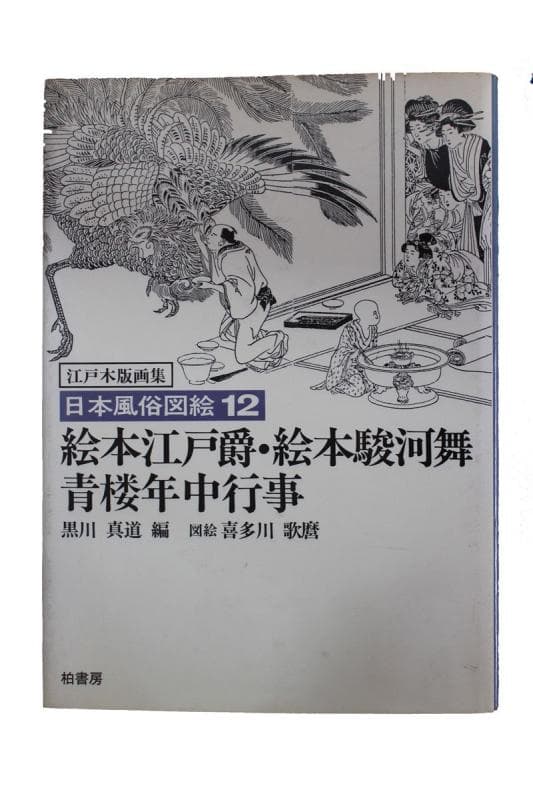
Japanese Customs Illustrated: Edo Woodblock Print Collection
【中古】日本風俗図絵: 江戸木版画集 (12)
No. 12ブリルビ
Japanese name江戸木版画
A printer starts with a key-block outline on washi, then returns with separate color blocks. That late-Edo ukiyo-e method has continued around Tokyo for about two centuries, through the divided work of artist, carver, printer, and publisher.
Information last updated 14 days ago
【中古】日本風俗図絵: 江戸木版画集 (12)
No. 12ブリルビ
First time buying on Rakuten? How residents in Japan order →
A key-block line is often where an Edo woodblock print begins. The printer takes that outline onto washi, then brings in colors from separate blocks until the image holds the vivid layered look associated with ukiyo-e. Around Tokyo, this late-Edo technique has continued for about 200 years through divided work: an artist’s drawing, a carver’s blocks, a printer’s impressions, and a publisher who coordinates the piece. That working chain now supports reproductions of Hokusai and Hiroshige series.
Woodblock printing reached Japan in the late 500s with Buddhism. Edo woodblock prints take their recognizable shape from ukiyo-e woodblock technique in the Edo period. By the late Edo period, multi-color printing had become a way to place affordable images in ordinary people’s hands. Figures, landscapes, famous places, and city scenes traveled on printed sheets.
Kitagawa Utamaro, Toshusai Sharaku, Katsushika Hokusai, and Utagawa Hiroshige are connected with that late-Edo development. Their names keep the craft tied to concrete printed subjects.
Coordinated hands finish an Edo woodblock print. The artist prepares the drawing, the carver cuts the blocks, the printer transfers line and color onto washi, and the publisher gathers the work into a finished piece. Workshops around them maintain materials and tools.
The craft is also treated as a national and Tokyo traditional craft. In practical terms, that points to a regional way of making centered on Tokyo for about two centuries, through roles, blocks, paper, tools, and workshop coordination.
The printing order starts with the key-block outline, then moves to separate color blocks. Smaller color areas and lighter colors are usually printed earlier, and the same sheet of washi returns to the blocks again and again. A finished multi-color image may require more than ten impressions and sometimes close to thirty. Brightness arrives through repeated alignment of block, color, paper, and pressure.
Takahashi Kobo in Bunkyo-ku gives the process a specific Tokyo address. The workshop comes from a printer lineage of roughly 170 years, dating back to the end of the Edo period, and its work includes hard yamazakura blocks, Echizen kizuki hosho washi, and a tilted printing bench. Blocks and paper expand or contract with the season, so printer Masami Tano judges their condition across repeated impressions. When a printer is asked to produce 100 sheets, each one is expected to hold the same quality.
Takahashi Kobo also studies how a print appears when framed or mounted as a hanging scroll, after the washi leaves the printing bench and enters a viewing setting. The Tokyo Traditional Woodblock Print Craft Cooperative connects present-day practice with named ukiyo-e series: Hiroshige’s One Hundred Famous Views of Edo and Fifty-three Stations of the Tokaido, and Hokusai’s Thirty-six Views of Mount Fuji, Remarkable Views of Bridges in Various Provinces, and Tour of Waterfalls in Various Provinces. Those titles bring the eye back to drawing, carving, key outline, color blocks, and the printer’s repeated handwork.
Aging craftspeople, a shortage of successors, and younger printers who need work: the continuity problem is that concrete. Younger hands have to learn repeatable pressure and alignment on actual sheets. The cooperative’s reproduction projects keep Hokusai and Hiroshige works as models for later study, while Takahashi Kobo links publisher coordination, job creation, and printer training. Each careful pass over the same block and washi sheet becomes part of how Edo woodblock printing moves forward in Tokyo.
The color of an Edo woodblock print comes from a working order: key block first, color blocks after, washi receiving repeated impressions, and a printer adjusting to wood and paper that move with the season. From late-Edo printed sheets to Tokyo reproductions of Hokusai and Hiroshige, the craft remains legible through divided work. Someone draws, someone carves, someone prints, someone coordinates, and younger hands learn the next impression.
Compiled from public records and official sources; see the recognition links below. Details may change over time.
Where this product is officially registered, designated, or recognized in Japan.
It is written as 江戸木版画 in Japanese. Search Rakuten and other Japanese sites with that spelling — the English name will not bring up the listings.
Edo woodblock prints are a Tokyo-centered craft based on ukiyo-e multi-color woodblock technique, developed in the late Edo period and continued for about 200 years through divided work by artist, carver, printer, and publisher. Printing starts from the key-block outline, then layers color blocks on washi, sometimes needing more than ten and up to about thirty impressions. Today it continues through Hokusai and Hiroshige reproductions, the Takahashi Kobo workshop in Bunkyo-ku, and training amid aging craftspeople and successor shortages.
Woodblock printing reached Japan in the late 500s with Buddhism, before Edo-period ukiyo-e woodblock technique later shaped Edo woodblock prints. Takahashi Kobo in Bunkyo-ku is a Tokyo workshop example with a printer lineage of roughly 170 years from the end of the Edo period. The Takahashi Kobo example includes hard yamazakura blocks, Echizen kizuki hosho washi, a tilted printing bench, and printer judgment around seasonal expansion and contraction. Printing begins with the key-block outline, then proceeds to color blocks, with smaller color areas and lighter colors prioritized early.
Reproduction projects let readers view the prints through named series such as One Hundred Famous Views of Edo, Fifty-three Stations of the Tokaido, Thirty-six Views of Mount Fuji, Shokoku Meikyo Kiran, Shokoku Taki Meguri, and Chie no Umi. Prints are displayed framed or mounted as hanging scrolls. Observing the printer's repeated impressions, the tilted printing bench, and the choice of blocks and washi offers a way to follow the printing process.
Keep craft pieces out of direct sunlight, damp, and sharp temperature swings, and store them where they won't knock against anything. Wood, bamboo, lacquer, and paper don't tolerate water — wipe any moisture off immediately. Specific care notes are on the listing.
Most options are shelf-stable, boxed, and travel well, so they suit gifting or bringing home. Confirm the final storage and delivery terms on the Rakuten listing.
On Rakuten: the shops listed here right now are ブリルビ. We don't sell directly; purchase, payment, stock, and delivery are all handled on the Rakuten product page.