 3 images
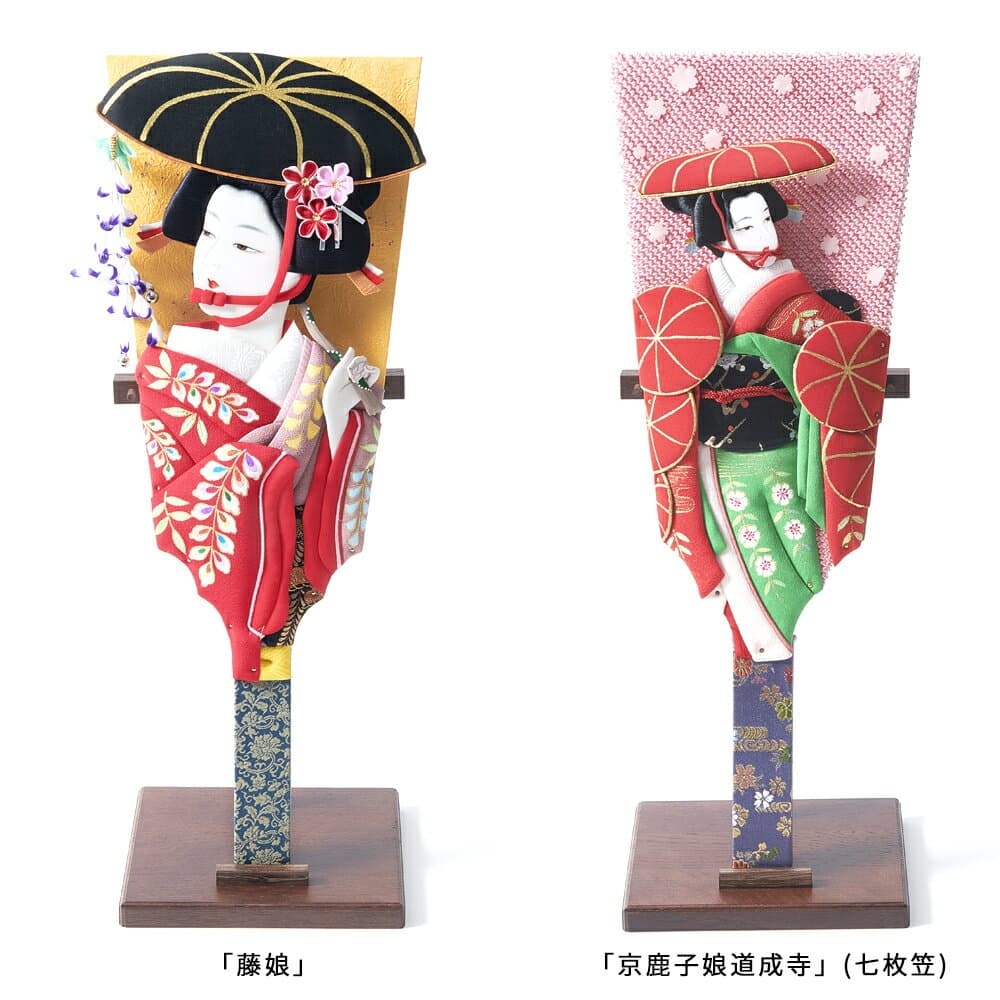
Suimon Shoten Edo Oshie Silk Hagoita Battledore with Display Stand
尺六寸 江戸押絵羽子板(正絹、上絵、絵絹面相) 飾り台付 2種 水門商店
1 shaku 6 sun, 2 designs小粋屋東京
Japanese name江戸押絵
Paper patterns, cotton wadding, silk or cotton cloth, washi, paste, and brush pigments give Edo Oshie its raised surfaces, from kabuki figures and portraits to hagoita linked with Sensoji’s December 17-19 market.
Information last updated 121 days ago
3 images尺六寸 江戸押絵羽子板(正絹、上絵、絵絹面相) 飾り台付 2種 水門商店
1 shaku 6 sun, 2 designs小粋屋東京
First time buying on Rakuten? How residents in Japan order →
Edo Oshie first reads as a surface that rises from the board. From the late Edo period, work of this kind took shape around Nihonbashi and Asakusa; its later forms still return to thick paper, cotton wadding, silk or cotton cloth, washi, paste, a heated iron, and brush lines. The raised textile image can appear on hagoita, portraits, framed works, folding screens, fans, ema, and even Tokyo Skytree elevator interiors. A sleeve, a face, or a fold of costume becomes a small map of place, material, and handwork.
Compiled from public records and official sources; see the recognition links below. Details may change over time.
Where this product is officially registered, designated, or recognized in Japan.
It is written as 江戸押絵 in Japanese. Search Rakuten and other Japanese sites with that spelling — the English name will not bring up the listings.
Edo oshie is a raised textile craft connected with Tokyo places including Nihonbashi, Asakusa, Taito, Sumida, and Katsushika. It is made from thick paper, cotton wadding, silk or cotton cloth, washi, paste, a heated iron, and hand-painted faces. Its forms include hagoita, portraits, framed works, screens, fans, ema, and architectural interiors. Its subjects include kabuki costume, kimono, hairstyles, manners, portraits, landscapes, plants, and animals; Edo oshie hagoita is tied to Sensoji's December 17-19 market.
Edo oshie took shape from the late Edo period around Nihonbashi and Asakusa. Beyond Taito, Sumida, and Katsushika, related Edo oshie areas also include Kawagoe, Kasukabe, Niiza, and Ninomiya. Edo oshie faces and surfaces use techniques such as sealing, ground layers, sumi, nikawa, gofun, zinc white, mineral pigments, and brush lines. The Sumida craft preservation association formed in 1978, and oshie hagoita is among the crafts it introduces.
Edo oshie hagoita are displayed at the year-end hagoita market held at Sensoji from December 17 to 19. The technique has also been used for architectural interior decoration, including elevator interiors at Tokyo Skytree, with a winter scene attributed to Noguchi Hosei in one caption. Edo oshie has been introduced to the public at craft demonstration events, such as a 2024 program at Aoyama Square linked to the Sumida Traditional Craft Preservation Association.
Keep craft pieces out of direct sunlight, damp, and sharp temperature swings, and store them where they won't knock against anything. Wood, bamboo, lacquer, and paper don't tolerate water — wipe any moisture off immediately. Specific care notes are on the listing.
Most options are shelf-stable, boxed, and travel well, so they suit gifting or bringing home. Confirm the final storage and delivery terms on the Rakuten listing.
On Rakuten: the shops listed here right now are 小粋屋東京. We don't sell directly; purchase, payment, stock, and delivery are all handled on the Rakuten product page.