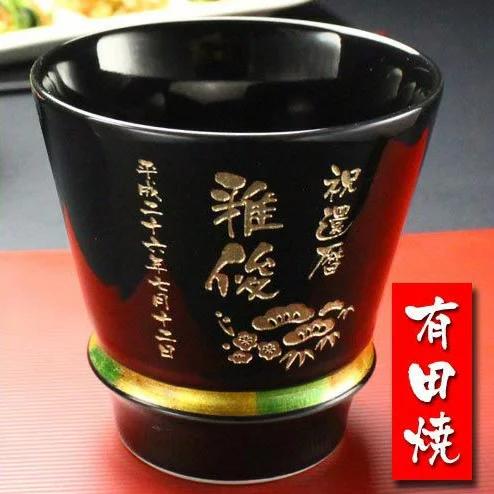
Personalized Arita Ware Happy Ring Shochu Glass
名入れ プレゼント 《 有田焼 至高の焼酎グラス ハッピーリング 》 お誕生日 還暦祝い 出産 内祝い 名前入りギフト 名入れ彫刻 実用的 2026
330ml, 1 glassGift-ready
名入れ工房アートテック
4.8 / 181 reviews
Japanese name伊万里・有田焼
In western Saga, the kilns of Arita Town and Imari City turn white porcelain stone from Izumiyama into blue-painted cups and plates, and keep the craft moving through workshops, cooperatives, and the mountain kiln village of Okawachiyama.
Information last updated 5 days ago
Ordering from abroad works when the recipient has a Japanese address.
All 4 listings below are sold as gifts in the shop's own wording (ギフト, のし対応 …), marked “Gift-ready”.
名入れ プレゼント 《 有田焼 至高の焼酎グラス ハッピーリング 》 お誕生日 還暦祝い 出産 内祝い 名前入りギフト 名入れ彫刻 実用的 2026
名入れ工房アートテック
4.8 / 181 reviews
 3 images
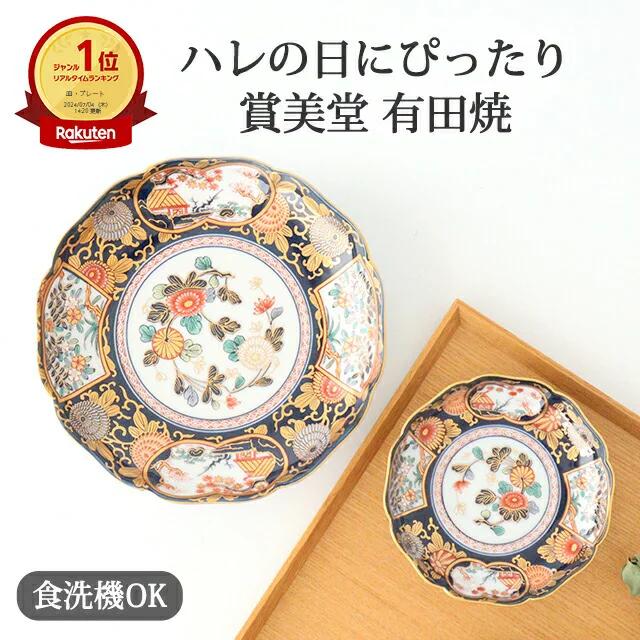
ポイント2倍 11/11まで|有田焼 小皿 和皿 琳派 古伊万里様式 磁器 賞美堂 伊万里焼 古伊万里 おせち料理 お正月 取り皿 取皿|食洗機対応 おしゃれ かわいい 手仕事 和食器 日本製 ギフト プレゼント 結婚祝い 来客 ベストセラー
うつわ かくち
5.0 / 4 reviews

【最大1000円OFF】amabro アマブロ MAME マメ 豆皿 13種類【小皿 有田焼 ギフト プレゼント 和食器 3980円以上で送料無料 おしゃれ オシャレ 母の日】
ハウスグラム
4.7 / 113 reviews
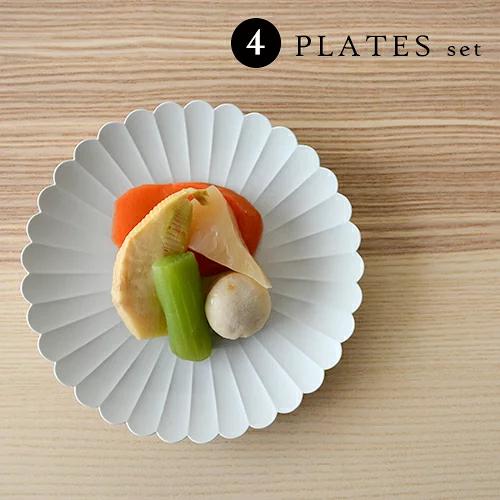
【最大1000円OFF】1616/arita japan TY パレスプレート 160(グレー)<4枚セット>【パレス イチロクイチロク アリタジャパン TY palace 有田焼 輪花 送料無料 皿 プレート 和食器 うつわ 中皿 取り皿 モダン おしゃれ オシャレ プレゼント 日本製 パスタ 母の日】
ハウスグラム
4.7 / 88 reviews
First time buying on Rakuten? How residents in Japan order →
All 4 listings of this product on Rakuten, lowest price first.
| Listing | Price | Shop | Reviews | Open listing |
|---|---|---|---|---|
amabro MAME Arita Ware Small Plate 13 designsLowest priceGift-ready | ¥1,870 | ハウスグラム | 4.7 / 113 reviews | View on Rakuten → |
Personalized Arita Ware Happy Ring Shochu Glass 330ml, 1 glassMost reviewedGift-ready | ¥6,050 | 名入れ工房アートテック | 4.8 / 181 reviews | View on Rakuten → |
Shobido Arita Porcelain Rinpa Ko-Imari Plate Gift-ready | ¥7,260 | うつわ かくち | 5.0 / 4 reviews | View on Rakuten → |
1616/arita japan TY Palace Plate 160 gray, set of 4Gift-ready | ¥7,920 | ハウスグラム | 4.7 / 88 reviews | View on Rakuten → |
Japanese · new tab
In western Saga Prefecture, Arita Town sits on a highland and Imari City lies to its northwest, and the kilns of the two places make a pottery route that has kept working for more than four hundred years. The thread usually leads back to Izumiyama, a hill in Arita where Ri Sampei is said to have found white porcelain stone and succeeded in firing porcelain in 1616; the first porcelain in Japan is generally held to have been fired in what is now Arita Town. A white, dense body, and blue underglaze painting that turns blue only after the kiln, are the first things that mark the ware. Follow the valley toward Imari and you reach Okawachiyama, a village ringed by mountains that once fired presentation pieces for the Nabeshima domain. From a single piece of porcelain stone to a coffee cup, geology, brushwork, and the daily table run in one line here.
Arita Town spreads across a highland in western Saga, with Imari City to its northwest, and together their kilns make a pottery route that has carried on for more than four hundred years. In Arita, a hilltop complex called Arita Sera gathers twenty-two shops and galleries, each with its own buyers and brands; nearby, the cooperative's MONO・NO・SU gallery shows work drawn from about sixty kilns, with a café space to sit in and gosu-painted sometsuke to look at. A short walk past Tozan Shrine and the lane of Tonbai walls sets the name "Imari-Arita ware" back inside the towns and valleys it comes from. Imari City has a base of its own: a ceramics cooperative of twenty-one kilns there runs painting workshops and trains successors.
To understand the ware, start with its raw material. Among the potters said to have come from the Korean peninsula with the Nabeshima house of Hizen, Ri Sampei searched the Taku and Nabeshima domains for stone that could make white porcelain like that of Jingdezhen in China, and is said to have found good white porcelain stone at Izumiyama in Arita and succeeded in firing porcelain in 1616. The white, dense body comes from stone like that at Izumiyama. By around 1630, abundant Izumiyama stone supported larger-scale production across the Arita area, and porcelain moved from a rare object toward tableware that could be supplied in quantity.
The easiest thing to recognize on these vessels is the blue of gosu. Gosu is an underglaze pigment: brushed onto the body it is not yet blue, and it develops its blue color only after the piece has been through the kiln. In Arita, the Imari-Arita Ware traditional-industry hall opens this step up as a painting workshop, where visitors brush gosu onto an unfired body themselves and then have it fired. The white body and blue pattern of sometsuke run from fine floral work to clean everyday motifs, and the Saga ceramics cooperative holds regular wheel and painting sessions, so the technique keeps being practiced by hand rather than only shown in a case.
Heading from Arita toward Imari, Okawachiyama hides in a valley closed in by mountains on three sides. In the Edo period it was a kiln ground of the Nabeshima domain, firing presentation pieces, and to keep the techniques from leaking out the kilns were kept inside this enclosed terrain; the selection of finished pieces is said to have been judged partly by tapping them and listening to the sound. About thirty kilns still fire in Okawachiyama today, and the valley is scattered with kiln remains, a climbing kiln, and traces of old potters' houses; the Nabeshima kiln bridge and kiln park keep that domain history in the place names along the path.
What holds the area together is a handful of groups that connect people and skills. The cooperative of twenty-one kilns in Imari City runs painting workshops and trains successors. The larger Saga Prefectural Ceramics Industry Cooperative, founded in 1949, covers the kilns of Imari, Arita, Ureshino, and Takeo, has grown in recent years to around seventy-odd members, and works to maintain the quality of Arita, Imari, and Hizen Yoshida ware. Imari-Arita ware is recognized as a traditional craft, and the successor training the cooperative runs on that basis passes painting, wheel work, and plaster-mold forming from one generation to the next. Alongside them, the Imari-Arita Ware Traditional Craftworkers' Association and the Saga Ceramics Technicians' Federation have shown the work of eighty-three traditional craftworkers and twenty-five skill holders together at the Saga Prefectural Kyushu Ceramic Museum, with their own stated aims: to raise successors, sharpen skills, and promote the craft.
After the detour through geology and kiln fire, the ware comes back to the table. The Saga ceramics cooperative writes "tableware that supports food culture" into its own purpose, and alongside traditional patterns it adds designs built for function and daily use: white-and-indigo modern motifs that keep a table clean and easy to set, and finely painted sometsuke pieces, each with its own expression. In Arita, a brand like 2016/, born in the four-hundredth year of Arita ware, hands the ideas of designers from Japan and abroad to skilled kilns to turn into vessels, in a space you can also sit and use as a café. From the display case to the coffee cup, from the history of presentation pieces to a single meal or drink, the most solid form of Imari-Arita ware is a piece held in the hand with food on it.
From a single piece of white porcelain stone at Izumiyama, to the kiln fire in the Okawachiyama valley, to blue-patterned cups and plates on a white body, Imari-Arita ware ties the geology, technique, and daily life of western Saga into one line. Across more than four hundred years the firing has not stopped: Izumiyama stone, gosu blue, the climbing kiln at Okawachiyama, and the painting and wheel training inside the cooperatives are all still being used, taught, and brushed. The simplest way to know the ware may be to walk through Arita and Imari, hold a cup in your hand, and set a plate on the table.
Compiled from public records and official sources; see the recognition links below. Details may change over time.
Where this product is officially registered, designated, or recognized in Japan.
Traditional craft
Designated a Traditional Craft (dentō kōgeihin) by Japan's Ministry of Economy, Trade and Industry.
Sources1
It is written as 伊万里・有田焼 in Japanese. Search Rakuten and other Japanese sites with that spelling — the English name will not bring up the listings.
Imari-Arita ware is a porcelain and tableware region centred on the kiln communities of Arita Town and Imari City in western Saga Prefecture. Ri Sampei is said to have found white porcelain stone at Izumiyama in Arita and succeeded in firing porcelain in 1616. The ware is marked by a white body and gosu underglaze painting that turns blue only in the kiln. Imari's Okawachiyama has about thirty kilns today.
This pottery route in western Saga has more than four hundred years of continuity. The first porcelain in Japan is generally held to have been fired in present-day Arita Town. By around 1630, abundant Izumiyama stone supported larger-scale porcelain production in the Arita area. Gosu is an underglaze pigment that is not yet blue when brushed on and develops its blue color only after firing.
It is used as daily tableware for meals and drinks, including cups and plates. Visitors can try hands-on gosu painting and wheel work events. Kiln towns such as Okawachiyama can be visited to see kiln remains and a climbing kiln.
Porous earthenware is usually given a "medome" treatment first — simmer it gently in rice-rinsing water (or water with a little flour), then cool, rinse, and air-dry. This reduces staining and odour absorption. Porcelain normally just needs a wash. Follow the listing where it says otherwise.
Handmade earthenware, pieces with gold or silver overglaze, and lacquerware generally should not go in a dishwasher, microwave, or heated drying cabinet; heat-resistant porcelain usually can. Check the Rakuten listing for the specific piece.
This is a temperature- or fragility-sensitive item — before travelling, confirm refrigerated/frozen delivery, packaging, and arrival dates on the Rakuten listing. For gifts, prefer shelf-stable, boxed options.
On Rakuten: the shops listed here right now are 名入れ工房アートテック, うつわ かくち, ハウスグラム. We don't sell directly; purchase, payment, stock, and delivery are all handled on the Rakuten product page.