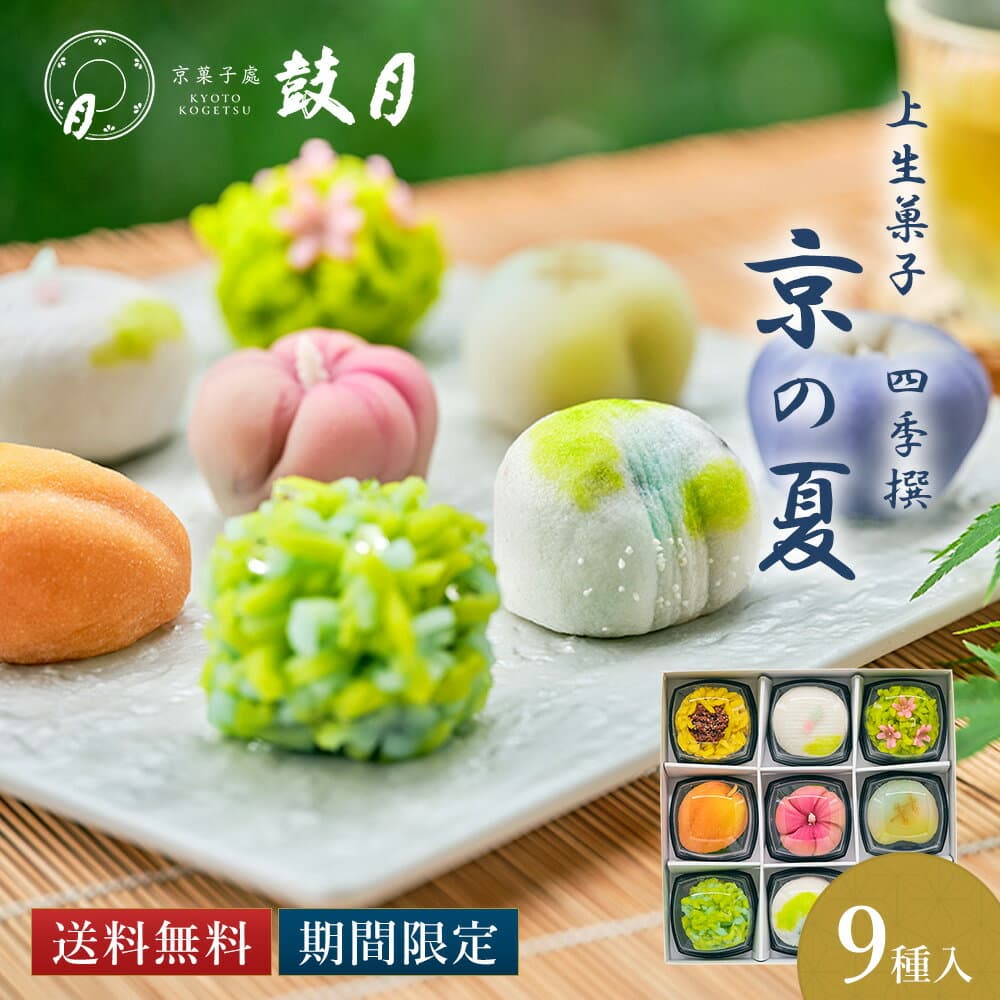
7月2日以降お届け 上生菓子 四季撰(9個入)【公式】京都 鼓月 / 限定150箱 夏ギフト 御中元 和菓子 生菓子 送料無料 お取り寄せ 人気 高級 お菓子 ねりきり 金団 こなし 京菓子 老舗 内祝 お祝い ギフト 贈り物
京菓子處 鼓月 楽天市場店
4.9 / 105 reviews
¥5,400
View on Rakuten →Japanese · new tab
Kyo-gashi is presented here as a Kyoto regional confectionery family. The supplied evidence identifies it directly as “京菓子” under a regional trademark source, tying the product family to Kyoto by name and regional recognition; the provided term “野菜” indicates a vegetable-related association, but the evidence does not specify a particular maker, technique, climate factor, or historical origin.
Information updated 66 days ago
京菓子處 鼓月 楽天市場店
4.9 / 105 reviews
¥5,400
View on Rakuten →Japanese · new tab
Kyogashi begins with a precise boundary of place and training: wagashi made in Kyoto by craftspeople who learned the craft there. The name distinguishes sweets of the former capital from wagashi made elsewhere. Inside that boundary are Heian court settings, temple and shrine occasions, tea rooms, white bean paste, azuki, rice flour, mochi flour, sugar, agar, and seasonal forms small enough to be held before a bowl of matcha.
Kyogashi begins with Kyoto-trained craftspeople making wagashi in Kyoto, and that boundary gives the sweet its local frame. Within it, selected materials, refined taste, hand skill, names, wrapping, and motifs such as flowers, birds, wind, and moon can carry Kyoto scenes into a small edible object. When the word culture is useful here, it means those concrete choices: a maker’s hand, a named sweet, a seasonal motif, and a Kyoto setting.
The background of Kyogashi reaches to Heian-period court sweets influenced by China, then to sweets prepared for court nobles, temples, shrines, and tea families. Kamakura tea-and-sweets customs and Muromachi tea gatherings gave Kyoto makers a reason to shape sweets for the moment before tea. After the Meiji period, some Western confectionery materials and methods also entered the field, adding another layer to a craft already tied to ceremony, tea, and Kyoto makers.
Kyogashi is better understood as a family of categories and techniques than as a single recipe. Namagashi, han-namagashi, higashi, tea sweets, and jo-namagashi each allow different textures and levels of moisture. White bean paste and azuki may become smooth centers or surfaces; rice flour and mochi flour bring chew; sugar and agar help hold shape and translucence. Matcha, purple sweet potato, and yellow carrot appear as plant-based color examples. These are examples from a flexible pantry, not requirements for every sweet.
Season enters Kyogashi through forms that can sit beside a tea bowl. Spring may appear as cherry blossoms; summer as cool water or fish; autumn as leaves, chestnut, or sweet potato; winter as snow imagery. Nerikiri and other namagashi make the method visible because smooth bean paste, hand-shaped curves, and layered color can suggest a petal, ripple, leaf, or drift of snow before the sweet is tasted.
In a tea setting, Kyogashi belongs to a sequence of taste. Measured sweetness and soft mouthfeel prepare the mouth before bitter matcha, so the small piece matters before the bowl is lifted. In the Kamigyo-ku Kyogashi Museum tea room Shounken, matcha is served with Unryu and seasonal namagashi, bringing together a named sweet, a bowl of tea, and the season chosen for the sitting.
The craft remains visible in present-day Kyoto through displays and makers. In Kamigyo-ku, the Kyogashi Museum shows old documents, paintings, wagashi models, and sugar-art sweets; the sugar works recreate flowers and birds in a material usually known through taste. Across Kyoto city wards, cooperative makers are linked with named sweets such as Kinuuta, Kibi-mochi, Shirakawaji, Murasakino Matsukaze, and seasonal tea sweets. Those names keep Kyogashi close to wards, workshops, and hands rather than leaving it only in the past.
Kyogashi is clearest when Kyoto, handwork, material, tea, and season are held together. Court and temple settings give it historical rooms; white bean paste, azuki, rice flour, sugar, and agar give it texture; cherry blossoms, water, leaves, and snow give it the year. In Kamigyo-ku displays and Kyoto maker communities, the small sweet remains something to see, hold, and taste.
Compiled from public records and official sources; see the recognition links below. Details may change over time.
Where this selection is officially registered, designated, or recognized in Japan.
Regional collective trademark
Registered as a Regional Collective Trademark with the Japan Patent Office.
Sources1
Storage varies by product — shelf-stable, refrigerated, or frozen — and is stated on the packaging and the Rakuten listing. Shelf-stable processed foods usually need refrigerating once opened and eating within a few days; chilled and frozen items go straight into storage on arrival. Treat the best-before date on the physical packaging as authoritative.
京菓子 is a regional foods from Kyoto. We compile its regional connection and characteristics against official registries, local sources, and live Rakuten listings.
Most options are shelf-stable, boxed, and travel well, so they suit gifting or bringing home. Confirm the final storage and delivery terms on the Rakuten listing.
We don't sell directly. This page compiles Rakuten listings and affiliate links; purchase, payment, stock, and delivery all happen on the Rakuten listing.