 3 images
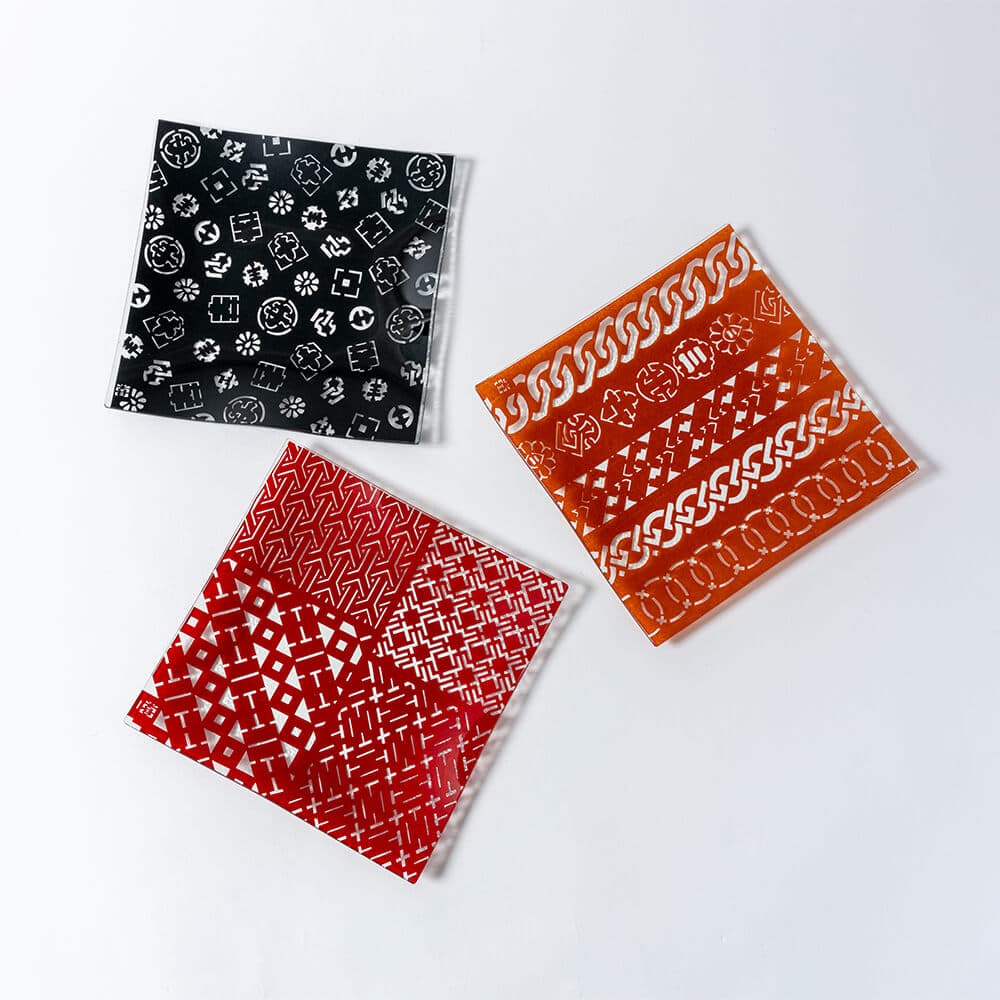
Matsui Katagami-ten Ise Katagami Glass Square Plate
食器 ガラス 角皿 食洗機OK ギフト 伝統工芸品 伊勢形紙 松井形紙店 伊勢形紙ガラス皿 まつり 黒 つなぎ 橙 あわせ 赤
Matsuri black / Tsunagi orange / Awase red小粋屋東京
5.0 / 1 reviews
¥11,000
View on Rakuten →Japanese · new tab
Japanese name伊勢形紙
In Suzuka, Mie Prefecture, Mino washi, persimmon tannin, hinoki boards, smoke, and carving blades become stencil paper for dyeing motifs onto kimono fabric.
Information updated 71 days ago
3 images食器 ガラス 角皿 食洗機OK ギフト 伝統工芸品 伊勢形紙 松井形紙店 伊勢形紙ガラス皿 まつり 黒 つなぎ 橙 あわせ 赤
Matsuri black / Tsunagi orange / Awase red小粋屋東京
5.0 / 1 reviews
¥11,000
View on Rakuten →Japanese · new tab
 3 images
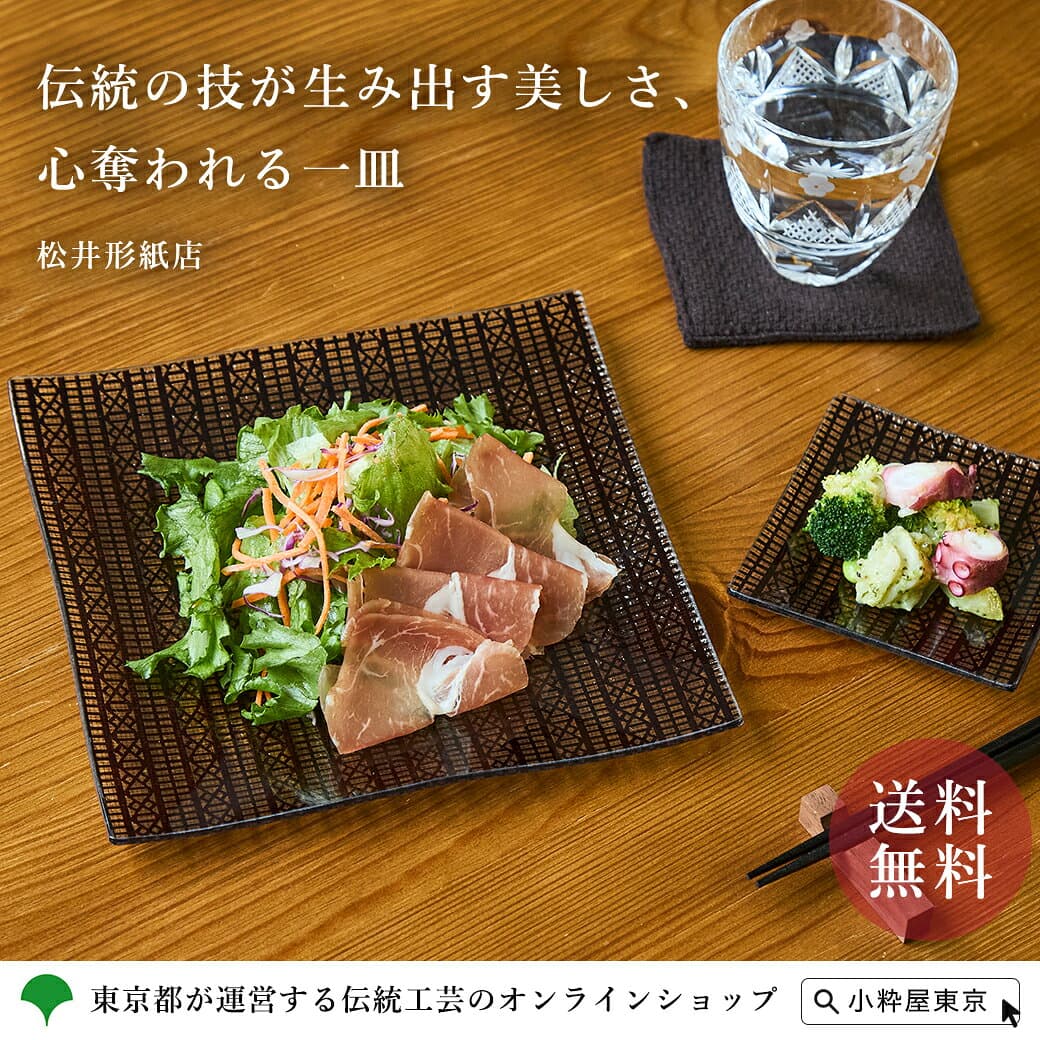
染色用型紙彫刻 伊勢形紙 ガラス皿・紗張り 松井形紙店
Sahari reinforced finish小粋屋東京
¥10,175
View on Rakuten →Japanese · new tab
Ise Katagami begins in Suzuka City, Mie Prefecture, as a working tool for textile dyeing. When motifs are placed onto kimono fabric, including Yuzen, yukata, and komon, the carved stencil gives color its edge. Its base is washi bonded with persimmon tannin, dried in sunlight, smoked, treated again, and inspected until it becomes strong, low-stretch katagami paper.
The geographic center of Ise Katagami is Suzuka City in Mie Prefecture. Mie Prefecture lists Suzuka as the main production area, and the Ise Katagami Cooperative is located in Jike, Suzuka, inside the Suzuka City Traditional Industries Hall. The stencil is used for dyeing patterns and motifs onto kimono fabrics, including Yuzen, yukata, and komon.
Its local identity is practical: a Suzuka production area, a cooperative community, a dyeing tool, and kimono motifs meet in one sheet of carved paper. Ise Katagami is also treated as a traditional craft tool; for readers, that points to a clear craft boundary, with treated washi paper cut by fine blades for textile patterns.
The base paper starts with Mino washi. In the early steps, 200 to 500 sheets are stacked and cut to standard dimensions. Three sheets are then bonded with persimmon tannin according to the grain of the paper, layered lengthwise, crosswise, and lengthwise, creating a plywood-like structure that can stand up to later carving.
After bonding, the sheets are placed on hinoki drying boards and dried in the sun. They then go into a smoking room, where about a week of smoke turns them into dark brown paper that resists stretching and shrinking. A second persimmon-tannin treatment, another round of sun drying and smoking, and a surface inspection complete the base. The material memory of Ise Katagami lies in these steps: cutting, grain-aware layering, hinoki-board drying, smoke, and patient inspection.
Ise Katagami patterns are shaped by several cutting methods. Hiki-bori, also called shima-bori, uses a ruler and carving blade to cut even stripes; one stripe is traced three times along the same line with a small blade, and some work can place as many as eleven stripes within one centimeter. Tsuki-bori places five to eight sheets on a holed board and moves forward with a one- to two-millimeter blade tip, making it suited to straight lines and larger designs, sometimes with gauze reinforcement.
Dogu-bori uses blades shaped like flowers, fans, diamonds, and other forms, so the repeated motif stays even while allowing many shapes. Kiri-bori makes small holes with an awl-like blade; in fine komon patterns, about 100 holes can fit into one square centimeter. The visual character of the stencil comes from these differences: line, perforation, shaped cut, and repeated hand control.
Ise Katagami has long been tied to kimono dyeing, and Mie Prefecture and the cooperative connect it with more than a thousand years of continuity. Recent uses include art crafts, fittings, interiors, cards, dyed small goods, and LED stencil lights.
Those newer uses return to the same core: persimmon-tannin-treated washi and carved openings. What guided color onto kimono cloth can give rhythm to a light, a card, or an interior object through the same cut lines and small holes. The continuity is concrete, carried by Suzuka paper preparation, blade work, and motifs that move from fabric to everyday objects.
Within the Ise Katagami Cooperative in Suzuka, kata-sho are cooperative members. They receive requests and act as directors who connect customers with stencil carvers. That role places the craft in a practical chain: a requested motif must be understood, planned, and translated into work that a carver can cut.
The cooperative also offers hands-on carving and dyeing experiences. When someone pushes a blade through paper or transfers a motif onto a card or small object, the local craft culture becomes visible through tools, gestures, pattern, and the people who keep the work moving.
Ise Katagami takes shape through thin material and exacting preparation. The grain of three washi sheets, the darkening touch of persimmon tannin, sun drying on hinoki boards, about a week of smoke, and the blade marks of hiki-bori, tsuki-bori, dogu-bori, and kiri-bori connect Suzuka with the patterned surfaces of kimono dyeing and present-day craft objects.
Compiled from public records and official sources; see the recognition links below. Details may change over time.
Where this selection is officially registered, designated, or recognized in Japan.
Traditional craft
Designated a Traditional Craft (dentō kōgeihin) by Japan's Ministry of Economy, Trade and Industry.
Sources1
It is written 伊勢形紙 in Japanese. Search Rakuten and other Japanese sites with that spelling — the English name will not return the listings.
Keep craft pieces out of direct sunlight, damp, and sharp temperature swings, and store them where they won't knock against anything. Wood, bamboo, lacquer, and paper don't tolerate water — wipe any moisture off immediately. Specific care notes are on the listing.
Ise katagami stencils is a craft objects from Mie. We compile its regional connection and characteristics against official registries, local sources, and live Rakuten listings.
Most options are shelf-stable, boxed, and travel well, so they suit gifting or bringing home. Confirm the final storage and delivery terms on the Rakuten listing.
We don't sell directly. This page compiles Rakuten listings and affiliate links; purchase, payment, stock, and delivery all happen on the Rakuten listing.