 3 images
Kuwana Cast Iron Japanese Mosquito Coil Holder
蚊取り線香ホルダー 蚊遣り器 くわな鋳物 おしゃれ 和風 日本製 鉄器 鋳鉄 蚊取り線香 置き 入れ 虫除け かやり 黒 和柄 素敵 レトロ かっこいい インテリア 送料無料 ラッピング対応 かわいい シンプル デザイン モダン 趣
viewgarden ビューガーデン
4.8 / 42 reviews
Japanese nameくわな鋳物
In Kuwana, Mie Prefecture, molten metal moves through molds into pots, machine parts, shrine fittings, wind chimes, and manhole covers shaped by nearby Komukai sand and local foundry work.
Information last updated 20 days ago
3 images蚊取り線香ホルダー 蚊遣り器 くわな鋳物 おしゃれ 和風 日本製 鉄器 鋳鉄 蚊取り線香 置き 入れ 虫除け かやり 黒 和柄 素敵 レトロ かっこいい インテリア 送料無料 ラッピング対応 かわいい シンプル デザイン モダン 趣
viewgarden ビューガーデン
4.8 / 42 reviews
First time buying on Rakuten? How residents in Japan order →
Kuwana castings begin with a clear physical act: metal is melted, poured into a mold, and left to harden. In this castle town in Mie Prefecture, the early layer is said to reach the Edo period, when Honda Tadakatsu became lord of Kuwana and began gun production; lanterns, temple bells, farm tools, and pots were also made in the town. In the Meiji period, sand suited to green-sand molding was found in nearby Komukai, now part of Asahi Town, giving daily-use casting a larger production base around Kuwana.
Casting is the act and product of melting metal, pouring it into a mold, and letting it harden. In Kuwana, that basic action has produced pots, kettles, stove mouths, irons, lanterns, temple bells, farm tools, machine castings, construction castings, and civil-engineering pieces such as manhole covers. The product family is practical at several scales: a pot over heat, a street cover underfoot, a commercial gas stove in use, and a machine part inside equipment.
The beginning of Kuwana casting is said to be linked to Honda Tadakatsu, who began gun production after becoming lord of Kuwana in the Edo period. Around that early layer, Kuwana also made lanterns, temple bells, farm tools, and pots. Those objects give the word tradition a concrete meaning here: a gun barrel, a bell in a temple precinct, a tool for field work, and a cooking pot shaped from metal in a mold.
In 1887, casting sand suited to the green-sand method was found in Komukai, a neighboring area now identified as Komukai in Asahi Town, Mie District. The method used naturally occurring sand for molding and supported lower-cost, larger-scale production. From that point, Kuwana made pig-iron household castings such as pots, kettles, stove mouths, and irons, tying the area’s manufacturing rhythm to a nearby material found in the ground.
From 1903, Kuwana began making machine castings such as noodle-making machines and waterworks equipment, widening the product range beyond household goods. The phrase pairing eastern Kawaguchi with western Kuwana belongs to this industrial memory, but its practical meaning is found in machine bases, water fittings, and later castings for machine tools, electrical machines, construction machines, automobiles, bridge handrails, and lighting fixtures. The forms coming out of Kuwana molds moved from hearthside goods into equipment, roads, bridges, and factory use.
Until around 1940, Kuwana castings developed on a base of everyday goods, but wartime restrictions pushed production away from those items and toward machine castings. Air raids during the Second World War caused severe damage, and after the war pig iron was difficult to obtain. Local makers collected aircraft duralumin and scattered scrap metal, cast them again, and turned them into pots and kettles for daily life.
Kuwana can also be read through objects that remain in public view. Kasuga Shrine has a bronze torii, Butsugan-in has a bell, and the city landscape includes fences, streetlights, motif-based manhole covers, bridge handrails, and clam-shaped cast wind chimes. These objects bring foundry work out of the plant and into shrine approaches, temple grounds, roads, bridges, and the small sound of metal moved by wind.
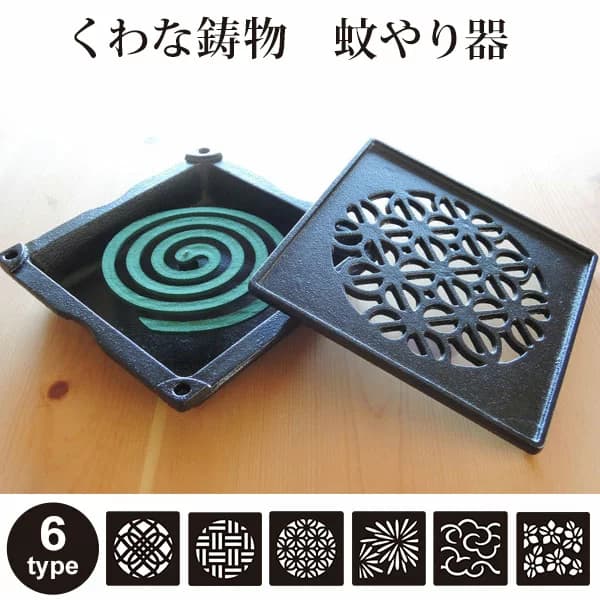
Since 1956, Kuwana has continued a casting technology competition that makes molding skill, speed, and finish visible outside ordinary production. Recent product development has also returned attention to daily-use castings, including an IH-compatible two-cup rice pot and mosquito-coil holders with summer-patterned lids. The Mie Prefecture traditional-craft designation attached to this field points to kettlebells and iron pots; the wider Kuwana range also appears in exhibitions, casting-product contests, quiz rallies, and hands-on casting experiences.
Kuwana castings are easiest to understand through named materials and objects: Komukai sand, pig-iron pots, noodle-making machines, waterworks equipment, postwar duralumin and scrap, the bronze torii at Kasuga Shrine, city manhole covers, and cast wind chimes. From an Edo-period origin told through gun production to the 1903 turn toward machinery and today’s daily-use development, Kuwana keeps pouring local manufacturing knowledge into forms people can cook with, walk across, listen to, or build into machines.
Compiled from public records and official sources; see the recognition links below. Details may change over time.
Where this product is officially registered, designated, or recognized in Japan.
Regional collective trademark
Registered as a Regional Collective Trademark with the Japan Patent Office.
Sources1
It is written as くわな鋳物 in Japanese. Search Rakuten and other Japanese sites with that spelling — the English name will not bring up the listings.
Kuwana cast metal is a casting product family from Kuwana, Mie Prefecture, made by pouring molten metal into molds and letting it harden. Its origin is said to connect with Edo-period gun production under Honda Tadakatsu, and in 1887 suitable sand was found in nearby Komukai, enabling larger-scale household castings such as pots and kettles. Today the range includes machinery parts, gas stoves, shaved-ice machines, iron pots, and kettlebells.
The sand found in 1887 came from Komukai, now part of Asahi Town. The green-sand method used naturally occurring sand and supported lower-cost, larger-scale production in Kuwana. From 1903, Kuwana began producing machine castings such as noodle-making machines and waterworks equipment. After the Second World War, local makers used aircraft duralumin and scattered scrap metal to cast pots and kettles.
Kuwana castings serve as household items such as pots, kettles, stove parts, irons, and shaved-ice machines, alongside newer products like rice pots and mosquito-coil holders. They also form industrial and construction parts, including machine-tool and electrical-machine bases, manhole covers, building materials, car parts, bridge handrails, and lighting fixtures. Recent designs include an IH-compatible rice pot and mosquito-coil holders with six summer-pattern lids.
Keep craft pieces out of direct sunlight, damp, and sharp temperature swings, and store them where they won't knock against anything. Wood, bamboo, lacquer, and paper don't tolerate water — wipe any moisture off immediately. Specific care notes are on the listing.
Most options are shelf-stable, boxed, and travel well, so they suit gifting or bringing home. Confirm the final storage and delivery terms on the Rakuten listing.
On Rakuten: the shops listed here right now are viewgarden ビューガーデン. We don't sell directly; purchase, payment, stock, and delivery are all handled on the Rakuten product page.