 3 images
Iga Kumihimo Reversible Sanbuhimo Obijime by Inoue Kobo
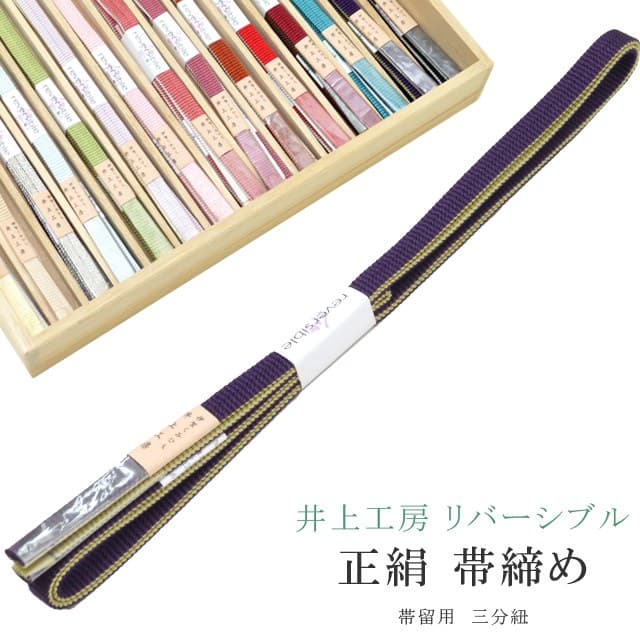
帯締め おびじめ 三分紐 リバーシブル 帯留め用 着物 きもの 伊賀組紐 日本製 井上工房 15選 帯〆 1年中 伊賀くみひも 高級 帯じめ 浴衣 紬 小紋 色無地 訪問着 留袖 礼装用 カジュアル〜フォーマル 6 紫×渋緑 sin7998-bob08 彩小径
No. 6: purple x muted greenKIMONO梅千代オンラインショップ
Japanese name伊賀くみひも
In Mie Prefecture’s Iga City and Nabari City, silk thread, gold and silver threads, and braiding stands shape Iga kumihimo from sutra-scroll cords to obijime, haori cords, straps, and accessories.
Information last updated 120 days ago
3 images帯締め おびじめ 三分紐 リバーシブル 帯留め用 着物 きもの 伊賀組紐 日本製 井上工房 15選 帯〆 1年中 伊賀くみひも 高級 帯じめ 浴衣 紬 小紋 色無地 訪問着 留袖 礼装用 カジュアル〜フォーマル 6 紫×渋緑 sin7998-bob08 彩小径
No. 6: purple x muted greenKIMONO梅千代オンラインショップ
 3 images
【 スーパーSALE50%OFF 】 訳有品 羽織紐 日本製 三重県 伊賀くみひも 伊賀 組紐 羽織 紐 くみひも 織元 組元 組み 組みひも 直付け S菅 S管 金具 S字金具 s菅 s管 s字金具 女性用 婦人用 子供用 レディース ピンク 桃 レッド 赤 ホワイト 白 マゼンタピンク 青 藍 ブルー
approx. 19 cmきもの 本多屋 楽天市場店
First time buying on Rakuten? How residents in Japan order →
Iga kumihimo belongs to the Iga City and Nabari City area of Mie Prefecture. Its main material is silk thread, sometimes joined by gold and silver threads, and its form comes from stands such as the kakudai, marudai, and takadai. The cords once served sutra scrolls, Buddhist implements, and Shinto implements; later they became closely tied to kimono accessories such as obijime and haori cords. At Kumisho no Sato in Ueno Marunouchi, Iga City, the same braiding world also appears in small hands-on items, straps, and accessories.
The main production places for Iga kumihimo are Iga City and Nabari City in Mie Prefecture. The Iga area’s climate suited sericulture, which connects the craft directly to silk thread, and its closeness to Kyoto helped the industry develop from the middle of the Meiji period. The regional identity here is concrete: two named cities, a silk-producing environment, and a position near Kyoto shaped the conditions in which braided cords could become a local industry.
An Iga kumihimo cord begins with thread: mainly silk, with gold and silver threads also used as braiding material. The work uses traditional stands including the kakudai, marudai, and takadai to create cords with a fine visual finish; hand-braided takadai cords are singled out as especially noted. The technique is best understood through these physical anchors: thread, stand, repeated crossing, and the finished cord.
The early uses of Iga kumihimo are attached to named objects. Mie Prefecture traces its origin to before the Nara period and describes its first uses as cords for sutra scrolls, Buddhist implements, and Shinto implements. That tradition means a practical role in binding scrolls and serving religious objects, giving the cord’s history a material shape instead of leaving it as a vague sense of age.
Iga kumihimo later became visible in kimono dress through small but important accessories. Obijime are described as an essential item for Japanese dress, and haori cords are also named among the craft’s products. In these uses, the cord sits where material, color, and function meet: silk and metallic threads become a narrow line that holds and completes the garment.
At 116-2 Ueno Marunouchi in Iga City, Iga Traditional Heritage Hall / Iga Kumihimo Kumisho no Sato is also the location connected with the Mie Prefecture Kumihimo Cooperative. The place presents Iga kumihimo and offers small making experiences such as key holders and bracelets. It gives the craft a specific address where visitors can connect the names of threads and stands with objects made by hand.
The Mie Prefecture Kumihimo Cooperative describes a difficult setting shaped by lifestyle changes and reduced demand for kimono use. Its work has included successor training, demand creation, market development, and new product development. The Iga Traditional Heritage Hall profile also notes production and research with cord-making machines that apply traditional techniques, along with contemporary uses such as straps and accessories. Continuity here is practical work: training people, developing objects, and carrying braiding techniques beyond obijime into smaller daily items.
Iga kumihimo is held together by a small set of concrete facts: Iga City and Nabari City, silk and metallic threads, kakudai, marudai, and takadai, and uses ranging from sutra-scroll cords to obijime. Its Traditional Craft designation can be read as context for the place, material, and technique boundary, but the lasting impression comes from the work itself: thread prepared in a sericulture-friendly region, crossed on stands, and adapted by the cooperative into bracelets, straps, and accessories as kimono demand changes.
Compiled from public records and official sources; see the recognition links below. Details may change over time.
Where this product is officially registered, designated, or recognized in Japan.
It is written as 伊賀くみひも in Japanese. Search Rakuten and other Japanese sites with that spelling — the English name will not bring up the listings.
Iga kumihimo braids are a textile craft from Mie Prefecture's Iga City and Nabari City area. They are made mainly from silk thread, sometimes with gold and silver threads, braided on stands such as kakudai, marudai, and takadai. Uses range from cords for sutra scrolls, Buddhist implements, and Shinto implements to obijime, haori cords, key holders, bracelets, straps, and accessories.
The Iga area's climate suits sericulture, and its closeness to Kyoto helped Iga kumihimo grow into an industry from the middle of the Meiji period. The Iga Traditional Heritage Hall, known as Iga Kumihimo Kumisho no Sato, is located at 116-2 Ueno Marunouchi, Iga City, and is connected with the Mie Prefecture Kumihimo Cooperative. The Mie Prefecture Kumihimo Cooperative works on training successors, developing demand, opening new markets, and creating new products.
Obijime is described as an essential item for wearing kimono. The cooperative offers production experiences for making key holders and bracelets.
Naturally dyed textiles shed some colour on first wash. Hand-wash separately with a neutral detergent, avoid long soaking and bleach, and dry in the shade to prevent fading. Silk, ramie, and traditionally dyed pieces often need professional cleaning — the care label on the listing takes precedence.
Most options are shelf-stable, boxed, and travel well, so they suit gifting or bringing home. Confirm the final storage and delivery terms on the Rakuten listing.
On Rakuten: the shops listed here right now are KIMONO梅千代オンラインショップ, きもの 本多屋 楽天市場店. We don't sell directly; purchase, payment, stock, and delivery are all handled on the Rakuten product page.