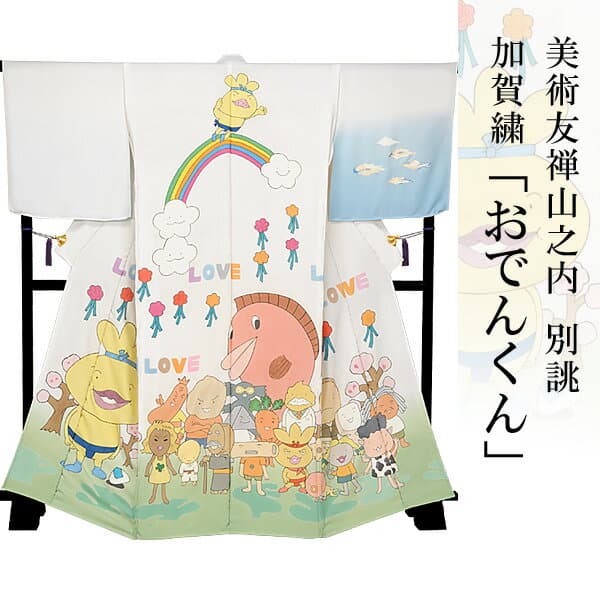
Bijutsu Yuzen Yamanouchi "Oden-kun" Kaga Embroidery Houmongi Kimono
訪問着 着物 きもの 【 送料無料 】【 限定品 】 美術友禅山之内訪問着 「おでんくん」 (日本刺繍工程)伝統的工芸品加賀繍
Japanese embroidery processKimonostyle(きものすたいる)
Japanese name加賀繍
Kaga embroidery comes from Ishikawa’s Kanazawa and Hakusan area, where silk, gold, and silver threads are stitched by hand into raised motifs for Buddhist textiles, kimono, obi, interiors, and small workshop pieces.
Information last updated 120 days ago
訪問着 着物 きもの 【 送料無料 】【 限定品 】 美術友禅山之内訪問着 「おでんくん」 (日本刺繍工程)伝統的工芸品加賀繍
Japanese embroidery processKimonostyle(きものすたいる)
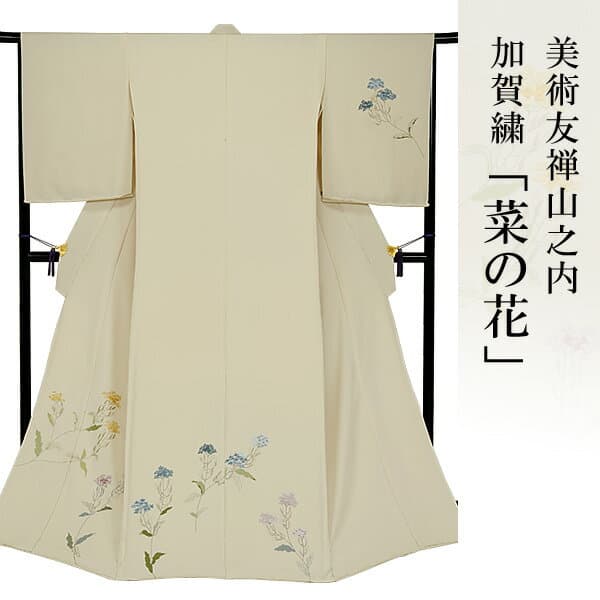
【加賀繍】訪問着 刺繍 着物 きもの 【 送料無料 】【 限定品 】 美術友禅山之内訪問着 「菜の花」 (日本刺繍工程)伝統的工芸品加賀繍
Japanese embroidery processKimonostyle(きものすたいる)
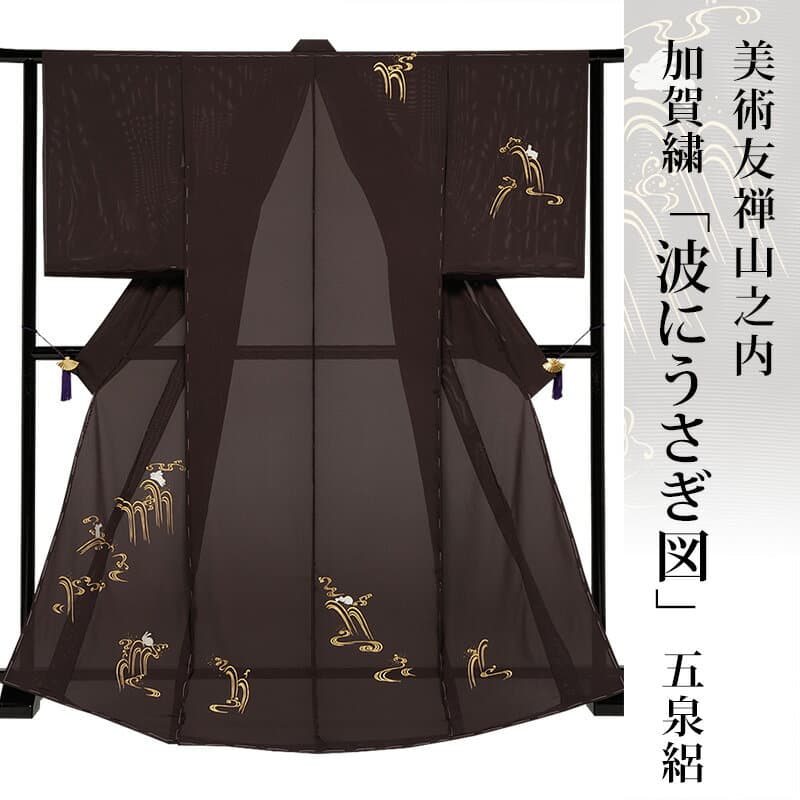
【純金×加賀繍】訪問着 純金加工 刺繍 着物 きもの 【 送料無料 】【 限定品 】 美術友禅山之内訪問着 「波にうさぎ図」五泉絽 (日本刺繍工程 本金使用)伝統的工芸品加賀繍
Gosen ro silk, dark brownKimonostyle(きものすたいる)
First time buying on Rakuten? How residents in Japan order →
Kaga embroidery begins with a clear geography: Kanazawa City and Hakusan City in Ishikawa. Its surface is built by hand, one stitch at a time, with colored silk, gold thread, and silver thread rising from cloth. The early setting includes Buddhist altar cloths, priests’ robes, and embroidered Buddhist images, while later uses include obi, visiting kimono, framed pictures, room lamps, and tapestries. Around today’s workshops and museum programs, the same fine stitching can also appear on hair accessories, magnets, small frames, keyholders, straps, earrings, and other small objects.
The making area of Kaga embroidery is centered on Kanazawa City and Hakusan City. The Ishikawa Kaga Embroidery Cooperative names workshops in Kanazawa neighborhoods such as Mikuchishinmachi, Shinkanda, Yamashina, Yokaichi, Hojiimamachi, and Izumino, along with a workshop in Hakusan’s Minato-machi. As of April 2023, the cooperative also listed 14 traditional craft specialists, placing the embroidery in a living network of ateliers, representatives, and teaching spaces rather than in a single workshop alone.
The visible character of Kaga embroidery comes from colored silk thread, gold thread, and silver thread. These materials are sewn into raised motifs, giving obi and visiting kimono a surface shaped by shine, color, and height. A museum exhibition on Kaga embroidery presented materials, tools, processes, technique samples, applied works, and 55 displayed pieces, making the relationship between thread and finished textile easier to see through actual works.
Embroidery can be finished by hand or by machine, and Kaga embroidery belongs to the hand-stitched method. That pace limits mass production, yet it allows fine handling and textured surfaces that machine processing is described as unable to produce in the same way. On obi, visiting kimono, and interior objects, the raised pattern is built by repeated stitches that hold silk, gold, and silver threads in place.
The early context of Kaga embroidery lies in Buddhist textiles. In the early Muromachi period, with the spread of Buddhism into the Kaga area, a hand embroidery technique from Kyoto was used for altar cloths, priests’ robes, and embroidered Buddhist images. Later, the same thread-based language moved into garments, especially obi and visiting kimono, where silk, gold, and silver threads could carry color and luster on the body.
Kaga embroidery also extends beyond clothing. Framed embroidery pictures, room lamps decorated with washi and embroidery thread, tapestries, and other interior pieces place the technique on walls, lampshades, and room surfaces. The museum exhibition brought together 55 works, including applied pieces, while workshops reduced the scale further into hair accessories, magnets, mini frames, keyholders, straps, earrings, and similar objects that can be handled closely.
In Kanazawa’s Mikuchishinmachi, Kaga Embroidery IMAI carries forward the work of Nui no Imai, founded in 1912, and offers hands-on courses, a three-day stay program, and regular embroidery classes. That example should be read as one workshop’s path, not as the history of the whole family. Alongside the cooperative’s Kanazawa and Hakusan ateliers and museum workshops, it shows how a fine textile technique is taught through both full-scale craft practice and small objects.
Kaga embroidery is easiest to read through its materials: silk thread, gold thread, silver thread, cloth, and the repeated movement of the hand. Those stitches lead back to altar cloths and priests’ robes, then outward to obi, visiting kimono, framed pictures, room lamps, tapestries, and small workshop pieces. In Kanazawa and Hakusan, the surface remains slow, raised, and human-scaled.
Compiled from public records and official sources; see the recognition links below. Details may change over time.
Where this product is officially registered, designated, or recognized in Japan.
Traditional craft
Designated a Traditional Craft (dentō kōgeihin) by Japan's Ministry of Economy, Trade and Industry.
Sources1
It is written as 加賀繍 in Japanese. Search Rakuten and other Japanese sites with that spelling — the English name will not bring up the listings.
Kaga embroidery is a hand embroidery technique from the Kanazawa and Hakusan area of Ishikawa Prefecture. Artisans build raised motifs stitch by stitch using colored silk, gold thread, and silver thread. The craft's early context includes Buddhist altar cloths and priests' robes, while later uses extend to obi, visiting kimono, and interior decor. As of April 2023, the local cooperative listed 14 traditional craft specialists working in Kanazawa and Hakusan.
A museum exhibition displayed 55 Kaga embroidery works alongside materials, tools, processes, and technique samples. In the early Muromachi period, the technique is described as arriving in the Kaga area with the spread of Buddhism from Kyoto. The hand-stitched process limits mass production but allows fine handling and textured surfaces. Workshop formats include small items such as hair accessories, magnets, mini frames, keyholders, straps, earrings, and piercings.
Kaga embroidery decorates obi and visiting kimono with raised motifs in silk, gold, and silver thread. Historically, it was used mainly for Buddhist altar cloths and priests' robes as religious ornamentation. Kaga Embroidery IMAI offers regular embroidery classes aimed at people training to become future traditional craft specialists.
Naturally dyed textiles shed some colour on first wash. Hand-wash separately with a neutral detergent, avoid long soaking and bleach, and dry in the shade to prevent fading. Silk, ramie, and traditionally dyed pieces often need professional cleaning — the care label on the listing takes precedence.
Most options are shelf-stable, boxed, and travel well, so they suit gifting or bringing home. Confirm the final storage and delivery terms on the Rakuten listing.
On Rakuten: the shops listed here right now are Kimonostyle(きものすたいる). We don't sell directly; purchase, payment, stock, and delivery are all handled on the Rakuten product page.