 3 images
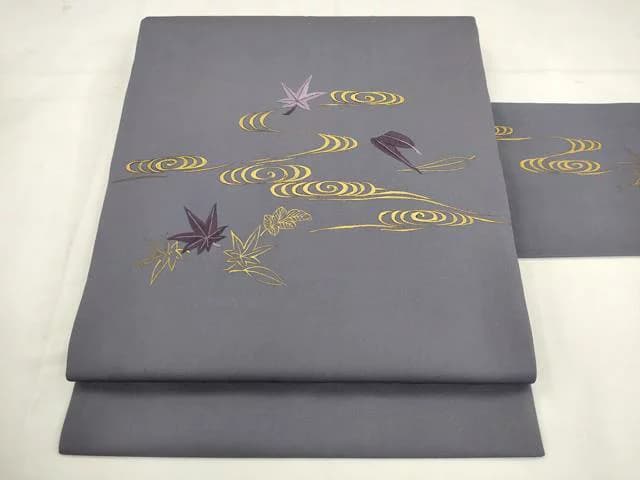
Goda Minetaro Kyo-nui Shioze Silk Nagoya Obi with Embroidered Flowing Water and Dancing Leaves
平和屋着物●京繍作家 合田峰太郎 塩瀬 九寸名古屋帯 刺繍 流水舞葉文 金彩 正絹 逸品 AABK6825pf
371 cm x approx. 30 cm平和屋
Japanese name京繍
From the Nuidonotsukasa office of the Heian capital to twelve-layer robes, Noh costume, kosode, and framed works, Kyō-nui builds pattern with cloth and multicolored thread.
Information last updated 37 days ago
3 images平和屋着物●京繍作家 合田峰太郎 塩瀬 九寸名古屋帯 刺繍 流水舞葉文 金彩 正絹 逸品 AABK6825pf
371 cm x approx. 30 cm平和屋
First time buying on Rakuten? How residents in Japan order →
Kyō-nui begins in Kyoto through a concrete arrangement of people and place. After the Heian capital was established, the Nuidonotsukasa, an office that held embroidery artisans, was placed in Kyoto, and embroidery began to decorate clothing. The surface of Kyō-nui comes from one needle, multicolored thread, silk or linen ground, and gold or silver thread. Its path can be followed through twelve-layer robes, warriors’ dōbuku, Noh costumes, kosode, fukusa, wall hangings, embroidered pictures, kimono goods, festival items, and framed works.
Before Kyō-nui’s Kyoto line, Japanese embroidery is tied to Asuka-period embroidered Buddhist hangings, where Buddhist images were expressed with thread. Kyō-nui’s Kyoto connection becomes clear after the Heian capital, when the Nuidonotsukasa was placed in the city and embroidery began to serve clothing decoration.
That beginning gives the name Kyō-nui a practical basis: Kyoto, garment use, embroidery artisans, cloth, and needlework meet in the same setting. The craft’s later range still points back to that arrangement, because its patterns are sewn onto objects made to be worn, handled, displayed, or used in ceremony.
In Kyō-nui, embroidery means sewing a pattern onto cloth with one needle and multicolored thread. Silk fabric and linen fabric form the ground, while silk thread, gold thread, and silver thread create line, color, and sheen on the surface.
The finished expression depends on composition, thread-color arrangement, and stitching method working together. When embroidery is added to dyed kimono or woven textile, the pattern no longer belongs only to dye or weave; it rises from the relationship between cloth, thread, and the path of the needle.
Kyō-nui appears through a sequence of named garments. It was used for Heian-period twelve-layer robes, Kamakura-period warriors’ dōbuku, Muromachi-period Noh costumes, and Azuchi-Momoyama kosode, with that movement continuing into the Edo period.
After the Meiji era, the surface widened beyond clothing alone. Fukusa, wall hangings, and embroidered pictures opened newer forms of use, while today’s range includes kimono goods, festival items, and framed works. The same needlework can therefore be read across dress, ceremony, and interior display.
About thirty techniques are now used in Kyō-nui, and named methods include nuikiri, koma-tsukai-nui, and matsui-nui. The list keeps the viewer from reducing the work to a single decorative gesture; the visible pattern is built from choices in stitch, thread, color, and ground fabric.
Within the small movement of one needle, method changes the surface. Silk and linen provide the ground, multicolored silk thread shapes the image, and gold or silver thread adds a separate material presence. The detail of Kyō-nui sits in those controlled decisions rather than in broad ornament alone.
The maker community also has a dated line. The predecessor of the Kyoto Embroidery Cooperative was established on October 1, 1897, and the cooperative marked its 120th anniversary in March 2018. Its activities include introducing Kyō-nui to wider audiences, training successors, and supporting technical study for future practitioners.
Kyō-nui also has a contemporary viewing setting in Kyoto. In October 2025, works were presented at Kyoto City Kyocera Museum alongside Kyō-Kanoko shibori and Kyō-kumihimo, with pieces including kimono, small goods, and Western clothing, plus short explanations by exhibitors.
Kyō-nui’s continuity is visible in concrete things: the Nuidonotsukasa of Heian Kyoto, silk and linen grounds, gold and silver thread, twelve-layer robes and Noh costumes, kosode and fukusa, framed works and museum presentations. Seen up close, the craft is Kyoto embroidery made legible through cloth, named methods, and the measured route of a needle.
Compiled from public records and official sources; see the recognition links below. Details may change over time.
Where this product is officially registered, designated, or recognized in Japan.
Traditional craft
Designated a Traditional Craft (dentō kōgeihin) by Japan's Ministry of Economy, Trade and Industry.
Sources1
It is written as 京繍 in Japanese. Search Rakuten and other Japanese sites with that spelling — the English name will not bring up the listings.
Kyo embroidery (Kyō-nui) is Kyoto embroidery that uses one needle and multicolored thread to sew patterns onto cloth. Its Kyoto origin ties to the Heian capital, when the Nuidonotsukasa office for embroidery artisans was placed in Kyoto and embroidery began decorating clothing. It later appeared on twelve-layer robes, warriors' dōbuku, Noh costumes, and kosode. After the Meiji era it extended to fukusa, wall hangings, and embroidered pictures, and today spans kimono goods, festival items, and framed works.
Kyō-nui uses silk and linen grounds along with silk thread, gold thread, and silver thread. About thirty Kyō-nui techniques are used today, including named methods such as nuikiri, koma-tsukai-nui, and matsui-nui. The predecessor of the Kyoto Embroidery Cooperative was established on October 1, 1897, and the cooperative marked its 120th anniversary in March 2018. In October 2025, Kyō-nui works were shown at Kyoto City Kyocera Museum alongside Kyō-Kanoko shibori and Kyō-kumihimo, including kimono, small goods, and Western clothing.
Kyō-nui is used to decorate kimono and other clothing. It is also used for fukusa, wall hangings, and embroidered pictures as decorative and ceremonial items. Kyō-nui works can be viewed at exhibitions held in Kyoto.
Naturally dyed textiles shed some colour on first wash. Hand-wash separately with a neutral detergent, avoid long soaking and bleach, and dry in the shade to prevent fading. Silk, ramie, and traditionally dyed pieces often need professional cleaning — the care label on the listing takes precedence.
Most options are shelf-stable, boxed, and travel well, so they suit gifting or bringing home. Confirm the final storage and delivery terms on the Rakuten listing.
On Rakuten: the shops listed here right now are 平和屋. We don't sell directly; purchase, payment, stock, and delivery are all handled on the Rakuten product page.