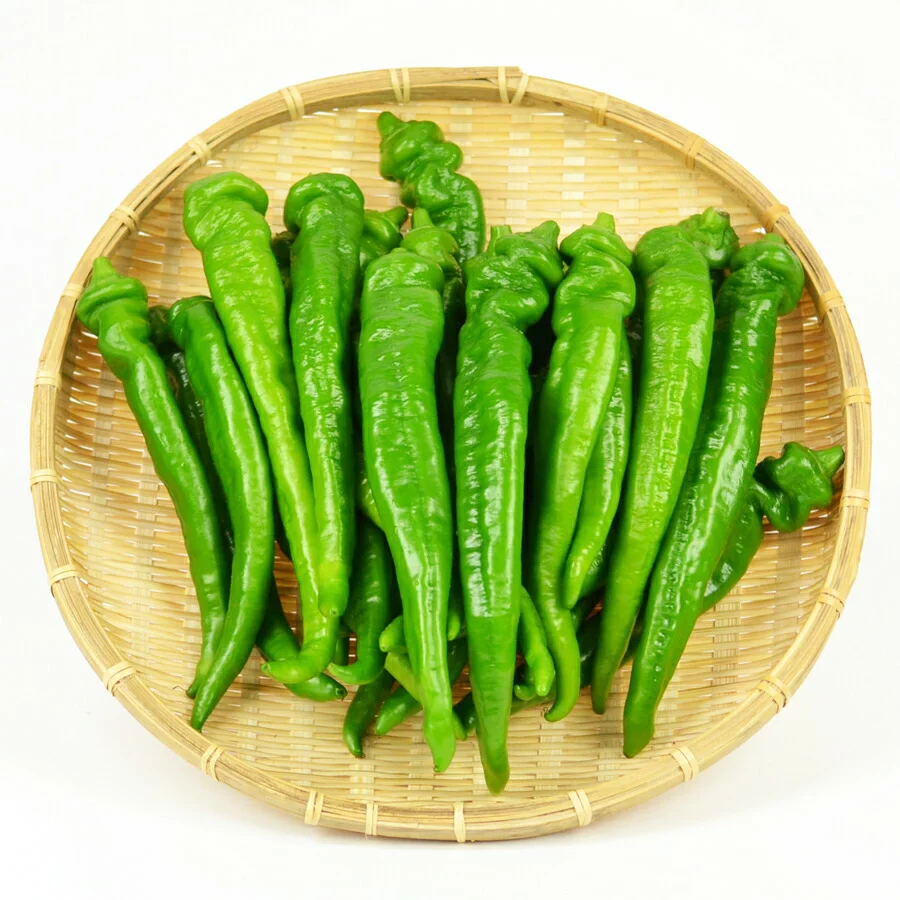
GI-Certified Manganji Amatou Kyoto Sweet Peppers
【GI認証】万願寺甘とう 箱売り 京野菜 京のブランド産品
1kg box, about 30 peppers
夜の八百屋さん
5.0 / 1 reviews
Japanese name万願寺甘とう
Grown from Maizuru's Manganji district out to Ayabe and Fukuchiyama, this big, thick-fleshed summer pepper has few seeds and almost no heat — easy to simmer, grill, or fry.
Information last updated 36 days ago
Ordering from abroad works when the recipient has a Japanese address.
None of the listings below mentions gift wrapping in its name; check noshi and wrapping options on the Rakuten page.
【GI認証】万願寺甘とう 箱売り 京野菜 京のブランド産品
夜の八百屋さん
5.0 / 1 reviews
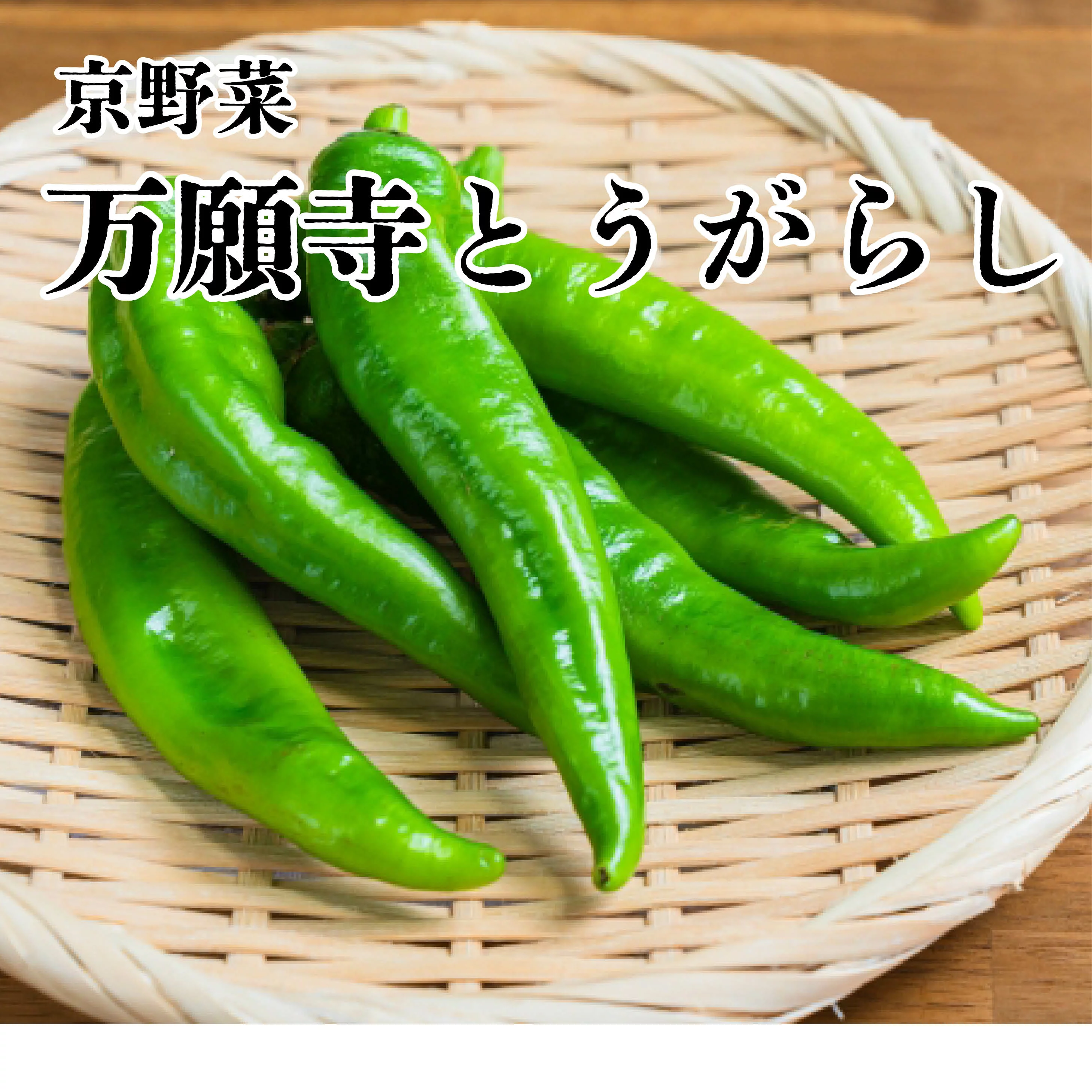
万願寺とうがらし 200g【京野菜 万願寺唐辛子 万願寺甘とう お取り寄せ】
新鮮野菜とフルーツのお店 旬屋
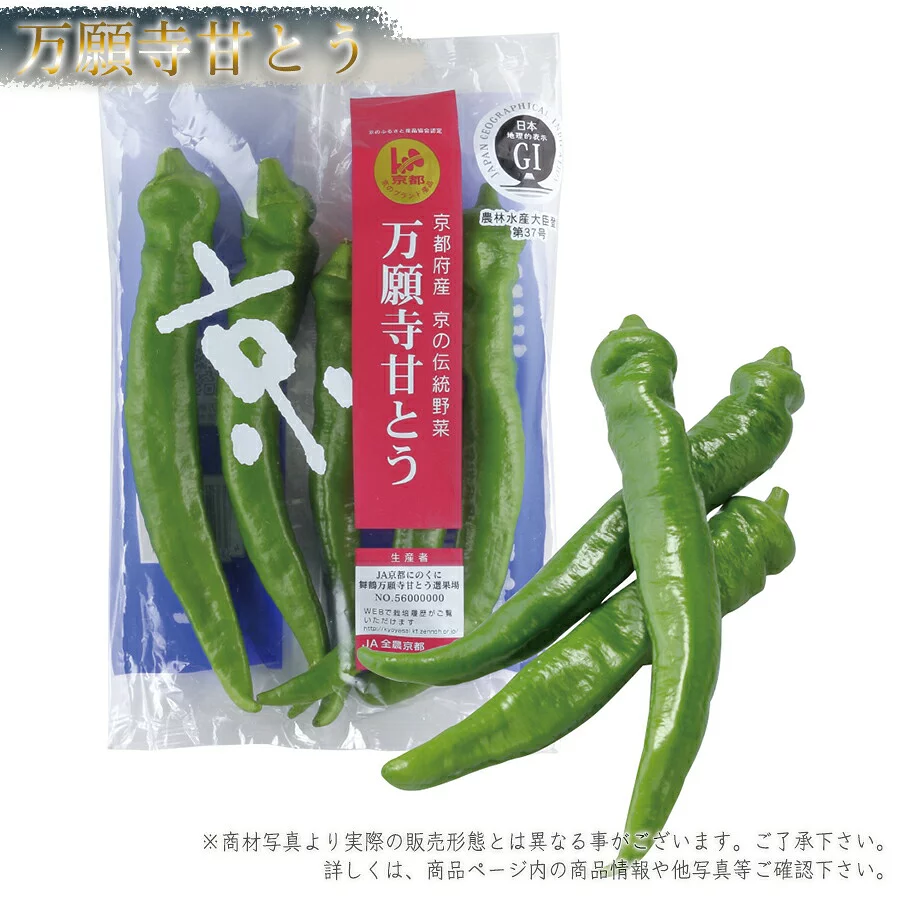
【GI認証】万願寺甘とう 単品 京野菜 京のブランド産品
夜の八百屋さん
First time buying on Rakuten? How residents in Japan order →
In the Manganji district of Maizuru, in the north of Kyoto Prefecture, farmers are said to have begun growing an unusually large pepper sometime between the late Taisho and early Showa periods. For years it stayed mainly on the family table. Cultivation later spread across the JA Kyoto Ninokuni area — Maizuru, Ayabe, and Fukuchiyama — in the Chutan part of northern Kyoto. The pepper is thick-fleshed and sweet, carries few seeds, and has little to no pungency, so home cooks can simmer, grill, or fry it without much fuss.
Manganji Amatou takes its name from the Manganji district of Maizuru. Maizuru City says the summer vegetable is thought to have appeared there between the late Taisho and early Showa periods, when it was grown largely for households' own tables; JA sales began only in 1983. Today it is cultivated across the JA Kyoto Ninokuni area — the cities of Maizuru, Ayabe, and Fukuchiyama — in the Chutan region of northern Kyoto. In 1989 it became the first vegetable Kyoto recognized among its branded produce, a sign that the prefecture counts this large pepper from the Maizuru area as one of its representative kyo-yasai.
Size is the first thing you notice. Maizuru City describes a pepper packed with flesh and substantial in the hand, with a distinctive pinched waist that makes it easy to recognize — the city even calls it the king of peppers. The flesh is thick yet soft, with a sweetness to it, and the seeds are few, so it eats easily. Kyoto City gives the same cues: no pungency, thick flesh, few seeds. The flesh carries vitamins A and C, which the city notes make it a good summer vegetable.
That thick flesh shapes how households cook it. Kyoto City notes the pepper has no heat, thick walls, and few seeds, so it is simple to simmer, grill, or fry at home; Maizuru City sums it up as good simmered, good grilled, good fried. Fried whole or set over a flame, the heavy flesh holds up to the heat and keeps its sweetness. The season runs from a first arrival around the middle of May through to late November, according to Kyoto City — summer into late autumn.
Manganji togarashi is the name of the pepper variety; Manganji Amatou is the name used for the produce shipped from this growing area, and a set of concrete rules sits behind it. Maizuru City explains that plants kept for seed are grown separately, their seed collected, and the resulting seedlings handed out to producers so the shipped fruit stays consistent. At shipping, the peppers are sorted by length, color, and shape: shuhin runs about 13 to 23 centimeters with especially good color and form, yuhin is 13 centimeters or longer, and ryohin is 10 centimeters or longer. Those limits on size and appearance are how the name is held to a standard in the field.
The work in the field comes from people. Growers in Maizuru, Ayabe, and Fukuchiyama make up the JA Kyoto Ninokuni Manganji Amatou producers' council, with 326 members across the Chutan area. The farming here is not easy: the council's chair, Jun Soeda, points to short winter daylight, snow damage, cramped plots, and crop damage from wildlife. Even so, new entrants keep arriving year after year, and growers under 40 now make up more than a fifth of the group. They share what they learn about cultivation, and Soeda notes that newcomers often land in the top ten of the group's own yield rankings. In 2022 the council took the top prize in the group category of a national farming award — recognition that landed on people who have kept a growing area going under difficult conditions.
From a few household plots in Maizuru's Manganji district to the fields of Chutan today, Manganji Amatou has stayed large, thick-fleshed, and sweet through steady practice: plants kept for seed, seedlings passed to growers, and fruit sorted by size and shape. From summer into late autumn it is simmered, grilled, and fried, and it is kept going by people willing to farm short-daylight winters and narrow plots in the north of Kyoto.
Compiled from public records and official sources; see the recognition links below. Details may change over time.
Where this product is officially registered, designated, or recognized in Japan.
It is written as 万願寺甘とう in Japanese. Search Rakuten and other Japanese sites with that spelling — the English name will not bring up the listings.
Manganji Sweet Peppers (Manganji Amatou) are a Kyoto Prefecture pepper named after the Manganji district of Maizuru, where they are said to have been grown from the late Taisho to early Showa period. They are now cultivated in Maizuru, Ayabe, and Fukuchiyama. The pepper is large with a distinctive waist, thick but soft flesh, sweetness, few seeds, and little to no pungency.
Manganji togarashi is the pepper variety name; Manganji Amatou is the name used for produce shipped from this area. At shipping it is graded by length, color, and shape: shuhin about 13–23 cm, yuhin 13 cm or longer, ryohin 10 cm or longer. Plants kept for seed are grown separately, their seed collected, and the seedlings distributed to producers. In 1989 it became the first vegetable recognized among Kyoto's branded produce.
It can be simmered, grilled, or fried at home. Kyoto City reports arrivals from around mid-May through late November.
Storage varies by product — shelf-stable, refrigerated, or frozen — and is stated on the packaging and the Rakuten listing. Shelf-stable processed foods usually need refrigerating once opened and eating within a few days; chilled and frozen items go straight into storage on arrival. Treat the best-before date on the physical packaging as authoritative.
Many countries restrict bringing in this kind of food, so check your destination's rules before you pack it, or enjoy it in Japan.
On Rakuten: the shops listed here right now are 夜の八百屋さん, 新鮮野菜とフルーツのお店 旬屋. We don't sell directly; purchase, payment, stock, and delivery are all handled on the Rakuten product page.