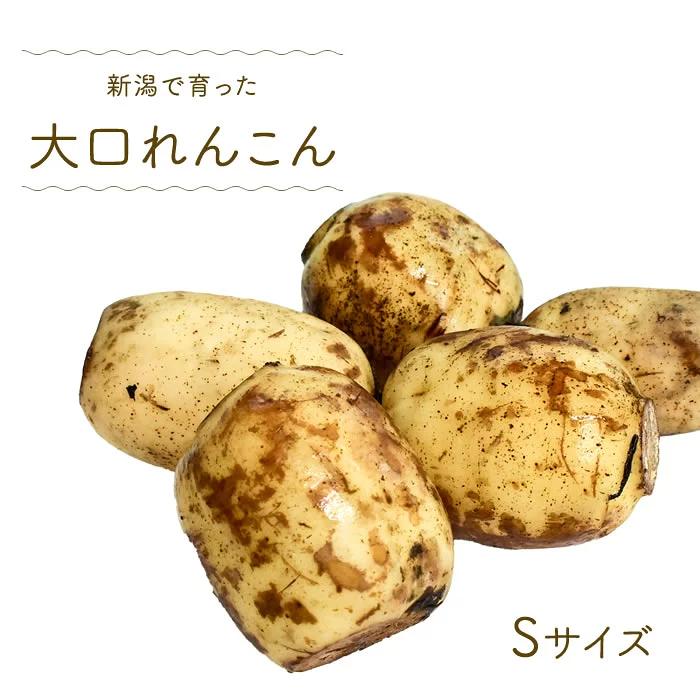
Niigata Oguchi Lotus Root
旬 野菜【税込 バラ売り】新潟県産 大口れんこん 小さいSSサイズ 約500g(れんこん はす 蓮 新潟れんこん)上越フルーツ
small SS size, approx. 500g
上越フルーツ 楽天市場店
Japanese name大口れんこん
In the Nakanoshima district of Nagaoka, paddies once judged too rich for rice now grow a pale, sweet lotus root that farmers lift by hand through the cold.
Information last updated 35 days ago
Ordering from abroad works when the recipient has a Japanese address.
None of the listings below mentions gift wrapping in its name; check noshi and wrapping options on the Rakuten page.
旬 野菜【税込 バラ売り】新潟県産 大口れんこん 小さいSSサイズ 約500g(れんこん はす 蓮 新潟れんこん)上越フルーツ
上越フルーツ 楽天市場店
旬 野菜【税込 バラ売り】新潟県産 大口れんこん 小さいSSサイズ 約1kg(れんこん はす 蓮 新潟れんこん)上越フルーツ
上越フルーツ 楽天市場店
【送料無料 消費税込】新潟県産 特産大口れんこん 小さい 2Sサイズ 約2kg 1箱(れんこん れんこん 大口)上越フルーツ
上越フルーツ 楽天市場店
First time buying on Rakuten? How residents in Japan order →
In the Nakanoshima district of Nagaoka, in Niigata Prefecture, the fields are paddies — flat, low, made to hold water. A century or so ago some of them turned out to be too rich for rice, and farmers put lotus root in instead. What they grow now is pale and crisp and faintly sweet, cut clean and white, and most of it leaves the ground in the cold months. Follow it from the flooded beds to the New Year table and you get the shape of a working district: the water that changed the crop, the hand-work of a winter harvest, and the growers teaching the next ones how it is done.
Compiled from public records and official sources; see the recognition links below. Details may change over time.
Where this product is officially registered, designated, or recognized in Japan.
Geographical Indication (GI)
Registered under Japan's Geographical Indication Protection System, run by the Ministry of Agriculture, Forestry and Fisheries.
Sources1
It is written as 大口れんこん in Japanese. Search Rakuten and other Japanese sites with that spelling — the English name will not bring up the listings.
Oguchi lotus root (大口れんこん) is grown in the Nakanoshima district of Nagaoka City, Niigata Prefecture, the prefecture's largest lotus-root growing area. About a century ago, paddies too nutrient-rich for rice were turned over to lotus root. The root has a white cut surface that resists discoloration when cooked, and a crisp, sweet bite. It is served at New Year in osechi and the local dish noppe.
Oguchi renkon is registered under Japan's national geographical-indication (GI) protection system. The early variety is Enomoto and the late variety is Darma; a JA account calls the district Japan's only growing area for Darma. Darma ships from mid-October to about the following May, with roughly 1,200 tons expected across both varieties. During the December-to-mid-January peak, the association ships about 8 tons a day.
Use it in New Year osechi and the local dish noppe. Larger roots suit kinpira and tempura, and grated root is mixed into hamburger-style patties. Smaller roots can be lightly boiled for salad to enjoy their texture and sweetness.
Storage varies by product — shelf-stable, refrigerated, or frozen — and is stated on the packaging and the Rakuten listing. Shelf-stable processed foods usually need refrigerating once opened and eating within a few days; chilled and frozen items go straight into storage on arrival. Treat the best-before date on the physical packaging as authoritative.
Many countries restrict bringing in this kind of food, so check your destination's rules before you pack it, or enjoy it in Japan.
On Rakuten: the shops listed here right now are 上越フルーツ 楽天市場店. We don't sell directly; purchase, payment, stock, and delivery are all handled on the Rakuten product page.