 3 images
Banyu Plane by Kengo Usui
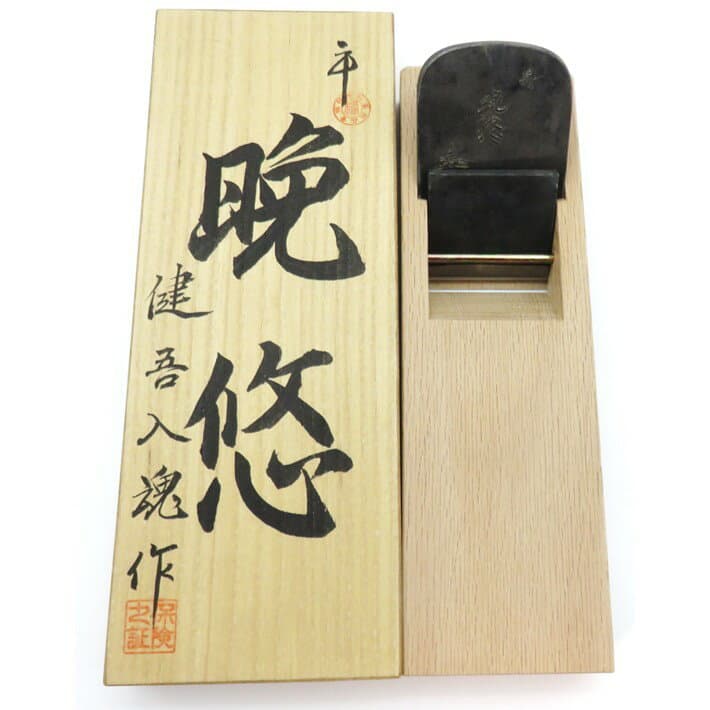
晩悠 鉋 箱入り 寸八 碓氷健吾氏作【越後与板打刃物 青紙 スーパー 鋼 釜地】
sunpachi, boxed道具屋 善左衛門
Japanese name越後与板打刃物
Echigo Yoita forged blades center on chisels, planes, masakari axes, and chouna adzes, carrying iron, carbon steel, mud quenching, hand sharpening, and woodworking use into one regional tool family.
Information last updated 120 days ago
3 images晩悠 鉋 箱入り 寸八 碓氷健吾氏作【越後与板打刃物 青紙 スーパー 鋼 釜地】
sunpachi, boxed道具屋 善左衛門
First time buying on Rakuten? How residents in Japan order →
In the Yoita area of Nagaoka, Niigata, Echigo Yoita forged blades are closely tied to carpentry tools. Chisels, planes, masakari axes, and chouna adzes form the center of the family, with carving knives, kiridashi, and yari-kanna named around it. The craft is easiest to understand through concrete work: iron and carbon steel are heated, forge-welded, hammered, mud-quenched for chisels and planes, sharpened by hand, and fitted with wooden handles or plane bodies for use on wood.
Echigo Yoita forged blades come from the Yoita area of Nagaoka City in Niigata Prefecture. The central tools are chisels, planes, masakari axes, and chouna adzes, and the wooden handles and wooden plane bodies are part of how those blades become working tools. A 1986 craft designation marks the same place, tool group, and making-method boundary behind the name.
At a woodworking bench, a Yoita plane depends on both blade and wooden body; a chisel needs its edge and handle to work as one. Iron and carbon steel have to be shaped into an edge, then joined to a handle or plane body before a carpenter or woodworker can use the tool to pare, shave, or shape wood.
The local account places the beginning in the 16th century, when a retainer of Uesugi Kenshin invited sword-making craftsmen from Kasugayama to make forged blades in Yoita. That origin is best read through its concrete anchors: Kasugayama, Yoita, swordsmithing skill, and forged blades.
By the mid-Edo period, Yoita carpentry tools were known by names such as Doihi-nomi and Hyobu-nomi. In the Meiji period, sword-making craftsmen began producing planes, and Yoita planes became known beyond the immediate production area, moving the regional craft more clearly toward woodworking blades.
The material base is iron and carbon steel. Blade steel is heated in a furnace and forge-welded by hammering; in chisels, carbon steel wraps the small cutting-edge area, while planes use a two-layer attachment that joins metals with different properties into one blade.
Shaping happens while the steel is hot, as hammer blows lengthen and spread the blade material. The process descriptions include base metal heated above 1,200 degrees Celsius, forge welding at around 1,000 to 1,100 degrees, and timing judged from flame color and heated metal color. Those numbers belong to a working scene of furnace heat, spring hammer blows, water-touched hammers, and practiced eyes.
For chisels and planes, quenching begins with a mud coating and then rapid cooling. Mud, water, the heated blade, and the cooling surface make the heat treatment visible as a material process rather than an abstract craft phrase.
After quenching, blade setting, sharpening, polishing, and finishing are done by hand. Wooden handles and wooden plane bodies complete the tools; the edge, handle, and body have to work together before a chisel can cut cleanly or a plane can ride evenly across wood.
A plane brings together a forged blade, a polished surface, and a wooden body. In the Yoita process, the plane begins with a two-layer metal attachment, passes through hammer shaping, mud quenching, hand sharpening, and finishing, and is finally set into a wooden body.
Thin shaving makes that work visible. When a skilled user produces a very fine shaving, the blade edge, the softer base metal, the polish, and the plane body adjustment are all being tested at once. The plane becomes a meeting point for forge work, finishing work, and the woodworker’s hand.
Every year in early June, the Mini Kezurokai is held at Yoita Gymnasium, where participants gather for thin plane-shaving competition. The event takes a skill usually seen in workshops or at a woodworking bench and places it around one shared act: drawing a plane across wood to make the thinnest shaving possible.
The gathering also includes visits to local blacksmith workshops. For visitors to Yoita, the furnace, hammering, sharpening, and plane adjustment connect to a real district of Nagaoka: the gymnasium, nearby workshops, and the hands that keep the tools in use.
Funahiro Hamono Seisakusho is based in Yoita, Nagaoka, and Funatsu Yuji is introduced as the third-generation Funahiro. His personal path began in 1961, when he learned chisel forging by watching his father; he later studied metal heat treatment at the prefectural metal industry testing site in Sanjo and steel heat treatment in Yasugi.
That biography should not stand in for every Yoita workshop, but it gives heat treatment a human outline. One Yoita maker, working with tools such as planes, chisels, and yari-kanna, turned a problem with cutting performance into study of steel, heat, and the finished edge.
Echigo Yoita forged blades are grounded in a specific place and a specific set of woodworking tools. Iron and carbon steel pass through furnace heat, forge welding, hammer shaping, mud quenching, and hand finishing before they meet wooden handles or plane bodies as chisels, planes, masakari axes, and chouna adzes. From the local account of Kasugayama swordsmiths in the 16th century to Edo-period carpentry-tool names, early-summer shaving competitions, and one maker’s study of heat treatment, the Yoita craft stays close to material, process, and use.
Compiled from public records and official sources; see the recognition links below. Details may change over time.
Where this product is officially registered, designated, or recognized in Japan.
Traditional craft
Designated a Traditional Craft (dentō kōgeihin) by Japan's Ministry of Economy, Trade and Industry.
Sources1
It is written as 越後与板打刃物 in Japanese. Search Rakuten and other Japanese sites with that spelling — the English name will not bring up the listings.
Echigo Yoita forged blades are a Niigata metalwork tradition from the Yoita area of Nagaoka, centered on chisels, planes, masakari axes, and chouna adzes. The tools are made from iron and carbon steel through furnace heating, hammer forge welding, shaping, mud-coated quenching for chisels and planes, and hand blade setting, sharpening, and finishing. Local accounts trace the craft to 16th-century swordsmiths from Kasugayama, and each early June the Mini Kezurokai at Yoita Gymnasium features thin plane-shaving demonstrations.
Related tools named in the craft account include carving knives, kiridashi, and yari-kanna. Wooden handles and wooden plane bodies are part of the completed tools. By the mid-Edo period, Yoita carpentry tools were known by names such as Doihi-nomi and Hyobu-nomi. The Mini Kezurokai also includes visits to local blacksmith workshops.
Chisels, planes, masakari axes, and chouna adzes are tools used by carpenters and woodworkers. Carving knives, kiridashi, and yari-kanna are used for carving and small woodworking tasks. According to the Funahiro profile, the maker aims to leave high-quality carpentry tools for young master builders who continue Japanese traditional architecture.
Keep wood, bamboo, and lacquer out of prolonged soaking, dishwashers, and direct sun — wipe dry after use and let them air out in the shade. For metal and fabric goods, follow the care notes on the listing.
Most options are shelf-stable, boxed, and travel well, so they suit gifting or bringing home. Confirm the final storage and delivery terms on the Rakuten listing.
On Rakuten: the shops listed here right now are 道具屋 善左衛門. We don't sell directly; purchase, payment, stock, and delivery are all handled on the Rakuten product page.