 3 images
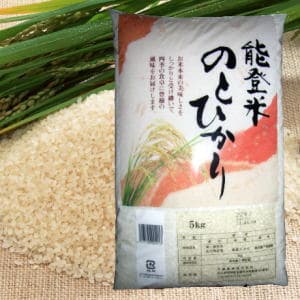
Noto Rice Noto Hikari Polished Rice
【送料無料!】新米!能登米 のとひかり(能登ひかり)5kg×3袋
5kg x 3 bagsんまーいmon屋
4.8 / 22 reviews
Japanese name能登米
Noto Rice gathers Koshihikari from Nanao, Suzu, Hakui, Shika, Hodatsushimizu, Nakanoto, Anamizu, and Noto around shared cultivation rules and visible paddy work: lower chemical inputs, mechanical weeding, scarecrows, and seasonal water management.
Information last updated 119 days ago
3 images【送料無料!】新米!能登米 のとひかり(能登ひかり)5kg×3袋
5kg x 3 bagsんまーいmon屋
4.8 / 22 reviews
3 images新米!能登米 のとひかり(能登ひかり)5kg
5 kgんまーいmon屋
4.7 / 17 reviews
 3 images
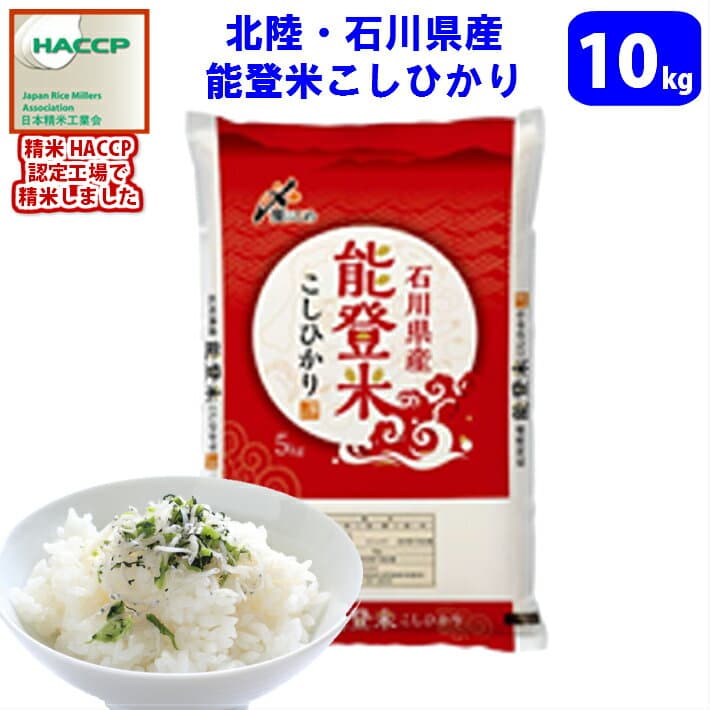
お一人様1個まで【令和7年産】【精米】世界農業遺産 北陸・石川県能登米こしひかり(日本海)10kg 送料無料!!(北海道は別途700円かかります。 沖縄配送不可。)
2025 harvest, 10kgMARUCHUU
4.6 / 14 reviews
First time buying on Rakuten? How residents in Japan order →
In Ishikawa’s Noto area, Noto Rice begins with Koshihikari and with a rule shared across the region’s paddies. The name connects Nanao, Suzu, Hakui, Shika, Hodatsushimizu, Nakanoto, Anamizu, and Noto, then rests on a concrete farming rule: chemical fertilizer and pesticide components are reduced by at least 30 percent compared with conventional cultivation, while field work includes mechanical weeding, machinery idling stops, scarecrows, and living-creature surveys.
Compiled from public records and official sources; see the recognition links below. Details may change over time.
Where this product is officially registered, designated, or recognized in Japan.
Regional collective trademark
Registered as a Regional Collective Trademark with the Japan Patent Office.
Sources1
It is written as 能登米 in Japanese. Search Rakuten and other Japanese sites with that spelling — the English name will not bring up the listings.
Noto rice is Koshihikari grown in the Noto area of Ishikawa Prefecture, across municipalities such as Nanao, Suzu, Hakui, Shika, Hodatsushimizu, Nakanoto, Anamizu, and Noto. It is grown under a shared cultivation rule that lowers chemical fertilizer and pesticide use compared with conventional farming, and it is tied to Noto's satoyama-satoumi landscape and paddy practices.
The shared Noto Rice cultivation rule reduces chemical fertilizer and pesticide components by at least 30 percent compared with conventional cultivation. Paddy practices connected with Noto Rice include mechanical weeding, stopping idling farm machinery, setting scarecrows, and living-creature surveys. After Noto's satoyama-satoumi landscape became a Globally Important Agricultural Heritage System in June 2011, six JA organizations in Noto began Noto Rice cultivation work. Special-cultivation Noto Rice guidance uses a 50 percent reduction threshold for targeted pesticides and chemical-fertilizer nitrogen compared with local standards.
As a Koshihikari rice, Noto Rice is used as everyday cooked rice, supplied throughout the year.
Storage varies by product — shelf-stable, refrigerated, or frozen — and is stated on the packaging and the Rakuten listing. Shelf-stable processed foods usually need refrigerating once opened and eating within a few days; chilled and frozen items go straight into storage on arrival. Treat the best-before date on the physical packaging as authoritative.
Most options are shelf-stable, boxed, and travel well, so they suit gifting or bringing home. Confirm the final storage and delivery terms on the Rakuten listing.
On Rakuten: the shops listed here right now are んまーいmon屋, MARUCHUU. We don't sell directly; purchase, payment, stock, and delivery are all handled on the Rakuten product page.