 3 images
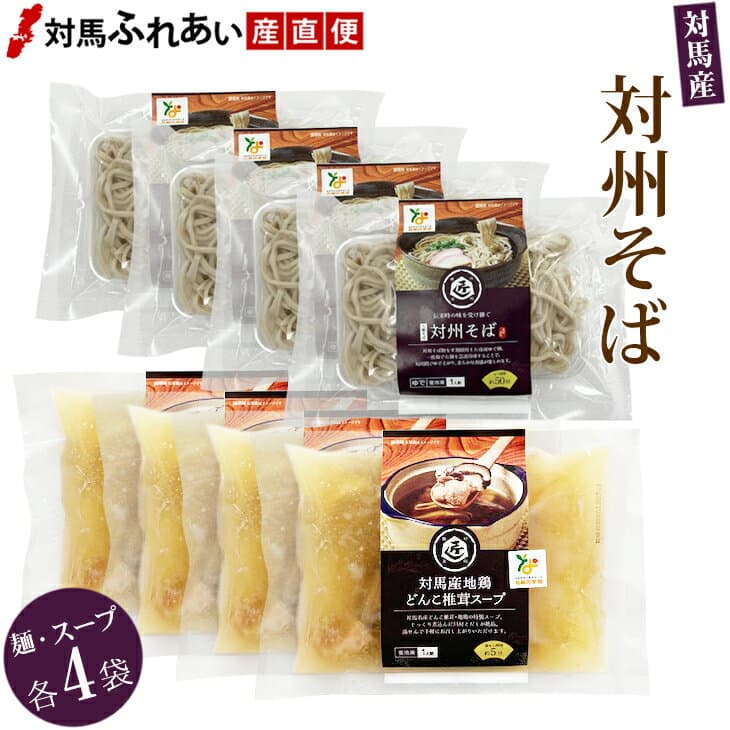
Tsushima Specialty Taishu Soba with Local Chicken and Shiitake Soup
対馬名物 対州そば4袋 対馬産地鶏・椎茸スープ×4袋セット つしま蕎麦 麺類 お取り寄せ 九州 長崎 つしま
180g x 4 noodle packs + 200ml x 4 soup packs対馬ふれあい産直便
4.6 / 19 reviews
Japanese name対州そば
Taishu soba begins with native buckwheat grown in Tsushima City, then moves through island hulling, milling, firm noodles, and bowls of mori, kake, and iriyaki soba.
Information last updated 119 days ago
3 images対馬名物 対州そば4袋 対馬産地鶏・椎茸スープ×4袋セット つしま蕎麦 麺類 お取り寄せ 九州 長崎 つしま
180g x 4 noodle packs + 200ml x 4 soup packs対馬ふれあい産直便
4.6 / 19 reviews
First time buying on Rakuten? How residents in Japan order →
Taishu soba begins in Tsushima City, Nagasaki Prefecture. The name refers to native buckwheat grown on the island and to foods made from it, including hulled buckwheat, buckwheat flour, and edible whole buckwheat. The older name Taishu points back to Tsushima itself, while the path after harvest remains concrete: hulling and milling take place on the island before the grain becomes flour or noodles.
The place boundary is central to Taishu soba: it is grown in Tsushima City, Nagasaki Prefecture. After harvest, the same buckwheat can become edible whole grain, hulled grain, or flour, so the name connects the field crop with the ingredients used in cooking.
Tsushima lies along the route by which buckwheat is considered to have reached Japan from China through the Korean Peninsula. Its island setting reduced chances of crossing with buckwheat from other regions, while island producers and local administration maintained the native variety over time.
Tsushima has little flat land suited to farming, and rice was historically scarce on the island. Those conditions made slopes useful for buckwheat cultivation, tying the crop to practical household food.
Soba dishes are still described as common in Tsushima homes. In that everyday setting, Taishu soba means specific things: sloped fields, island-grown buckwheat, flour for noodles, and meals prepared at home.
Taishu soba grains are relatively small, yet they are described as well-filled, heavy, and even in size. Before the buckwheat becomes flour or noodles, those grain traits give the product family a visible material character.
As noodles, Taishu soba has firm bite, aroma, flavor, and a slight bitterness. That bitterness is associated with traits close to an older buckwheat type, giving both cold mori soba and warm kake soba a clear taste and texture.
The work after harvest also stays on Tsushima. Buckwheat grains are hulled and milled on the island, becoming hulled buckwheat and buckwheat flour; edible whole buckwheat can also carry the same name.
This path gives the name a practical boundary. It points to native buckwheat grown on Tsushima, post-harvest work done on the island, and a material range that runs from whole grain to flour.
At the table, Taishu soba appears as cold mori soba and warm kake soba. The firm texture and slight bitterness keep the buckwheat present even in these straightforward noodle forms.
It also appears in iriyaki soba, a Tsushima local dish. That use places the buckwheat inside island meals: the crop moves from slope fields to hulled grain, flour, noodles, and a named bowl tied to Tsushima.
In recent decades, producers, local administration, and JA worked on maintaining the purity of Taishu soba. By 2006, all buckwheat harvested on Tsushima had been switched to Taishu soba, turning variety maintenance into a concrete change in the island’s harvests.
The continuity rests on people and process: island producers, administrative support, JA involvement, native seed management, and the annual movement from sloped fields to grain, flour, and noodles.
Taishu soba is best understood through Tsushima’s particulars: Nagasaki Prefecture island fields, limited flatland, small well-filled grains, hulling and milling on the island, firm noodles with slight bitterness, and meals such as mori soba, kake soba, and iriyaki soba. Its shape comes from the route between the island’s slopes and the bowls where the buckwheat is still eaten.
Compiled from public records and official sources; see the recognition links below. Details may change over time.
Where this product is officially registered, designated, or recognized in Japan.
Geographical Indication (GI)
Registered under Japan's Geographical Indication Protection System, run by the Ministry of Agriculture, Forestry and Fisheries.
Sources1
It is written as 対州そば in Japanese. Search Rakuten and other Japanese sites with that spelling — the English name will not bring up the listings.
Taishu soba is native buckwheat grown in Tsushima City, Nagasaki Prefecture, and the name also covers hulled buckwheat, buckwheat flour, and edible whole buckwheat made from it. Tsushima's island setting reduced crossing with outside varieties, while limited flatland and scarce rice tied slope-grown buckwheat to home cooking. Its grains are small, well-filled, heavy, and even, and as noodles it has firm bite, aroma, flavor, and slight bitterness.
By 2006, all buckwheat harvested on Tsushima had been switched to Taishu soba. The name Taishu is connected with an older name for Tsushima. Tsushima lies on the route by which buckwheat is considered to have reached Japan from China through the Korean Peninsula. After becoming known as a local specialty, Taishu soba is offered by many restaurants on Tsushima.
It can be served cold as mori soba or hot as kake soba. It is used in iriyaki, a Tsushima dish that may include soba. Soba dishes are still commonly eaten at home on Tsushima, where rice was historically scarce and buckwheat was grown on slopes.
Storage varies by product — shelf-stable, refrigerated, or frozen — and is stated on the packaging and the Rakuten listing. Shelf-stable processed foods usually need refrigerating once opened and eating within a few days; chilled and frozen items go straight into storage on arrival. Treat the best-before date on the physical packaging as authoritative.
Most options are shelf-stable, boxed, and travel well, so they suit gifting or bringing home. Confirm the final storage and delivery terms on the Rakuten listing.
On Rakuten: the shops listed here right now are 対馬ふれあい産直便. We don't sell directly; purchase, payment, stock, and delivery are all handled on the Rakuten product page.