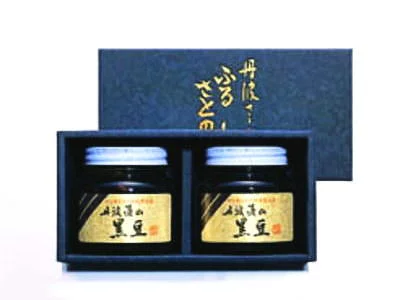
Tamba-Sasayama Simmered Black Soybeans
【丹波直品】丹波篠山黒豆煮【内容詳細】・丹波篠山黒豆煮
390g x 2 (200g solids each)
【築地通販】おいしいなショップ
Japanese name丹波篠山黒豆
In Tanba-Sasayama, Hyogo, villages short of irrigation water raised an unusually large-grained black soybean with sacrifice plots, dug-and-dried soil, and tall ridges — a bean tied to chosen seed, cooperative fields, and tables from New Year osechi to everyday simmered pots.
Information last updated 36 days ago
Ordering from abroad works when the recipient has a Japanese address.
None of the listings below mentions gift wrapping in its name; check noshi and wrapping options on the Rakuten page.
【丹波直品】丹波篠山黒豆煮【内容詳細】・丹波篠山黒豆煮
【築地通販】おいしいなショップ
 3 images
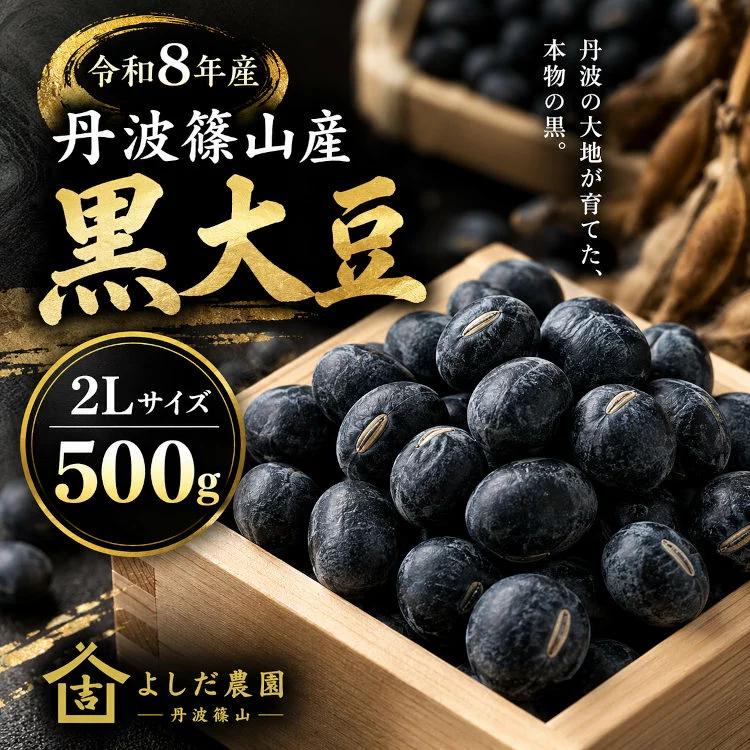
【先行予約開始】黒豆 丹波篠山産 丹波黒 500g 2Lサイズ 令和8年産 黒大豆 国産 兵庫県産 丹波黒大豆 おせち 黒豆煮 黒豆ご飯 煮豆 お正月 農家直送 よしだ農園 丹波篠山 黒豆 新豆
よしだ農園
4.0 / 1 reviews
First time buying on Rakuten? How residents in Japan order →
In Tanba-Sasayama City, Hyogo, black soybeans grow along tall, built-up ridges of earth. The local agricultural cooperative describes Tanba-Sasayama kuromame as a black soybean raised in the area's particular climate and land — and the largest-grained of the black soybean varieties — set out for New Year osechi dishes and simmered into nimame through the rest of the year. The bean's character sits in the fields. Because rainfall is light and irrigation water scarce, villages once set aside some paddies as unwatered "sacrifice fields," dug and dried the soil in a method called horisaku, and heaped it into high ridges for the crop. Seed runs along the same line: farmers chose good seed over generations, the Habe family selected and spread the "Habe-guro" bean between the late Edo and Meiji eras, and that work later passed to experiment stations and today's seed-production council. A cookery book from 1730 already listed the black beans of Tanshu Sasayama as a local specialty.
Tanba-Sasayama kuromame is the black soybean of Tanba-Sasayama City in Hyogo Prefecture, grown in the area's particular climate and soil, and the largest-grained among black soybean varieties. JA Tanba-Sasayama, the local agricultural cooperative, handles these beans alongside other local products such as Koshihikari rice and carries the Tanba-Sasayama name across the country. Many people first meet the bean at the table: it is a fixture of New Year osechi dishes, and through the rest of the year it is slow-simmered into nimame. To see why the bean is bound so closely to Tanba-Sasayama, it helps to walk into the fields where it grows and watch how people raised it under a shortage of water.
Black soybean growing in Tanba-Sasayama reaches back roughly three hundred years. One traceable thread appears in Ryori Momoku Chomisho, a cookery book published in 1730 (Kyoho 15). It notes that "black beans are a specialty of Tanshu Sasayama" and that the black beans of Tanshu Sasayama are good simmered and steeped — marking them, even then, as a prized specialty with real market value. The glistening simmered bean on a table today and the named specialty in that Edo-period book point to a crop from the same ground.
Light rainfall and short irrigation water around Tanba-Sasayama wrote themselves straight into how the bean is grown. To stretch the little water available, villages would leave some paddies unwatered as giseiden, or "sacrifice fields"; they dug up and sun-dried the field soil in a method called horisaku; and they heaped it into tall ridges for the crop, a practice known as high-ridge cultivation. None of this could be done by a single household alone — people sharing one water system had to talk it through and divide the work. Turning fields that could not be irrigated into dry, high-ridged ground is where Tanba-Sasayama's black soybean took root.
A good bean starts with good seed, the other edge that sets this crop apart. Farmers selected large, dependable seed to keep back, generation after generation. Between the late Edo and Meiji eras, Habe Rokubei and his son Habe Motojiro put real effort into breeding and spread a black soybean known as Habe-guro. That seed work did not stay with individual farmers: agricultural experiment stations carried it on, and today a seed-production council continues it, with local public and private bodies together maintaining the bean's genetic stock. Behind one ordinary-looking black bean stands generation after generation of choosing and keeping seed.
The crop's planted area shows how this growing region took shape in modern times. In 1960 (Showa 35), the city's Tanba-kuro covered only about 10 hectares. After the rice-acreage reduction policy began in 1971 (Showa 46), black soybeans were brought into the paddies as an income crop in place of rice, and the area climbed to about 777 hectares by 2019 (Reiwa 1), counting the green-soybean (edamame) use. For the dry-bean Tanba-kuro alone, Tanba-Sasayama City grows around 557 hectares, close to a fifth of the national area. Holding that scale up are the growing skills built from horisaku, together with joint pest control and shared machinery and facilities run through the production cooperatives — a habit of a whole settlement helping one another.
Back at the table, Tanba-Sasayama kuromame holds two clear places. The first is New Year: the dish of glossy simmered black beans in an osechi spread calls for large black soybeans like these. The second is everyday: across the whole year, the beans are slow-cooked into nimame, a home preparation tied to no season. A New Year nicety on one hand and a plain simmered pot on the other, the large bean arrives at both in its simplest cooked form. Set back against the fields of Tanba-Sasayama, that bowl of simmered beans connects to the high ridges, to the farmers who chose the seed, and to the cooperative work of the whole settlement.
The land where Tanba-Sasayama kuromame grows carries a long local history of its own. People have lived around Sasayama since the Jomon period, through Yayoi and Kofun times — the great Kumobe Kurumazuka tumulus points to a group here tied to the central powers. In 1609 (Keicho 14), Sasayama Castle was built by order of Tokugawa Ieyasu, and the castle town with the surrounding Taki district formed one complete region once called the "capital of Tanba." The old quarter keeps armor, lacquerwork, and paintings, along with fine Ojiyama ware first fired as the Sasayama domain kiln in the late Edo period; the former Sasayama District Court, built in 1891 and among the oldest wooden courthouse buildings in the country, now serves as the municipal history museum. Read the castle town and the ridged bean fields just outside it together, and the name Tanba-Sasayama holds both the fields and the castle.
The life of Tanba-Sasayama kuromame lives in specific things: giseiden, horisaku, and high ridges in fields short of water; the good seed chosen by generations of farmers and the Habe-guro they bred; a climb from about 10 hectares to several hundred as paddies were converted; and a table that runs from New Year osechi to a year of simmered pots. In 2021, this settlement-supported way of growing black soybeans was recognized as a Japan Agricultural Heritage system under a name meaning "superior seed and family farming supported by the village." Walk the Sasayama castle town, then look at the high-ridged fields beyond it, and a single black bean traces back to the ground, the water, the seed, and the people it came from.
Compiled from public records and official sources; see the recognition links below. Details may change over time.
Where this product is officially registered, designated, or recognized in Japan.
Regional collective trademark
Registered as a Regional Collective Trademark with the Japan Patent Office.
Sources1
It is written as 丹波篠山黒豆 in Japanese. Search Rakuten and other Japanese sites with that spelling — the English name will not bring up the listings.
Tamba-Sasayama black soybeans (kuromame) are large-grained black soybeans grown in Tanba-Sasayama City, Hyogo Prefecture, described as the largest-grained of the black soybean varieties. They are used for New Year osechi and for simmered beans year-round. Because rainfall and irrigation water are limited, farmers developed giseiden sacrifice fields, horisaku soil-digging, and high-ridge cultivation.
Between the late Edo and Meiji eras, Habe Rokubei and his son Habe Motojiro bred and spread the black soybean known as Habe-guro. A 1730 cookery book, Ryori Momoku Chomisho, recorded the black beans of Tanshu Sasayama as a specialty. Tanba-Sasayama City's Tanba-kuro area grew from about 10 hectares in 1960 to roughly 777 hectares in 2019, including edamame use. The black soybean cultivation of Tanba-Sasayama was recognized as a Japan Agricultural Heritage system in 2021.
The beans are used for osechi dishes at New Year. They are also simmered into nimame throughout the year.
Storage varies by product — shelf-stable, refrigerated, or frozen — and is stated on the packaging and the Rakuten listing. Shelf-stable processed foods usually need refrigerating once opened and eating within a few days; chilled and frozen items go straight into storage on arrival. Treat the best-before date on the physical packaging as authoritative.
Many countries restrict bringing in this kind of food, so check your destination's rules before you pack it, or enjoy it in Japan.
On Rakuten: the shops listed here right now are 【築地通販】おいしいなショップ, よしだ農園. We don't sell directly; purchase, payment, stock, and delivery are all handled on the Rakuten product page.