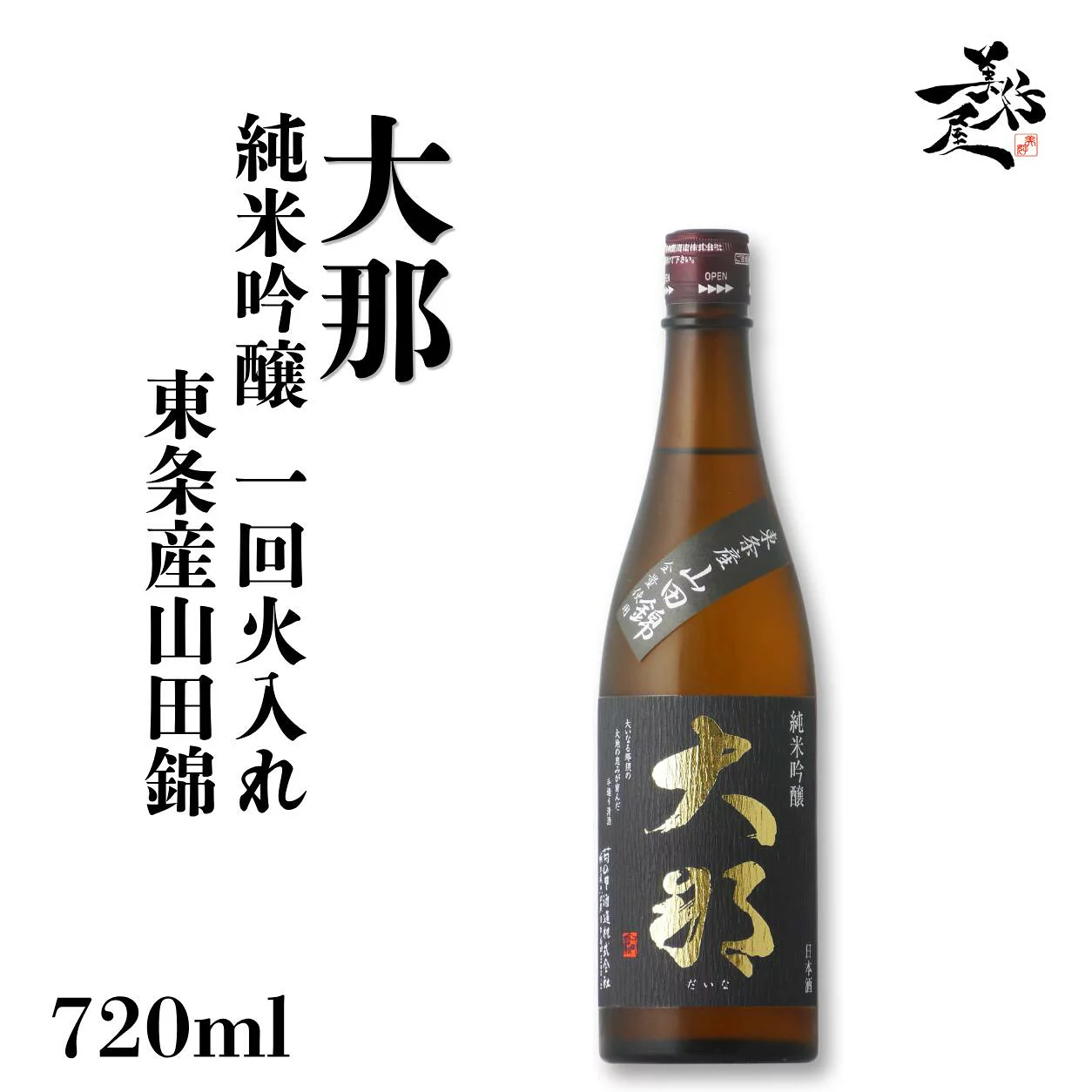
Daina Junmai Ginjo Single-Pasteurized Tojo Yamada Nishiki Sake
大那 純米吟醸 一回火入れ 東条産山田錦 720ml 日本酒 地酒 お酒 限定品 人気銘柄 おすすめ 美味しい日本酒 取扱い店 栃木県 菊の里酒造 特約店 だいな daina 美好屋酒店 有名 人気 飲みやすい ギフト プレゼント お祝い 贈り物 誕生日 退職祝い 結婚祝い 還暦祝い
美好屋酒店 〜美酒を求めて〜
5.0 / 2 reviews
Japanese name東条産山田錦
In the Tojo hills of Kato City, wide day-and-night temperature swings and well-drained terraces shape a brewing rice prized for its large grains and starchy shinpaku core.
Information last updated 36 days ago
Ordering from abroad works when the recipient has a Japanese address.
The listing below is sold as a gift in the shop's own wording (ギフト, のし対応 …), marked “Gift-ready”.
大那 純米吟醸 一回火入れ 東条産山田錦 720ml 日本酒 地酒 お酒 限定品 人気銘柄 おすすめ 美味しい日本酒 取扱い店 栃木県 菊の里酒造 特約店 だいな daina 美好屋酒店 有名 人気 飲みやすい ギフト プレゼント お祝い 贈り物 誕生日 退職祝い 結婚祝い 還暦祝い
美好屋酒店 〜美酒を求めて〜
5.0 / 2 reviews
First time buying on Rakuten? How residents in Japan order →
North of the Rokko ridgeline in Hyogo Prefecture, the land breaks into narrow valleys and stepped paddies. This is the Tojo area of Kato City, where growers raise Yamada Nishiki rice for the brewing vat rather than the dinner bowl, selling it to sake makers as brown rice. Cool night air sliding down from the Tamba highlands, terraces that drain fast after rain, and a wide gap between daytime and nighttime temperatures all shape the grain here — enough that brewers ask for the rice by the name of the place it comes from.
Tojo Yamada Nishiki is rice of the Yamada Nishiki variety grown in the Tojo area of Kato City, Hyogo, and moved on to breweries as brown rice for brewing. The name points at that ground: it is a protected regional collective trademark held by the local agricultural cooperative, which keeps the name on grain raised in these particular paddies rather than Yamada Nishiki from elsewhere. Kato City sits within North Harima, the belt that supplies roughly eight out of ten grains of Yamada Nishiki grown across Japan, which anchors the rice to a specific stretch of country.
The Tojo valleys open to the north of the Rokko Mountains, with the Tamba highlands rising beyond them. On summer nights Rokko walls off the warm air coming in from the sea while cooler air drains down from Tamba, so the temperature falls sharply after dark and the daily swing runs wide. The paddies are terraced and drain quickly, and this combination of cool nights and fast-draining stepped fields is what growers connect to good Yamada Nishiki. The Tojo growing ground is rated in the top 'Special A' grade for sake-rice land, and an old line among growers — buy sake rice by looking at the land first — puts the weight exactly there.
Yamada Nishiki began as a cross made in 1923 at the Hyogo prefectural agricultural experiment station, with Yamadaho as the mother plant and Tankan Wataribune as the father. The new line was then taken to the sake-rice trial ground in present-day Sawabe, Kato City, and grown alongside about twenty other varieties to see which suited the local land; it came out ahead, was named Yamada Nishiki in 1936, and was listed as a Hyogo recommended sake-rice variety. The trial ground sits in the same city that grows Tojo Yamada Nishiki today, so the rice in these paddies traces back to breeding work carried out a short distance away.
Brewers judge sake rice by a short list of traits: a large grain, a visible shinpaku — the opaque white core at the center of the kernel — a relatively low protein level, and kernels that are full, even, and heavy by the thousand. Yamada Nishiki carries all of these and is rated at the top of the sake-rice field because of it. Sake brewed from Yamada Nishiki is described as mellow and clean in body, among the finest results obtainable from today's brewing rice. The phrasing growers return to — good sake begins with good rice-growing — treats the grain itself, and the ground under it, as the first step in the brewery.
The same plant that brewers prize is hard to farm. Yamada Nishiki grows taller stems than most rice, which makes it tip and lodge in wind and rain, and it yields less grain per field, so a crop demands a high level of skill to bring in. Weather and local ground still decide much of the outcome, and even with machinery doing more of the work, the result leans on what the grower knows from experience. Warmer seasons and more frequent typhoons have added to the difficulty, keeping the margin for error narrow in the paddies that carry the Tojo name.
Yamada Nishiki is now about eighty years into its life as a named variety, and the Tojo growers describe holding to it through hard years — carrying on with a brewing rice even after the war, when rice to eat was short and fetched high prices. That choice has met rising demand: as breweries across Japan make more ginjo and daiginjo, calls for Yamada Nishiki have outrun what the fields can supply. The continuity in Tojo is less a matter of ceremony than of growers deciding, season after season, to keep a difficult grain in the ground.
Tojo Yamada Nishiki comes together from a chain of conditions held in one place: the cold night air behind Rokko, the fast-draining terraces, a variety bred a few kilometers away, and growers who have kept raising a demanding grain for the brewery across generations. Follow the rice back through those links and it reads as a short account of one corner of Kato City — its slopes, its weather, and the people who farm it for sake.
Compiled from public records and official sources; see the recognition links below. Details may change over time.
Where this product is officially registered, designated, or recognized in Japan.
It is written as 東条産山田錦 in Japanese. Search Rakuten and other Japanese sites with that spelling — the English name will not bring up the listings.
Tojo-grown Yamada Nishiki is brewing-use brown rice of the Yamada Nishiki variety, grown in the Tojo area of Kato City, Hyogo Prefecture. The area lies north of the Rokko Mountains with the Tamba highlands beyond, giving a wide day-night temperature swing, and its well-drained terraced paddies suit the variety. The rice has large grains, a shinpaku core and low protein, but its tall stems lodge easily and yields are low, so it depends on grower skill.
The name is protected as a regional collective trademark (registration No. 5264709, registered 2009) held by the Minori Agricultural Cooperative; the designated goods are brewing-use Yamada Nishiki brown rice from the Tojo area of Kato City. The whole Tojo area is rated a 'Special A' sake-rice ground. About 80% of the Yamada Nishiki grown in Japan comes from Hyogo's North Harima region, which includes Kato City. Yamada Nishiki was created by a 1923 cross of Yamadaho (mother) and Tankan Wataribune (father), tested at the sake-rice trial site in present-day Sawabe, Kato City, and named in 1936 as a Hyogo recommended sake-rice variety.
It is used to brew sake from Yamada Nishiki brown rice. The Tojo association notes rising demand from brewers making ginjo and daiginjo.
Storage varies by product — shelf-stable, refrigerated, or frozen — and is stated on the packaging and the Rakuten listing. Shelf-stable processed foods usually need refrigerating once opened and eating within a few days; chilled and frozen items go straight into storage on arrival. Treat the best-before date on the physical packaging as authoritative.
Rules for this kind of item vary by destination, and fresh, raw or unprocessed versions are the ones most often restricted, so check the rules where you're flying before you pack it.
On Rakuten: the shops listed here right now are 美好屋酒店 〜美酒を求めて〜. We don't sell directly; purchase, payment, stock, and delivery are all handled on the Rakuten product page.