 3 images
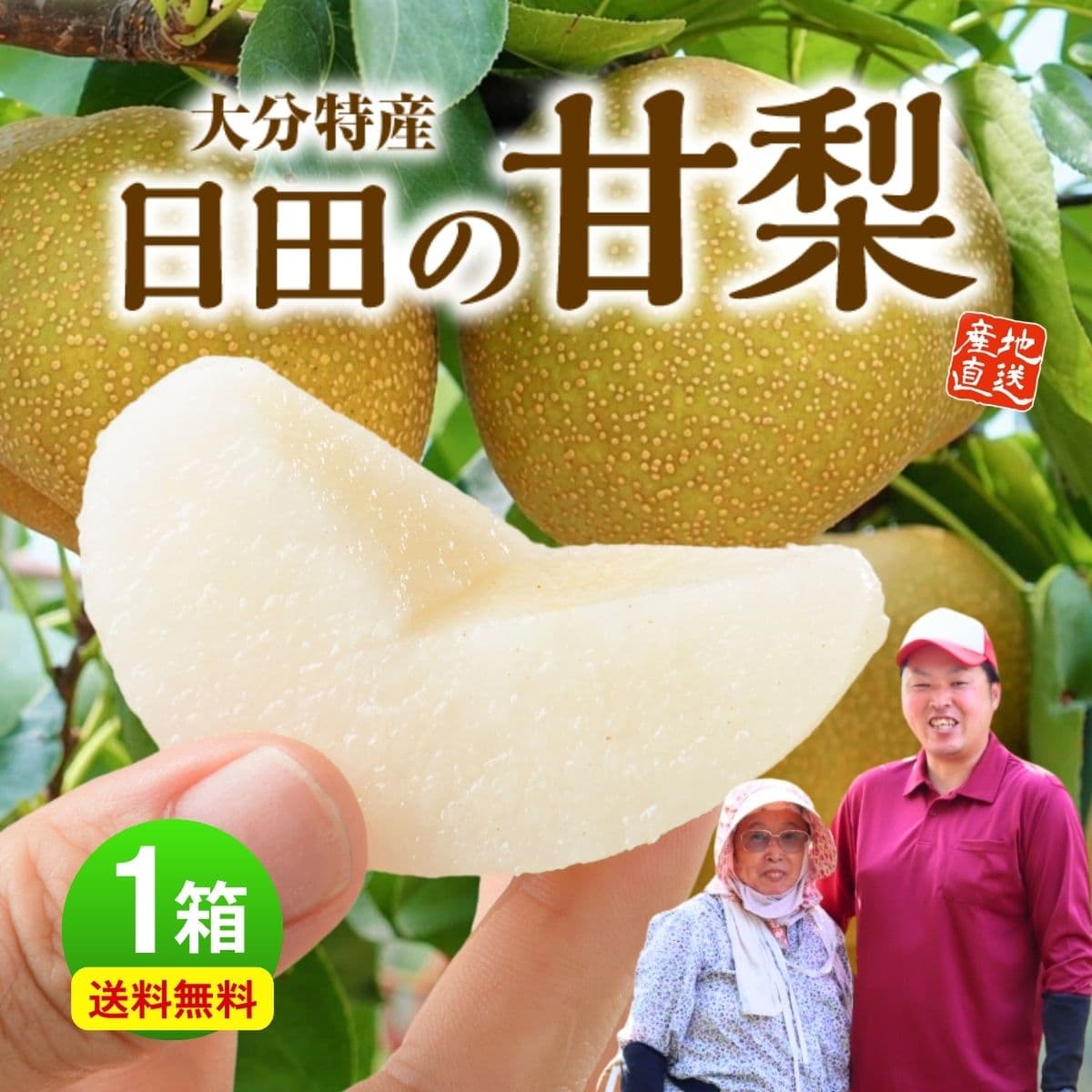
【楽天ランキング1位】 梨 和梨 日田の甘梨 1箱 約2kg 3〜6玉 産地 農家 直送 大分 日田 新高 新興 愛宕 日田梨 甘梨 甘い 大分産 プレゼント 贈答 ギフト 39ショップ
まるかじり九州
4.0 / 13 reviews
¥3,450
View on Rakuten →Japanese · new tab
From Oita's Hita basin, where the temperature swing lifts sugar — harvested August–October.
Hita Nashi is a pear fruit family identified by the regional trademark name “日田梨.” Its place connection comes from the name itself: Hita in Oita is the regional identity attached to this fruit, so the gift story is about a fresh local pear rather than a maker-specific craft or award.
Information updated 60 days ago
3 imagesまるかじり九州
4.0 / 13 reviews
¥3,450
View on Rakuten →Japanese · new tab
Hita pears belong to Oita Prefecture’s pear country, where Hita, Nakatsu, and Yufu are named as major growing areas. The Hita name carries about a century of cultivation, and the fruit is known here for sweetness and abundant juice. Shipments begin in July and continue toward late October through varieties such as Kosui, Niitaka, Shinko, and Toyosato. Behind that seasonal line are 82 members of the JA Oita Hita Pear Division, about 134 hectares of orchards, and a grading facility where optical sensors check sweetness, acidity, color, damage, and weight.
The place behind Hita pears begins with Oita’s growing map. Hita City stands with Nakatsu and Yufu as a major pear-producing area in the prefecture, and Hita pear carries about 100 years of cultivation behind its name. The fruit’s sweetness and juiciness are tied to that place name, the July-to-late-October shipment season, and the fresh Japanese pears moving out from local orchards each year. Any cultural meaning here is concrete: Hita City, a century-scale cultivation span, and orchards that bring Japanese pears to market from summer into late October. The local name is carried by fruit, season, and handling work.
Several named varieties carry the Hita pear season. Kosui begins in July, and names such as Niitaka, Shinko, and Toyosato continue the run toward late October. Toyosato is treated by Oita Prefecture as an original pear variety of the prefecture, and it appears in local plans around renewed export shipments and Taiwan promotion. Weather also enters the variety calendar. In one reported season, spring low temperatures and summer heat reduced Niitaka shipment volume and affected export-use shipments. The seasonal line from Kosui to Niitaka, Shinko, and Toyosato therefore includes fruit names, temperature, shipment volume, and the work of presenting Oita pears abroad.
Hita pear is carried by a producer community with a defined scale. The JA Oita Hita Pear Division has 82 members cultivating about 134 hectares, and the group continues exchanges and training around the phrase “Hita pears through the seasons.” The community is concrete: member count, orchard area, training, and the yearly work of linking varieties to shipment periods. Tradition in this case means people and acreage that can be counted. Eighty-two members tend pear orchards across about 134 hectares, then use meetings and training to keep the seasonal work aligned. That scale gives the Hita name a shared agricultural base.
After harvest, Hita pears move through the JA Oita Hita pear grading facility. Fruit is separated for fresh-market and processing use, then optical sensors check sweetness, acidity, color, damage, and weight; those checks are reflected in shipment grades. The grading process connects the sensory character of sweet, juicy pears to managed details such as sugar, acidity, appearance, physical condition, and fruit weight. Fresh-fruit sorting and packing can be understood as postharvest handling from selection through packing. In Hita’s case, the memorable details are the optical sensors and the five checked qualities. Before the fruit leaves the grading shed, the pear has already been read through sweetness, acidity, color, visible damage, and weight.
Current work in Hita also includes rebuilding and renewal. The Hita Pear Production Area Vision names three issues: securing new farmers, strengthening production systems including heat countermeasures, and relocating to flatter land such as new orchard blocks. After the 2017 Northern Kyushu heavy rain disaster, construction finished on new pear blocks in the Ono and Nagino districts, with winter planting planned. The renewal has names and ages attached to it. Ono and Nagino are the districts where new pear blocks were prepared after flood damage, and a graduate in their 20s from the Hita Pear Farmers School entered pear farming. A 100-year cultivation name continues through new plantings, flatter blocks, heat countermeasures, and younger farmers.
Hita pears are valued for sweetness and juiciness, and that juiciness still matters after the fruit leaves the grading shed. Japanese pears become dry when moisture evaporates, so home handling centers on newspaper, a plastic bag, and the refrigerator vegetable compartment. Because Japanese pears generally do not ripen after harvest, freshness and eating soon are part of the fruit’s seasonal rhythm. The sweetness has a physical map inside the fruit. The bottom end tends to be sweeter than the stem side, and flesh near the skin tends to have higher sugar than the center near the seeds. From sensor checks at the grading facility to juice held in the cut fruit, Hita pear’s character remains anchored in moisture, sugar, skin, and flesh.
The character of Hita pear is built from linked details: Oita’s pear-growing places, a July-to-late-October run of varieties, 82 members working about 134 hectares, and a grading shed that checks sweetness, acidity, color, damage, and weight. New blocks in Ono and Nagino and younger farmers entering the field show how a name with about 100 years of cultivation is being carried into the next season of orchards.
Compiled from public records and official sources; see the recognition links below. Details may change over time.
Where this selection is officially registered, designated, or recognized in Japan.
Regional collective trademark
Registered as a Regional Collective Trademark with the Japan Patent Office.
Sources1
Fresh produce doesn't keep, so start with the grower's note in the box. Most fruit ripens best at room temperature and is at its most fragrant when it reaches eating condition; refrigerate only once it is cut or fully ripe, and eat it soon after. Chilling too early stalls ripening and flattens the flavour. Follow the listing and the enclosed note for the specific variety.
日田梨 is a regional foods from Oita. We compile its regional connection and characteristics against official registries, local sources, and live Rakuten listings.
This is a temperature- or fragility-sensitive item — before travelling, confirm refrigerated/frozen delivery, packaging, and arrival dates on the Rakuten listing. For gifts, prefer shelf-stable, boxed options.
We don't sell directly. This page compiles Rakuten listings and affiliate links; purchase, payment, stock, and delivery all happen on the Rakuten listing.