 2 images
Sendai Miso Shoyu Josen Kura-dashi Sendai Miso
【マラソン限定クーポン配布中】仙台味噌醤油 ジョウセン 蔵出し仙台みそ 1kg × 2パック 【 まとめ買い 】
1kg x 2 packsにっぽん津々浦々
5.0 / 6 reviews
¥1,914
View on Rakuten →Japanese · new tab
Japanese name仙台みそ
This Miyagi rice miso is built from soybeans, rice koji, and salt, then shaped by a high soybean ratio, longer fermentation, Sendai castle-town history, and uses in soups, simmered dishes, grilled rice balls, shiso-maki, and bakkemiso.
Information updated 71 days ago
2 images【マラソン限定クーポン配布中】仙台味噌醤油 ジョウセン 蔵出し仙台みそ 1kg × 2パック 【 まとめ買い 】
1kg x 2 packsにっぽん津々浦々
5.0 / 6 reviews
¥1,914
View on Rakuten →Japanese · new tab
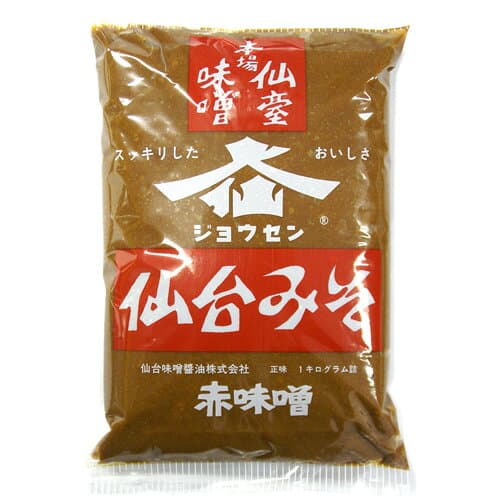
ジョウセン 仙台みそ 赤味噌 1kg 被災地特産品 ミソ 米みそ
1kg飲料食品卸売 ホールセール フジミ
4.3 / 6 reviews
¥1,161
View on Rakuten →Japanese · new tab
 3 images
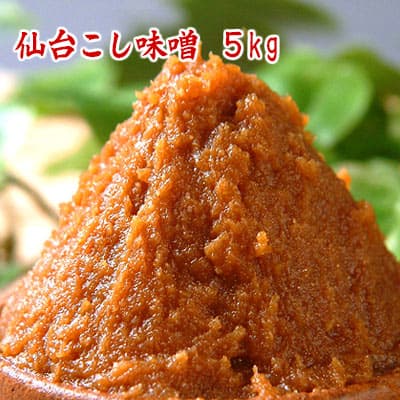
仙台こし味噌 5kg 【送料無料】 塩慣れしたキリっと辛口が特徴の仙台みそ まとめ買いの5kg 米みそ 辛口みそ 麹みそ 漉しみそ 宮城みそ 宮城県産 食品 調味料 みそ 赤みそ 【smtb-t】
5 kg生きてるみそ
4.5 / 4 reviews
¥6,600
View on Rakuten →Japanese · new tab
Sendai miso is a rice miso made from soybeans, rice koji, and salt, passed down across Miyagi Prefecture. It is known for a glossy dark yamabuki color, salt-rounded umami, and aroma; around Sendai, sunny days, cooler nights, and fertile soil are tied to the soybean and rice production behind that flavor.
The structure of Sendai miso is direct: soybeans, rice koji, and salt. Within the rice-miso family, it is marked by a comparatively high soybean ratio, which helps build its deep color, aroma, and substantial umami; Miyagi rice koji brings sweetness into the salty base. The glossy dark yamabuki color gives a visible clue to fermentation, soybeans, and koji working over time.
The place character of Sendai miso rests in Miyagi Prefecture as a whole and in conditions described around Sendai: abundant sunshine, cooler nights, and fertile soil connected with soybeans and rice. When the soybean share is high and rice koji is folded into the mash, saltiness matures into a flavor that can support a bowl of soup or a simmered dish without much paste.
The history of Sendai miso is often linked to Date Masamune. He is said to have carried the miso during the Korean campaigns, and later to have built the Goensogura in the Sendai castle town to supply military miso, entrusting production and operation to local merchants. In that setting, the paste belonged to household cooking, military provisioning, and merchant technique at the same time.
By the mid-seventeenth century, miso was also being brewed at the Sendai domain’s Oi lower residence in Edo, and surplus production was sold through Edo miso wholesalers. That movement helped the Sendai name travel beyond Miyagi, carried with soybeans, rice koji, salt, and domain-household production behind it.
Sendai miso ferments longer than lighter or shorter-fermented examples named in the Miyagi account, and its flavor deepens during that maturation. A small amount can season miso soup or simmered dishes with clear aroma and salty umami. The paste may appear as a particle type that keeps soybean texture, or as a strained type with a smoother mouthfeel, allowing the same rice miso to show different textures.
Sendai miso also appears in local side dishes. Shiso-maki mixes the paste with sesame or walnuts, wraps it in green perilla, and fries it; it is described as a side dish, tea snack, and children’s snack. Bakkemiso combines chopped fuki-no-to, grated walnut, Sendai miso, sugar, and sake, then goes onto warm rice or tofu, where spring bitterness meets the miso’s mature saltiness.
The present life of Sendai miso is carried by Miyagi’s miso and soy sauce brewing community. The Miyagi Miso and Soy Sauce Industrial Cooperative connects member makers and keeps visible activities around Sendai miso, including festivals, fairs, appraisal events, and outreach lessons for children. Through those settings, the paste moves from brewery to table to classroom while Miyagi soybean foods remain part of daily food learning.
The depth of Sendai miso comes from tangible things: Miyagi soybeans and rice koji, salt, longer maturation, particle and strained textures, and uses that run from the Goensogura and Edo domain residences to shiso-maki and bakkemiso. Its place on the Miyagi table is held by a soup bowl, a grilled rice ball, and the spring bitterness of fuki-no-to on warm rice.
Compiled from public records and official sources; see the recognition links below. Details may change over time.
Where this selection is officially registered, designated, or recognized in Japan.
Regional collective trademark
Registered as a Regional Collective Trademark with the Japan Patent Office.
Sources1
It is written 仙台みそ in Japanese. Search Rakuten and other Japanese sites with that spelling — the English name will not return the listings.
Storage varies by product — shelf-stable, refrigerated, or frozen — and is stated on the packaging and the Rakuten listing. Shelf-stable processed foods usually need refrigerating once opened and eating within a few days; chilled and frozen items go straight into storage on arrival. Treat the best-before date on the physical packaging as authoritative.
Sendai miso is a regional foods from Miyagi. We compile its regional connection and characteristics against official registries, local sources, and live Rakuten listings.
Most options are shelf-stable, boxed, and travel well, so they suit gifting or bringing home. Confirm the final storage and delivery terms on the Rakuten listing.
We don't sell directly. This page compiles Rakuten listings and affiliate links; purchase, payment, stock, and delivery all happen on the Rakuten listing.