 3 images
JA Mikkabi Shizuoka Mikan Mandarins, Premium Grade
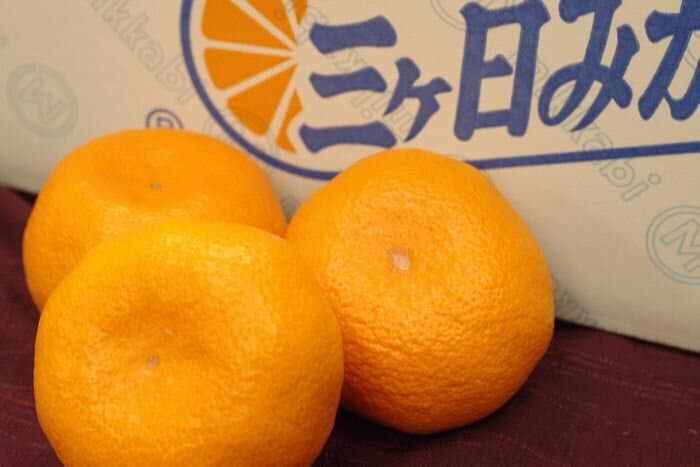
JA三ヶ日みかん通販 お歳暮静岡県みかん販売 早生・青島 約4kg S〜2L 糖度11度以上 秀品
Early or Aoshima, approx. 4kg, S-2L果物百貨店 浜中屋
4.5 / 2 reviews
Japanese name三ヶ日みかん
In Mikkabi, Hamamatsu, south-facing orchards, stony red soil, Aoshima mikan, and cool storage shape a sweet-tart citrus tied to Lake Hamana's north shore.
Information last updated 120 days ago
3 imagesJA三ヶ日みかん通販 お歳暮静岡県みかん販売 早生・青島 約4kg S〜2L 糖度11度以上 秀品
Early or Aoshima, approx. 4kg, S-2L果物百貨店 浜中屋
4.5 / 2 reviews
First time buying on Rakuten? How residents in Japan order →
Mikkabi mikan begins with a clear geography: the Mikkabi area of Hamamatsu, Shizuoka, on the north shore of Lake Hamana. The fruit is Unshu mikan, often grown on warm south-facing slopes where long sun, red soil, and stone-rich drainage help build concentrated sweetness and moderate acidity. Its winter character comes through Aoshima mikan, a large, richly flavored variety that spread in the area during the Showa 30s and can be held in cool storage after harvest.
The name Mikkabi mikan points to Unshu mikan produced in and around Mikkabi, a citrus district on the lake side of Hamamatsu. The district sits on the north shore of Lake Hamana, and JA Mikkabi works as a local agricultural cooperative around the crop. That makes the fruit's place easy to picture: orchards on the Hamana side of Shizuoka, a warm production area where citrus has become the local specialty.
The orchards are often described through their ground before their trees: reddish soil from the foot of the Akaishi Mountains, stones mixed into the fields, and drainage that lets roots push downward. The soil is acidic and not especially fertile, a demanding condition that growers balance with soil pH management. For mikan trees, too much water can dilute sweetness; in Mikkabi, drainage, slope, and sunlight work together so fruit can concentrate sugar while keeping acidity in the taste.
Citrus growing in Mikkabi is traced back to the Edo period, then widened after the Meiji era as the warm climate and well-drained soil suited orchards. In the Showa 30s, Aoshima mikan spread through the area. It mattered because it brought a larger fruit, strong sweetness, rich flavor, and storage suitability, giving Mikkabi a winter variety that could keep its character beyond harvest.
The taste is prepared before harvest day. Growers manage soil pH, prune trees to keep them healthy, and time field work so orchards stay in steady condition. The community side is part of the work too: producers and JA staff share attention to consistent quality, while fruit is graded by size and sugar level before it moves into the next stage.
Aoshima mikan suits winter because it has a somewhat thicker peel and holds up well after harvest. Storage is active care in Mikkabi; fruit is kept with humidity control, ozone, and a temperature around 5 degrees Celsius to maintain freshness. After that cool period, the fruit keeps the balance that defines the area: dense sweetness, measured acidity, and a peel suited to storage.
Mikkabi mikan is used as fresh fruit, and the same citrus also appears as 100% juice, dried fruit, and jelly. Some fruit that falls outside parts of the grading line still carries the same flavor into processing. Dried Mikkabi mikan concentrates natural sweetness without added sugar, while juice and jelly keep the Lake Hamana-side citrus recognizable in another form.
What stays with Mikkabi mikan is the chain from place to handling: Lake Hamana's north shore, south-facing orchards, red stony soil, Aoshima fruit, grading, and cool storage. The sweetness is not an isolated taste; it comes from a citrus district where field work and postharvest care stay close to the fruit's winter season.
Compiled from public records and official sources; see the recognition links below. Details may change over time.
Where this product is officially registered, designated, or recognized in Japan.
Regional collective trademark
Registered as a Regional Collective Trademark with the Japan Patent Office.
Sources1
It is written as 三ヶ日みかん in Japanese. Search Rakuten and other Japanese sites with that spelling — the English name will not bring up the listings.
Mikkabi mikan is an Unshu mikan (温州みかん) family associated with the Mikkabi area of Hamamatsu, Shizuoka, on the north shore of Lake Hamana. South-facing slopes, stony red soil, good drainage, and long sunlight help the fruit develop concentrated sweetness balanced with moderate acidity. Citrus growing in the area dates to the Edo period and expanded after the Meiji era.
Mikkabi orchards are linked with south-facing slopes, sunlight, red soil, stones, and good drainage. Aoshima mikan spread in Mikkabi during the Showa 30s and is described as large, richly flavored, sweet, and suitable for storage. Mikkabi mikan is graded by fruit size and sugar level after harvest. Postharvest storage is kept around 5 degrees Celsius with humidity and ozone.
Aoshima mikan is harvested in late autumn to early winter and, after storage, shipped from January through March; its sweetness, acidity, thick peel, and storage suitability make it a fruit eaten in winter. Fruit that does not meet certain grade thresholds is processed into 100% mikan juice, dried fruit, and jelly, with juice flavor varying by year. Dried Mikkabi mikan concentrates the fruit's natural sweetness without added sugar.
Fresh produce doesn't keep, so start with the grower's note in the box. Most fruit ripens best at room temperature and is at its most fragrant when it is ready to eat; refrigerate only once it is cut or fully ripe, and eat it soon after. Chilling too early stalls ripening and flattens the flavour. Follow the listing and the enclosed note for the specific variety.
Most options are shelf-stable, boxed, and travel well, so they suit gifting or bringing home. Confirm the final storage and delivery terms on the Rakuten listing.
On Rakuten: the shops listed here right now are 果物百貨店 浜中屋. We don't sell directly; purchase, payment, stock, and delivery are all handled on the Rakuten product page.