 3 images
GoodsPro Tamagawa Pear Nobori Flag
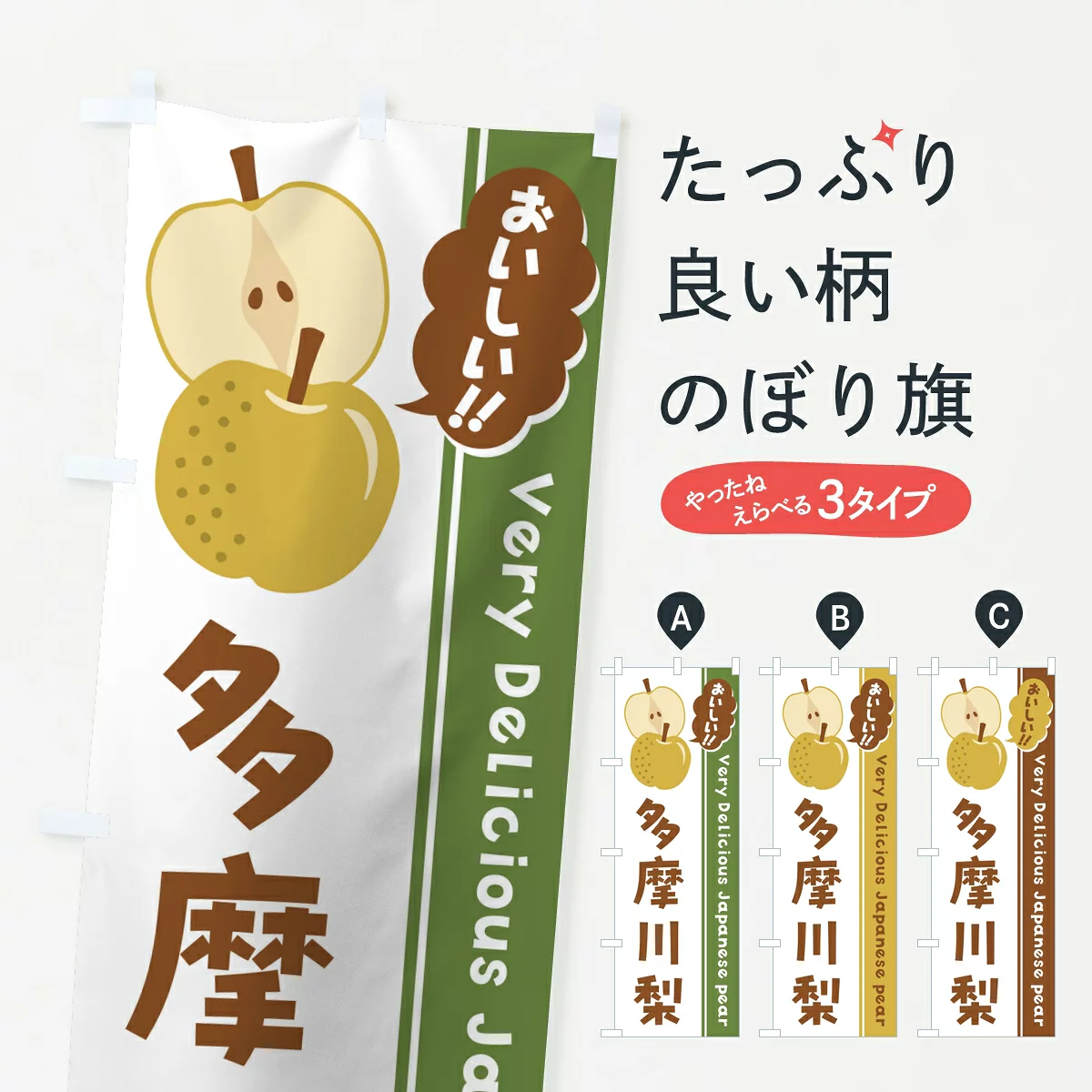
【ポスト便 送料360】 のぼり旗 多摩川梨・梨・なしのぼり 86R7 なし・梨 グッズプロ 【名入れできます】
86R7 design
グッズプロ
Japanese name多摩川梨
Along the Tama River, gravelly ground drains fast after rain, and Kawasaki's orchards have grown pears since the Edo era — Kosui, Hosui, and Chojuro ripening from Nakanoshima to Asao, eaten washed, lightly chilled, and skin-on.
Information last updated 36 days ago
Ordering from abroad works when the recipient has a Japanese address.
None of the listings below mentions gift wrapping in its name; check noshi and wrapping options on the Rakuten page.
3 images【ポスト便 送料360】 のぼり旗 多摩川梨・梨・なしのぼり 86R7 なし・梨 グッズプロ 【名入れできます】
グッズプロ
First time buying on Rakuten? How residents in Japan order →
The Tama River runs between Tokyo and Kanagawa, and the ground along its banks is a layer of gravel. After heavy rain, water slips away through the stones instead of pooling around the roots, and the moderate climate here suits fruit trees. On the Kawasaki side of the river, growers raise pears with a clear sweetness from this ground, and the fruit carries a shared name: Tamagawa Nashi. People use that name up and down the Tama — around Inagi, Hino, and Kawasaki — and the Kawasaki pears are the ones that ripen on the Kanagawa bank.
Compiled from public records and official sources; see the recognition links below. Details may change over time.
Where this product is officially registered, designated, or recognized in Japan.
Regional collective trademark
Registered as a Regional Collective Trademark with the Japan Patent Office.
Sources1
It is written as 多摩川梨 in Japanese. Search Rakuten and other Japanese sites with that spelling — the English name will not bring up the listings.
Tamagawa pear (Tamagawa Nashi) is a regional name for pears harvested in the Tama River basin, centered on Inagi and Hino in Tokyo and Kawasaki in Kanagawa. Gravelly, sandy riverside ground drains quickly after rain, which locals link to the pears' sweetness. Common varieties include Kosui, Hosui, Akizuki, Nijisseiki, and Niitaka.
For the local Kawasaki farming cooperative, Tamagawa Nashi refers to pears grown in Kawasaki City's Tama River basin. Pear growing in Kawasaki began about 250 years ago, and the area was a leading Kanto pear district by the Taisho era. Postwar orchard area fell from about 230 hectares to roughly 37, rose to about 125 by 1963, and is about 30 hectares today. Chojuro, a disease-resistant red pear, was found in 1893 in Daishigawara, now Dekino in Kawasaki-ku.
Growers recommend washing the pear, chilling it lightly, and eating it with the skin on, since the area between skin and flesh carries flavor. A Tama-ku facility makes jam from local Kosui, Hosui, and Niitaka pears, which can go with bread, yogurt, or vanilla ice cream. Pick-your-own orchards operate in Tama-ku areas such as Nakanoshima, Noborito, and Nagao, with varieties depending on the orchard.
Storage varies by product — shelf-stable, refrigerated, or frozen — and is stated on the packaging and the Rakuten listing. Shelf-stable processed foods usually need refrigerating once opened and eating within a few days; chilled and frozen items go straight into storage on arrival. Treat the best-before date on the physical packaging as authoritative.
Many countries restrict bringing in this kind of food, so check your destination's rules before you pack it, or enjoy it in Japan.
On Rakuten: the shops listed here right now are グッズプロ. We don't sell directly; purchase, payment, stock, and delivery are all handled on the Rakuten product page.