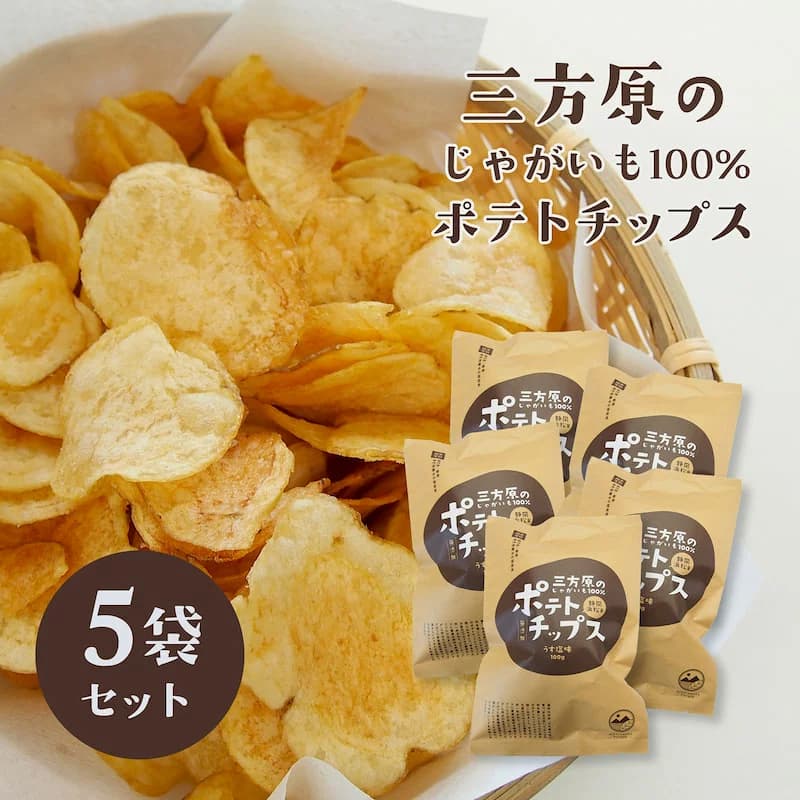
Mikatabara Potato Chips
【期間・数量限定】三方原ポテトチップス うす塩味80g 5袋【三方原馬鈴薯100%使用】
Lightly salted, 80g x 5 bags浜名湖グルメマーケット
4.8 / 5 reviews
Japanese name三方原馬鈴薯
Around Hamamatsu's Mikatahara Plateau, well-drained red soil and long sunshine shape Baron potatoes with pale glossy skins, high starch, sweetness, and a fluffy bite; the spring crop is planted in January and February and harvested from May to August.
Information last updated 36 days ago
【期間・数量限定】三方原ポテトチップス うす塩味80g 5袋【三方原馬鈴薯100%使用】
Lightly salted, 80g x 5 bags浜名湖グルメマーケット
4.8 / 5 reviews
First time buying on Rakuten? How residents in Japan order →
Mikatahara Bareisho names potatoes grown around the Mikatahara Plateau in Hamamatsu, Shizuoka. In these red-soil fields, a spring crop planted in January and February is harvested from May to August, and the Baron potatoes are known for pale glossy skins, high starch, sweetness, and a fluffy bite that suits early-summer cooking from mid-May into July.
The name Mikatahara Bareisho points to potatoes grown in the area centered on Hamamatsu City's Mikatahara Plateau. The red soil drains well, giving the crop a field setting suited to spring growth. In the wider JA Topia Hamamatsu production area, the average annual temperature is about 15.7 C, annual sunshine reaches about 2,132 hours, winter snow is rare, and the dry Enshu seasonal wind is part of the local climate.
Baron potatoes sit at the center of this product family. Red soil and long sunshine help produce potatoes with high starch and a fluffy texture, while the skin is described as pale and glossy. The same skin matters at the table: when the potatoes are eaten with the skin on, their aroma becomes part of the experience along with sweetness and a powdery bite.
Potato cultivation in the Mikatahara area began in the early Taisho period, when the crop was valued as a relatively stable choice for difficult red-soil fields. After the war, released former military land and incoming settlers helped expand the planted area. In 1953, communities including Mikatahara, Isami, Waji, and Hanakawa began joint cooperative shipping, tying separate fields to a shared production flow.
The spring rhythm is concrete: seed potatoes go into the ground from January to February, and harvest runs from May to August. Because potatoes cannot be grown continuously in the same field, rotation is part of the work. Soil analysis, fertilizer guidance, farm logs, pre-shipment starch checks, dry-weather harvesting, shade drying for at least three days, grading, and inspection all shape the potatoes before they leave the growing area.
The sweetness and fluffy texture make Mikatahara Bareisho well suited to simple powdery boiled potatoes, where the starch shows clearly. The same potatoes are also used for salad, nikujaga, croquettes, and prepared potato-salad products. Skin-on eating adds aroma to the pale glossy surface, giving the potato a sensory link back to the red-soil fields.
Mikatahara Bareisho is easiest to understand through concrete details: Hamamatsu's plateau fields, red soil with good drainage, January-to-February planting, May-to-August harvest, shade drying for three or more days, and cooperative shipping that began in 1953. On the table, those details become powdery boiled potatoes, salad, nikujaga, croquettes, and a pale-skinned Baron potato with sweetness and a fluffy bite.
Compiled from public records and official sources; see the recognition links below. Details may change over time.
Where this product is officially registered, designated, or recognized in Japan.
Regional collective trademark
Registered as a Regional Collective Trademark with the Japan Patent Office.
Sources1
It is written as 三方原馬鈴薯 in Japanese. Search Rakuten and other Japanese sites with that spelling — the English name will not bring up the listings.
Mikatahara potatoes are potatoes grown around the Mikatahara Plateau in Hamamatsu, Shizuoka. Well-drained red soil, warm conditions, and long sunshine help shape Baron potatoes with pale glossy skins, high starch, sweetness, and a fluffy texture. Cultivation began in the early Taisho period.
Joint cooperative shipping began in 1953 among communities including Mikatahara, Isami, Waji, and Hanakawa. The spring crop is planted from January to February and harvested from May to August. Potato cultivation expanded after the war with land release and settler migration. Before shipment, the workflow includes starch checks, dry-weather harvesting, shade drying for at least three days, grading, and inspection.
Mid-May to July is the eating season. They suit powdery boiled or steamed potatoes, salad, nikujaga, croquettes, and processing uses. Eating the skin allows the aroma to be enjoyed.
Storage varies by product — shelf-stable, refrigerated, or frozen — and is stated on the packaging and the Rakuten listing. Shelf-stable processed foods usually need refrigerating once opened and eating within a few days; chilled and frozen items go straight into storage on arrival. Treat the best-before date on the physical packaging as authoritative.
Most options are shelf-stable, boxed, and travel well, so they suit gifting or bringing home. Confirm the final storage and delivery terms on the Rakuten listing.
On Rakuten: the shops listed here right now are 浜名湖グルメマーケット. We don't sell directly; purchase, payment, stock, and delivery are all handled on the Rakuten product page.