 2 images
Saito Seika Akita Morokoshi Three-Color Tsutsumi
【斉藤製菓】秋田諸越三色つつみ 130g秋田 もろこし 諸越 グルメ お菓子 お土産 おみやげ ご当地 逸品 銘品 銘産 名物 銘菓
130g秋田のグルメ・逸品 銘店 おばこ
4.8 / 8 reviews
Japanese name秋田諸越
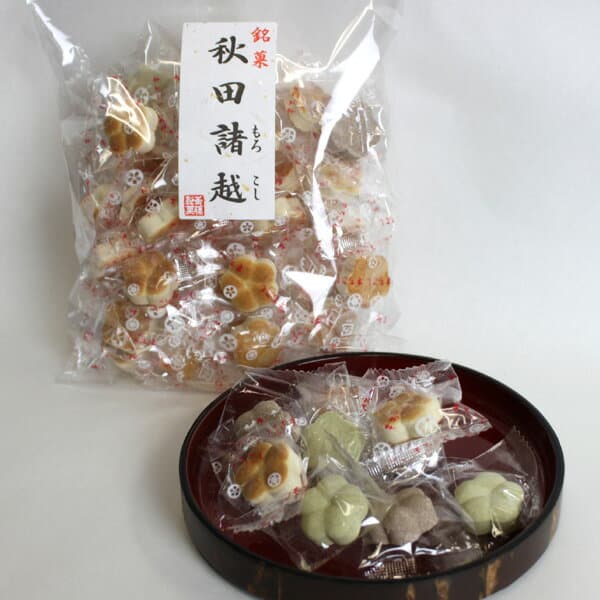
Akita Morokoshi is a dry sweet of azuki powder and sugar, struck from wooden molds and shaped with Akita motifs such as namahage, Kanto lanterns, butterbur, kokeshi, and sake bottles.
Information last updated 120 days ago
2 images【斉藤製菓】秋田諸越三色つつみ 130g秋田 もろこし 諸越 グルメ お菓子 お土産 おみやげ ご当地 逸品 銘品 銘産 名物 銘菓
130g秋田のグルメ・逸品 銘店 おばこ
4.8 / 8 reviews
 3 images
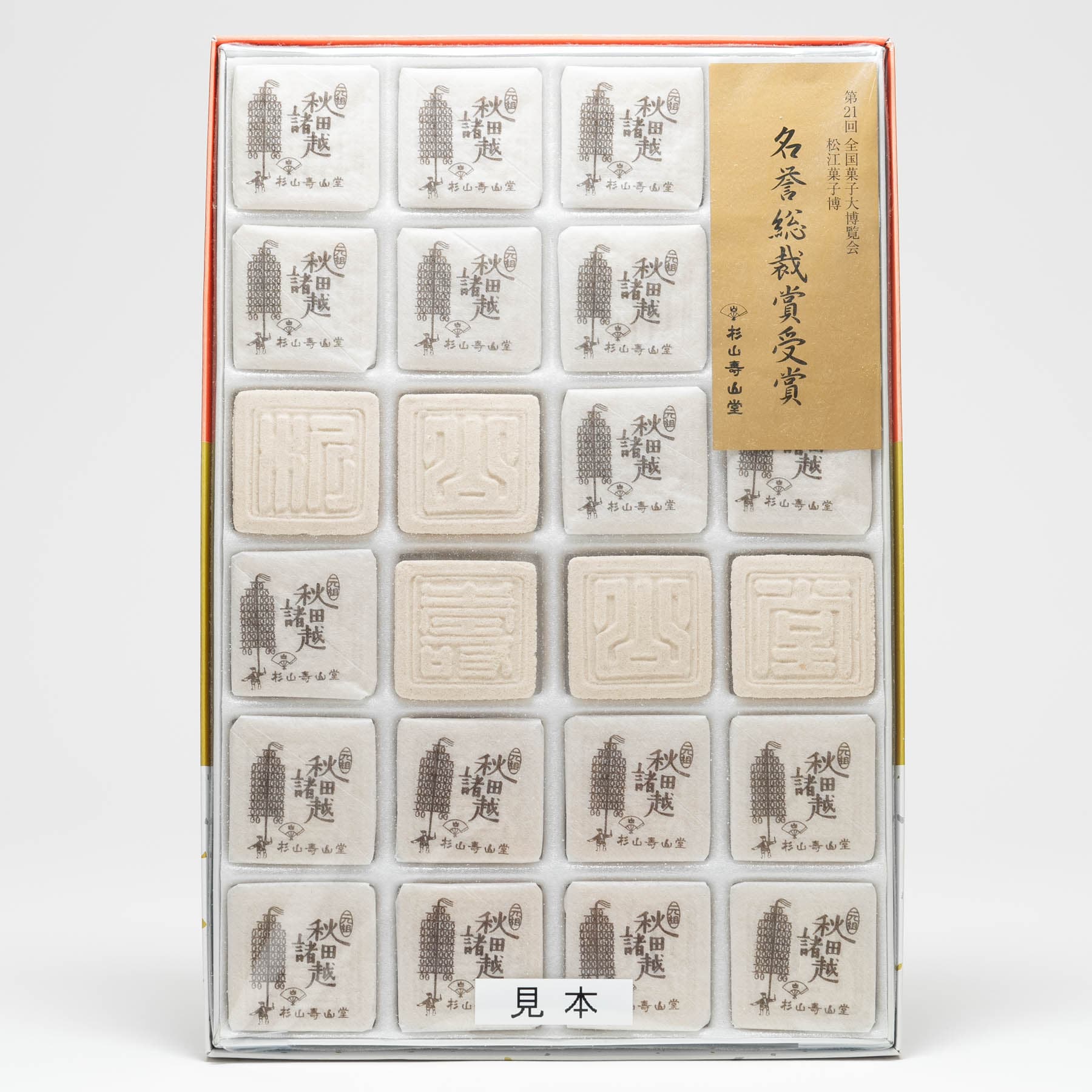
杉山壽山堂 元祖 秋田諸越 24枚入
24 pieces秋田県物産振興会楽天市場店
4.3 / 4 reviews
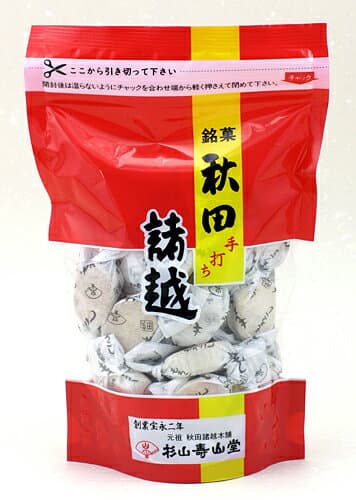
杉山壽山堂 秋田諸越袋入 上焼
110g bag, roasted秋田県物産振興会楽天市場店
5.0 / 1 reviews
First time buying on Rakuten? How residents in Japan order →
Akita Morokoshi begins with azuki bean powder and sugar. In a category where many dry sweets are built around rice flour, Morokoshi is remembered for bean aroma and a texture that slowly dissolves in the mouth. Its wooden-molded surfaces can show namahage, the Kanto Festival, Akita butterbur, kokeshi, and sake bottles. Around Akita Station, at the prefectural products plaza, in local supermarkets, and in Akita City confectionery shops, the same sweet appears in travel routes and everyday sweet shelves.
The defining taste of Akita Morokoshi comes from azuki powder and sugar. In Ganso Akita Morokoshi from Sugiyama Juzando, wasanbon sugar is also used, giving a gentle sweetness that spreads with the azuki flavor before the sweet slowly dissolves. Where many dry Japanese sweets rely on rice flour, Morokoshi is shaped by the aroma of beans, the fine looseness of powder on the tongue, and the clean sweetness left by sugar. Its local character stays close to material: azuki powder associated with the Akita area, sugar, and a small dry sweet whose texture opens gradually in the mouth.
Morokoshi belongs to the uchigashi family of sweets: the prepared mixture is packed into a wooden mold, firmed, and struck out. The movement is compact, but Akita makers describe hand-striking as skilled work because pressure, timing, and release decide whether a tiny edge or motif survives cleanly. A namahage face, the line of Akita butterbur, or a sake-bottle shape depends on powder density and the hand that frees it from the mold. Craft here means a visible sequence of filling, pressing, striking, and lifting out a dry sweet that keeps its surface intact.
The molded surfaces carry concrete Akita images: namahage faces, scenes of the Kanto Festival held each August, large Akita butterbur, kokeshi, and sake-bottle shapes. Festival, plant, doll, and vessel become small edible reliefs rather than broad symbols. The Kanto motif places a summer event on the surface; Akita butterbur gives the mold a named local plant; namahage and kokeshi bring faces and figures into the same medium of azuki powder and sugar. Each form gives Morokoshi a specific object to hold before it is tasted.
Morokoshi appears around Akita Station, at the prefectural products plaza, in local supermarket sweet sections, and in Akita City confectionery shops. In those settings, neat molded pieces and bagged broken pieces sit close to both travel memory and everyday tea-table snacking. At station counters and regional product displays, the namahage or Kanto shapes meet travelers; on supermarket shelves and in city confectionery shops, bagged broken pieces remain familiar to local customers. The sweet is therefore placed by its surroundings as much as by its taste.
A handed-down naming tradition links Morokoshi with the Satake family. In the Sugiyama Juzando version, the completed sweet was presented to Akita's fourth lord, Satake Yoshitada, and praised as surpassing other sweets; the name is remembered through that praise. The tradition places the name in a concrete setting of a confection, a presentation, a lord, and a phrase of approval. Sugiyama Juzando also connects its first shopkeeper with the use of azuki powder from the Akita area, a shop-specific thread that belongs beside Akita City, wasanbon sugar, wooden molds, and Ganso Akita Morokoshi.
Akita confectioners also describe change: fewer people hand-strike Morokoshi, younger customers often choose newer sweets, and older local customers still quickly take bagged broken pieces. Continuity is visible in concrete actions: someone must pack the mixture into a wooden mold, strike it cleanly, keep the azuki flavor recognizable, and place the finished or broken pieces where people still encounter them. The future of Morokoshi therefore rests on hands, molds, azuki powder, shop shelves, and customers who recognize a small dry sweet as part of Akita life.
Akita Morokoshi is most vivid when seen through azuki powder, sugar, wasanbon in one named line, wooden molds, and local motifs. It can sit near Akita Station as a travel memory or on a local shelf as a familiar snack; as it dissolves, namahage, Kanto lanterns, Akita butterbur, and Akita City confectionery work remain close to the taste.
Compiled from public records and official sources; see the recognition links below. Details may change over time.
Where this product is officially registered, designated, or recognized in Japan.
Regional collective trademark
Registered as a Regional Collective Trademark with the Japan Patent Office.
Sources1
It is written as 秋田諸越 in Japanese. Search Rakuten and other Japanese sites with that spelling — the English name will not bring up the listings.
Akita Morokoshi is a dry sweet from Akita made mainly with azuki powder and sugar. Its azuki base gives bean aroma and a slowly melting texture; Ganso Akita Morokoshi from Sugiyama Juzando also uses wasanbon sugar. The sweet is packed into wooden molds, firmed, and struck out, often in Akita motifs such as namahage, the Kanto Festival, Akita butterbur, kokeshi, and sake bottles.
Akita Morokoshi is a representative Akita dry sweet made mainly from azuki powder and sugar. Its azuki powder base distinguishes it from many dry sweets that rely on rice flour. Ganso Akita Morokoshi from Sugiyama Juzando uses wasanbon sugar and is described with gentle sweetness and azuki flavor. Morokoshi is made by packing the mixture into wooden molds, firming it, and striking it out by hand, a process requiring skill.
Storage varies by product — shelf-stable, refrigerated, or frozen — and is stated on the packaging and the Rakuten listing. Shelf-stable processed foods usually need refrigerating once opened and eating within a few days; chilled and frozen items go straight into storage on arrival. Treat the best-before date on the physical packaging as authoritative.
Most options are shelf-stable, boxed, and travel well, so they suit gifting or bringing home. Confirm the final storage and delivery terms on the Rakuten listing.
On Rakuten: the shops listed here right now are 秋田のグルメ・逸品 銘店 おばこ, 秋田県物産振興会楽天市場店. We don't sell directly; purchase, payment, stock, and delivery are all handled on the Rakuten product page.