 2 images
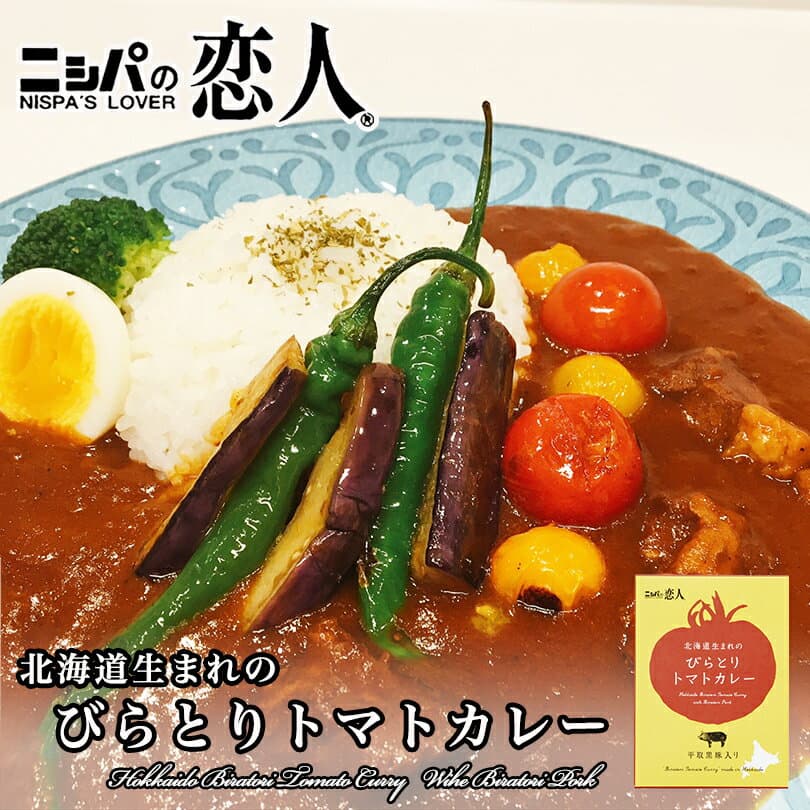
Nishipa no Koibito Biratori Tomato Curry
ニシパの恋人 びらとり トマトカレー カレー レトルト トマト びらとり カレー 桃太郎 お土産 ギフト プレゼント 黒豚 人気 北海道 ご当地 パウチ 保存食 惣菜 ご当地バレンタイン
北海道銘菓 センカランド
4.9 / 7 reviews
Japanese nameびらとりトマト
In western Hidaka, Hokkaido, Biratori tomatoes grow in greenhouses around Hiratori and Hidaka, shaped by cool low-humidity summers, Momotaro-type varieties, shared sorting, green manure, and bumblebee pollination.
Information last updated 126 days ago
2 imagesニシパの恋人 びらとり トマトカレー カレー レトルト トマト びらとり カレー 桃太郎 お土産 ギフト プレゼント 黒豚 人気 北海道 ご当地 パウチ 保存食 惣菜 ご当地バレンタイン
北海道銘菓 センカランド
4.9 / 7 reviews
First time buying on Rakuten? How residents in Japan order →
Biratori tomatoes belong to the greenhouse tomato area around Hiratori in western Hidaka, Hokkaido, with production also tied to parts of Hidaka such as Tomikawa and Kita-Hidaka. The Saru River runs through Hiratori after flowing from the Hidaka Mountains, and the area’s cool, relatively dry summer conditions help tomatoes keep a clear balance of sweetness and acidity. Behind the red fruit is a cooperative growing system: more than 100 hectares of greenhouse tomatoes, shared grading facilities, and harvest work that can run from early May to mid-November.
Hiratori sits in southwestern Hokkaido at the western edge of the Hidaka subprefecture, and the Saru River passes through the center of the town. JA Biratori links its tomato houses with Hiratori and parts of Hidaka, including Tomikawa and Kita-Hidaka. The area is cooler and less humid than many summer growing regions, a useful condition for tomatoes, which do poorly in heat and damp air. Around the river, that climate helps the fruit keep a bright sugar-acid balance, the trait that makes a chilled red Biratori tomato feel clean and vivid on the tongue.
The modern production path began in 1972, when six growers tried summer-autumn tomato cultivation in vinyl houses after rice acreage reduction pushed farmers to look beyond paddy rice. As plantings expanded, individual sorting became a labor bottleneck. In 1982, a joint collection and grading facility began operating, turning tomatoes from separate household crops into a coordinated production area with shared sorting, grading, and seasonal planning.
Biratori tomato growing is organized through more than one season. JA Hiratori used nine cropping patterns, from heated semi-forcing culture to rain-sheltered summer-autumn culture, so harvest, grading, and handling could continue from early May to mid-November. The YES!clean cultivation standard also lists greenhouse forcing and long-term semi-forcing periods, with seeding, transplanting, and harvest windows arranged across the calendar. At peak times, growers move through daily greenhouse work while watching maturity, size, and quality before the fruit reaches the shared grading line.
Momotaro-type tomatoes form the core of this production area. The district unified around Momotaro-type varieties in 1991, and the YES!clean standard lists Momotaro Bright, Momotaro Next, and TTM.160 among the varieties. Growers manage fruiting trusses, and the grading process separates tomatoes by quality and size. A sugar-sensor sorting facility adds another layer of consistency, working alongside internal targets such as Brix 5.5 or higher and a sugar-acid ratio of 12.0 or higher.
The cultivation work depends on soil and pollination as much as on summer weather. Growers use soil diagnosis for fertilization, compost as a basis for soil building, and post-harvest green manure such as oats, rye, and sorghum inside the houses. Drainage work, deep tillage, and organic matter management support the root zone. Bumblebees are used for pollination, and all growers use flight-prevention nets around the houses. Pest management includes forecasting, microbial pesticides, and standards aimed at reducing chemical fertilizer and synthetic pesticide use.
JA Biratori presents the red summer tomato as a fruit to chill and bite into, and its recipe pages place tomatoes in home cooking as well. After grading, fruit outside fresh-market specifications can move into processing by JA as tomato juice, puree, ketchup, and jelly. Whether eaten cold in the sun or transformed into a cup, sauce, or dessert, the material remains the same: ripe red tomatoes grown in greenhouses along the Saru River corridor.
The character of Biratori tomatoes comes from a modern agricultural system rather than an ancient craft line. Since the six-grower trial in 1972, the area has built its rhythm through the 1982 shared grading facility, Momotaro-type varieties, nine cropping patterns, soil diagnosis, green manure, bumblebee pollination, and sugar-sensor sorting. The fresh sugar-acid balance in a red tomato carries the place clearly: cool Hidaka summers, greenhouse labor, and cooperative work along the Saru River.
Compiled from public records and official sources; see the recognition links below. Details may change over time.
Where this product is officially registered, designated, or recognized in Japan.
Regional collective trademark
Registered as a Regional Collective Trademark with the Japan Patent Office.
Sources1
It is written as びらとりトマト in Japanese. Search Rakuten and other Japanese sites with that spelling — the English name will not bring up the listings.
Biratori tomatoes are greenhouse-grown tomatoes tied to Hiratori and parts of Hidaka in western Hidaka, Hokkaido. The growing area follows the Saru River, where cool, relatively dry summers and day-night temperature differences support a clear sugar-acid balance. Six growers began trial summer-autumn tomato cultivation in 1972, and a shared grading facility followed in 1982. The area is now defined by more than 100 hectares of greenhouses, Momotaro-type varieties, nine cropping patterns, soil diagnosis, green manure, bumblebee pollination, and sugar-sensor sorting.
Biratori tomatoes are associated with greenhouse tomato production around Hiratori and the Tomikawa and Kita-Hidaka areas of Hidaka in western Hidaka, Hokkaido. In 1972, six growers began trial summer-autumn tomato cultivation in vinyl houses after rice acreage reduction. JA Biratori materials describe more than 100 hectares of greenhouse tomato cultivation, close to 40% of Hokkaido's large tomato growing area. The growing area uses nine cropping patterns, allowing harvest, grading, and handling from early May to mid-November.
Biratori tomatoes are presented as a summer tomato to chill and eat fresh. Harvest, grading, and shipment run from early May to mid-November, and JA Biratori provides tomato recipes for home cooking. Out-of-grade tomatoes are processed by JA into tomato juice, puree, ketchup, and jelly under the Nishipa no Koibito brand.
Storage varies by product — shelf-stable, refrigerated, or frozen — and is stated on the packaging and the Rakuten listing. Shelf-stable processed foods usually need refrigerating once opened and eating within a few days; chilled and frozen items go straight into storage on arrival. Treat the best-before date on the physical packaging as authoritative.
Most options are shelf-stable, boxed, and travel well, so they suit gifting or bringing home. Confirm the final storage and delivery terms on the Rakuten listing.
On Rakuten: the shops listed here right now are 北海道銘菓 センカランド. We don't sell directly; purchase, payment, stock, and delivery are all handled on the Rakuten product page.