Shirayuki no Tennen-sui Daisetsu Asahidake Gensui Hokkaido Natural Mineral Water
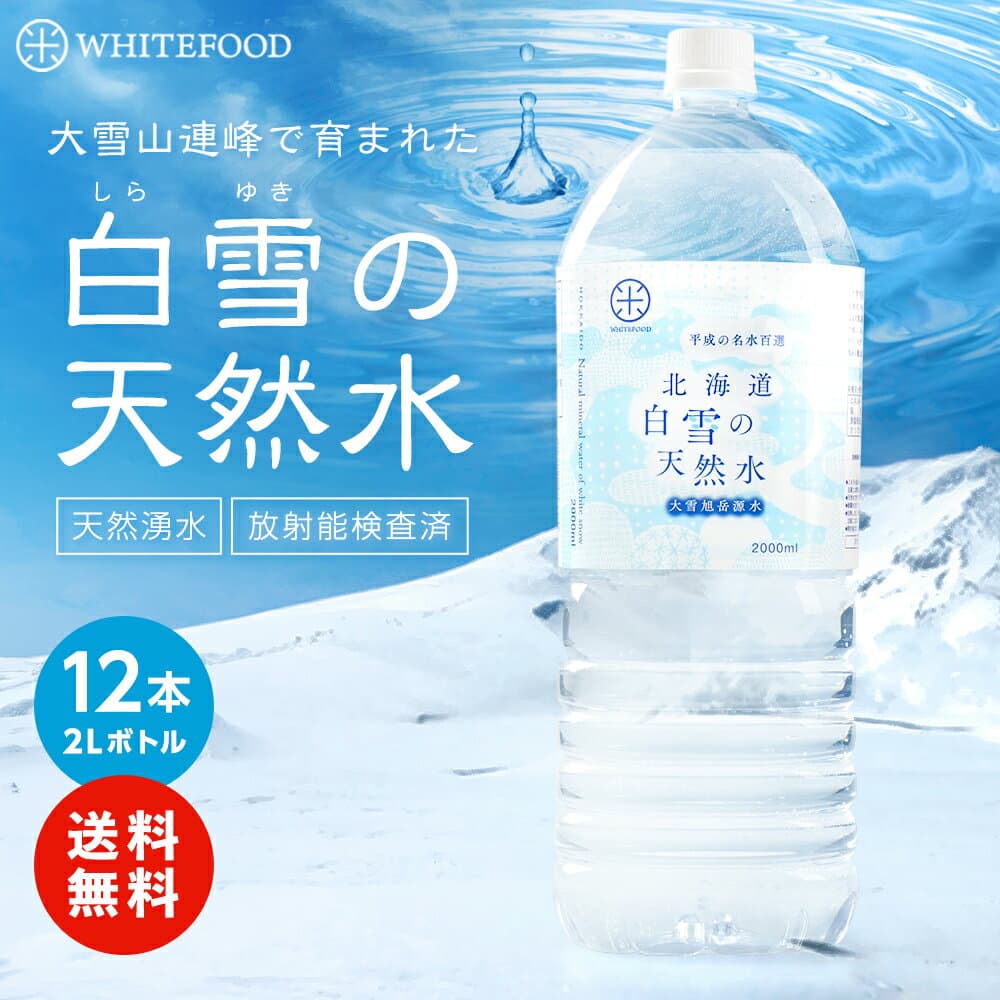
水 2l 天然水 北海道 白雪の天然水 2L×12本【平成の名水百選に選ばれました!大雪旭岳源水】【放射能検査済】 中硬水 ローリングストック 放射線 北海道産 ミネラルウォーター 2リットル 送料無料(注意:沖縄への配送不可)
2L x 12 bottles安心の自然食品店 WHITEFOOD
4.5 / 224 reviews
Japanese name大雪旭岳源水
Daisetsu Asahidake Gensui begins with Asahidake snowmelt, the Nocanan spring area, and a Hokkaido town where daily life is built around groundwater.
Information last updated 121 days ago
水 2l 天然水 北海道 白雪の天然水 2L×12本【平成の名水百選に選ばれました!大雪旭岳源水】【放射能検査済】 中硬水 ローリングストック 放射線 北海道産 ミネラルウォーター 2リットル 送料無料(注意:沖縄への配送不可)
2L x 12 bottles安心の自然食品店 WHITEFOOD
4.5 / 224 reviews
随時発送中 北海道 天然水 2リットル 送料無料 天然水 2l 北海道の水 大雪山 大雪旭岳源水 2リットル×6本入 2ケース(2箱) 大雪山国立公園の天然水 ミネラルウォーター 水
2L x 6 bottles, 2 cases北海道 ギフト・タネ 実 蔵本舗
5.0 / 19 reviews
大雪山国立公園の天然水 2L 12本 (6本×2ケース) 旧名称:大雪旭岳源水 体内の水分組成に近いpH7.4の天然水 平成の名水百選 北海道 ミネラルウォーター 水 2L 送料無料 12本 セット 水 2リットル ペットボトル
2L x 12 bottles (6 bottles x 2 cases)北海道の美食逸品 イランカラプテ
4.7 / 101 reviews
First time buying on Rakuten? How residents in Japan order →
Daisetsu Asahidake Gensui comes from Higashikawa in Hokkaido, with its collection area in Nocanan, Kamikawa District. The town sits at the foot of Daisetsuzan National Park, and its relationship with water is unusually direct: many households draw groundwater from about 20 meters below ground for daily use. The bottled water carries that same local setting, from Asahidake snowmelt to a cold spring environment and careful filtration near the water resource.
The first place to look is Nocanan, the Higashikawa area named as the collection site for Daisetsu Asahidake Gensui. Nearby, Daisetsu Asahidake Gensui Park presents the water as a spring point at the foot of Daisetsuzan National Park. In Higashikawa, groundwater is part of ordinary life: many homes use electric pumps to draw water from roughly 20 meters underground, so the product begins in a town where drinking water and household water already come from beneath the ground.
Snowmelt from Asahidake and the Daisetsuzan range seeps into the earth and moves slowly toward Higashikawa. Along that underground route, the water takes in minerals before emerging near the foothills. The name Daisetsu Asahidake Gensui is tied to drinking water produced in the Daisetsu Asahidake area and surrounding region, so its local identity rests on specific places: the mountain, the underground passage, Higashikawa, and the Nocanan collection area.
The water is described as holding a year-round temperature of about 6 to 7°C, with a spring flow of about 4,600 liters per minute and mineral content from its underground path. Those details give the water its clearest sensory frame: cold, mineral-bearing, and steady at the spring. At Daisetsu Asahidake Gensui Rock in the park area, visitors can draw water from the same Nocanan setting, linking the bottled product to a visible water point.
Bottling takes place near the water resource. The work uses non-heat sterile filling and 0.01-micron UF membrane filtration, removing unwanted components while retaining minerals considered important to the water’s taste. Daisetsu Water Resources Conservation Center began operating in 2013 through a local partnership, giving the bottling work a clear place in Higashikawa’s broader management of its water resource.
In Higashikawa, the groundwater is used beyond bottled drinking water. Residents use it for drinking and daily life, and it is also connected with crop cultivation and processed foods. If the word culture is useful here, it means concrete practices: pumps at homes, water drawn from about 20 meters underground, fields that use the groundwater, and local foods made with it. Daisetsu Asahidake Gensui sits inside that everyday water use.
The bottled water also supports local conservation activity in Higashikawa. In 2013, the town, JA Higashikawa, and private companies launched Daisetsu Water Resources Conservation Center; a portion from each two-liter bottle is donated back to Higashikawa for activities that protect nature and the local environment. Here, conservation has a concrete shape: Asahidake snowmelt, the Nocanan water site, groundwater used by residents, and a town system that sends part of the bottled-water return toward protecting that setting.
Daisetsu Asahidake Gensui is best understood through a route from mountain to town. Asahidake snowmelt enters the ground, gathers minerals on its way to Higashikawa, emerges as water kept around 6 to 7°C, and is bottled near the water resource through non-heat UF membrane filtration. The same groundwater supports households, fields, processed foods, visitor water drawing, and conservation work in the town.
Compiled from public records and official sources; see the recognition links below. Details may change over time.
Where this product is officially registered, designated, or recognized in Japan.
Regional collective trademark
Registered as a Regional Collective Trademark with the Japan Patent Office.
Sources1
It is written as 大雪旭岳源水 in Japanese. Search Rakuten and other Japanese sites with that spelling — the English name will not bring up the listings.
Daisetsu Asahidake Gensui is bottled drinking water from Higashikawa, Hokkaido, drawn near Nocanan in Kamikawa District. Snowmelt from Asahidake and the Daisetsuzan range seeps underground and travels slowly toward the foothills, emerging as mineral-bearing water kept around 6 to 7°C. It is bottled through non-heat sterile filling and 0.01-micron UF membrane filtration.
Higashikawa sits at the foot of Daisetsuzan National Park, and many households draw groundwater from about 20 meters underground for daily use. The spring flow is about 4,600 liters per minute. Groundwater in Higashikawa is also used for crop cultivation and processed foods, not only drinking. Daisetsu Water Resources Conservation Center began operating in 2013 through cooperation among Higashikawa, JA Higashikawa, and private companies.
Residents of Higashikawa rely on groundwater for daily drinking and household use. The water is bottled as natural drinking water using non-heat sterile filling and 0.01-micron UF membrane filtration. Visitors can draw the spring water themselves at Daisetsu Asahidake Gensui Rock in the park.
Water temperature varies a lot by type of Japanese tea: roughly 50–60°C for gyokuro, 70–80°C for sencha, and near-boiling 90–100°C for hojicha (including roasted stem tea), bancha, and genmaicha, steeped for about 30 seconds to a minute. A common ratio is about 3g of leaf per 150ml of water. Follow the instructions on the packaging where they differ.
Tea leaves are damaged by light, humidity, and absorbed odours. Once opened, keep them sealed and away from light at room temperature and drink them within a few weeks. If you refrigerate them, let the container return to room temperature before opening so condensation doesn't get in.
Most options are shelf-stable, boxed, and travel well, so they suit gifting or bringing home. Confirm the final storage and delivery terms on the Rakuten listing.
On Rakuten: the shops listed here right now are 安心の自然食品店 WHITEFOOD, 北海道 ギフト・タネ 実 蔵本舗, 北海道の美食逸品 イランカラプテ. We don't sell directly; purchase, payment, stock, and delivery are all handled on the Rakuten product page.