 3 images
Gujo Ayu Natural Sweetfish from Nagara River
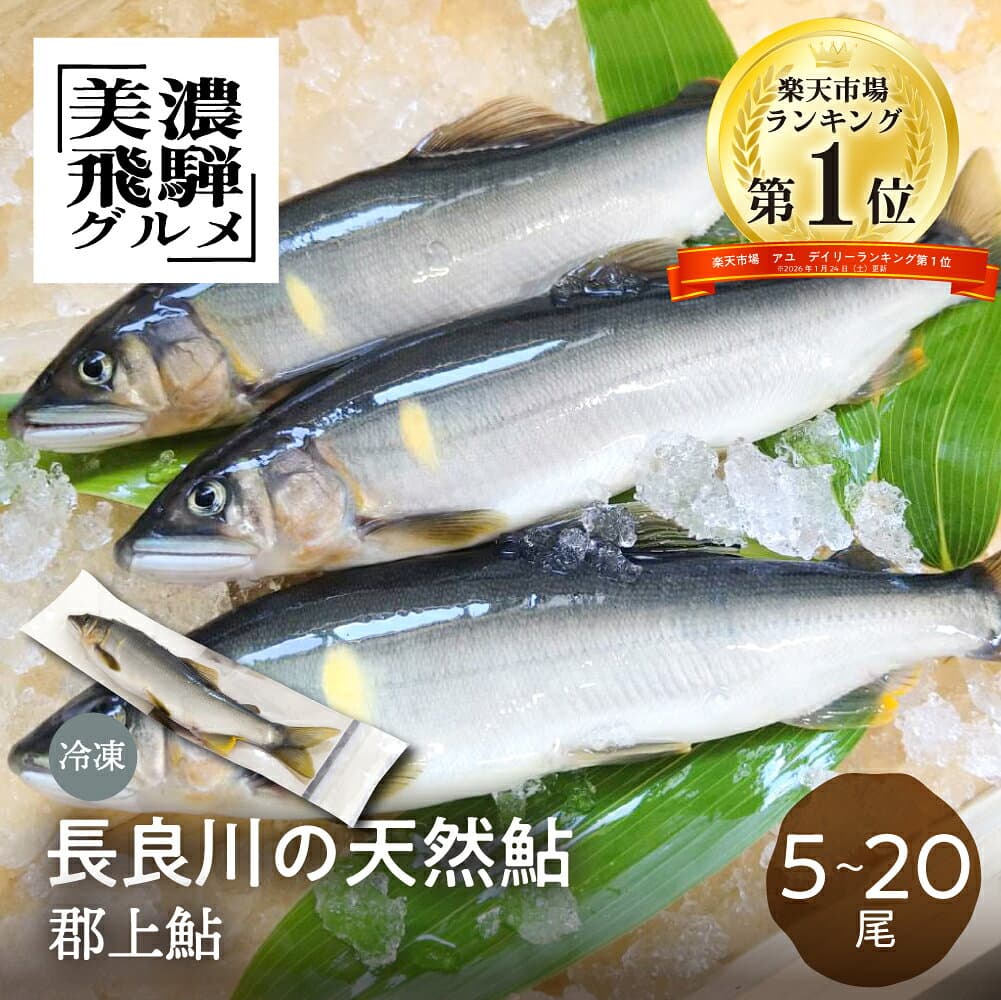
\アユランキング1位/【尾数が選べる】 郡上鮎 長良川の天然鮎 5尾 10尾 15尾 20尾 鮎 天然 冷凍 お取り寄せ あゆ 魚 川魚 岐阜県 塩焼き BBQ バーベキュー キャンプ 世界遺産 世界農業遺産 美濃飛騨グルメ 岐阜 産地直送 送料無料 ぎふまる
5/10/15/20 fish産地直送!ぎふまる楽天市場店
4.7 / 14 reviews
Japanese name郡上鮎
Around Gujo City in Gifu, swift upper-river water, algae on stones, and one-rod tomozuri fishing shape the firm flesh and clear aroma associated with Gujo Ayu.
Information last updated 119 days ago
3 images\アユランキング1位/【尾数が選べる】 郡上鮎 長良川の天然鮎 5尾 10尾 15尾 20尾 鮎 天然 冷凍 お取り寄せ あゆ 魚 川魚 岐阜県 塩焼き BBQ バーベキュー キャンプ 世界遺産 世界農業遺産 美濃飛騨グルメ 岐阜 産地直送 送料無料 ぎふまる
5/10/15/20 fish産地直送!ぎふまる楽天市場店
4.7 / 14 reviews
First time buying on Rakuten? How residents in Japan order →
Gujo Ayu begins with place: the upper Nagara River and its tributaries around Gujo City, Gifu. The Nagara River runs about 166 kilometers from northern Gifu toward Ise Bay, and the Gujo reach sits in the upper basin where swift water, clean riverbeds, and tributaries such as the Yoshida River form the fishery ground. The familiar descriptions of firm flesh, aroma, and flavor are tied to that setting of current, water quality, stones, and fish behavior.
Gujo Ayu is tied to the upper Nagara River. The Gujo Fishery Cooperative describes it as ayu caught in the upper Nagara flowing from the Hakusan area, while the fishery ground lies in the Nagara River and tributaries within Gujo City, including the upper Nagara and the Yoshida River system.
The place is a working stretch of river. The Nagara River extends about 166 kilometers through Gifu toward Ise Bay, and Gujo belongs to its upper reaches. There, steep current and good water quality become everyday conditions for ayu feeding, growing, and being caught.
Ayu live on a roughly one-year cycle. They hatch in the river in autumn, spend winter in the sea, migrate upstream in spring, grow in the river through summer, and return to spawning grounds around autumn. Gujo Ayu therefore belongs to a moving river-and-sea rhythm as well as to the summer river season.
That cycle gives concrete meaning to the upper-river habitat. Fish that move upstream in spring enter the Nagara River system, grow among current, water quality, and stone riverbeds in summer, and depend again on cared-for spawning grounds as autumn returns.
Natural ayu feed on algae attached to stones on clear riverbeds, a detail connected with the fish’s fragrant character and the name “aroma fish.” For Gujo Ayu, aroma can be traced back to stones, algae, flowing water, and the body of the fish.
The cooperative’s description follows the same concrete line. Gujo Ayu raised by steep current and good water quality is described as having firm flesh, aroma, and taste. The sensory language stays close to the upper Nagara River: water, stone, current, and fish.
Tomozuri turns ayu behavior into fishing technique. Without using a boat, an angler works with one rod and places a hooked decoy ayu inside a wild ayu’s territory; when the territorial fish strikes the intruder, it is caught.
The method brings together river shape and fish behavior. On the Nagara River and its tributaries, the angler reads the current, moves the decoy, and waits for the wild ayu’s response. Gujo Ayu is caught through that meeting of fast water, territorial instinct, and practiced hands.
The ayu fishery around Gujo also depends on work away from the moment of capture. Stocking, fishing-ground management, spawning-ground preparation, forest care, river cleaning, and fishing rules place a seasonal catch inside longer river stewardship.
Marine Eco-Label Japan certification appears here as background. What matters for the reader is the practical boundary behind it: the Nagara River and tributaries within Gujo City, tomozuri as the fishing method, resource management, and repeated work that supports the ayu cycle.
A simple way to understand Gujo Ayu at the table is salt-grilled ayu. Nagara River food writing describes salt grilling as a preparation that lets people enjoy ayu aroma directly; fire, salt, and the fish bring the riverbed’s algae-linked fragrance into a plain serving.
The sensory portrait stays close to the river. Gujo Ayu can be described through firm flesh shaped by swift upper-river water, the fragrant character associated with ayu, and a salt-grilled preparation that keeps attention on the fish itself.
Gujo Ayu comes into focus through the upper Nagara River and tributaries within Gujo City: ayu moving upstream in spring, fish feeding on algae attached to stones in summer, one-rod tomozuri in swift water, and river work such as spawning-ground care and cleaning. When salt-grilled ayu releases its aroma, the scene still points back to the same concrete things: Nagara River water, riverbed stones, the Gujo fishery community, and a managed fishery ground.
Compiled from public records and official sources; see the recognition links below. Details may change over time.
Where this product is officially registered, designated, or recognized in Japan.
Regional collective trademark
Registered as a Regional Collective Trademark with the Japan Patent Office.
Sources1
It is written as 郡上鮎 in Japanese. Search Rakuten and other Japanese sites with that spelling — the English name will not bring up the listings.
Gujo sweetfish (Gujo Ayu) is ayu associated with the upper Nagara River and tributaries around Gujo City, Gifu. The Nagara River runs about 166 km toward Ise Bay, and the Gujo fishery ground includes the Nagara River and tributaries such as the Yoshida River within Gujo City. Ayu live on a roughly one-year cycle between river and sea.
Gujo Ayu is described as raised by steep current and good water quality, with firm flesh, aroma, and taste. Natural ayu feed on algae attached to stones on clear riverbeds, a detail linked to their aroma. Ayu live on a roughly one-year cycle: hatching in autumn, wintering in the sea, migrating upstream in spring, growing in summer, and spawning in autumn. Tomozuri uses one rod and a decoy ayu to trigger the territorial response of a wild ayu, and the method does not use a boat.
Salt-grilled ayu is described as a simple preparation that lets the aroma of ayu be enjoyed directly. Recreation, angling, fishing classes, hand-catching, and tomozuri learning are ways people encounter ayu and the river environment.
Storage varies by product — shelf-stable, refrigerated, or frozen — and is stated on the packaging and the Rakuten listing. Shelf-stable processed foods usually need refrigerating once opened and eating within a few days; chilled and frozen items go straight into storage on arrival. Treat the best-before date on the physical packaging as authoritative.
Most options are shelf-stable, boxed, and travel well, so they suit gifting or bringing home. Confirm the final storage and delivery terms on the Rakuten listing.
On Rakuten: the shops listed here right now are 産地直送!ぎふまる楽天市場店. We don't sell directly; purchase, payment, stock, and delivery are all handled on the Rakuten product page.