 3 images
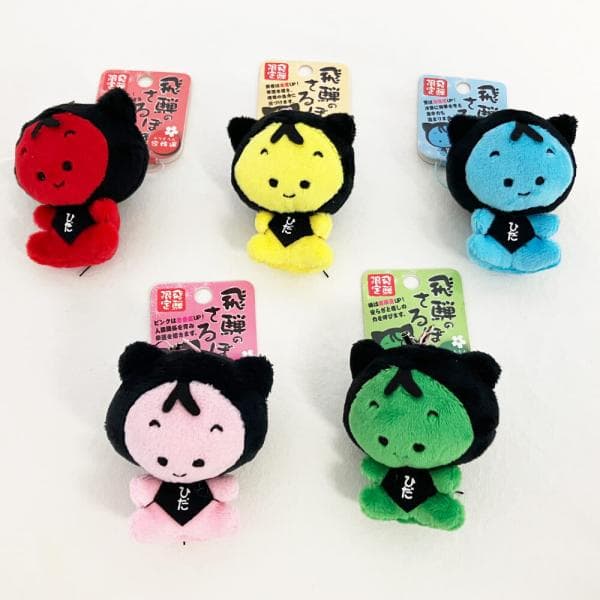
Hida Sarubobo Plush Strap
飛騨のさるぼぼ ぬいぐるみストラップ(5色)さるぼぼ サルボボ 人形ストラップ
5 colorsあずさ屋
Japanese name飛騨のさるぼぼ
A red cotton body, black hood, apron, and little jacket connect the Hida baby-monkey name with household wishes, Takayama workshops, and the memorial practice at Hida Kokubunji.
Information last updated 119 days ago
3 images飛騨のさるぼぼ ぬいぐるみストラップ(5色)さるぼぼ サルボボ 人形ストラップ
5 colorsあずさ屋
First time buying on Rakuten? How residents in Japan order →
In the Hida area of Gifu, sarubobo means “baby monkey” in Hida speech. The red face is tied to that name: it was seen as resembling a baby monkey, giving the doll a simple visual explanation before any larger symbolism is added. Its familiar form is just as concrete: red cotton body, black hood, apron, and chanchanko jacket.
The name sarubobo begins in local speech. In Hida language, it means “baby monkey,” and the red face gives the name a visible reason. Color and word work together: the viewer meets the bright face, then the dialect meaning, then the small figure that carries both.
Earlier Hida households placed concrete family hopes in the doll. Mothers are said to have made and given sarubobo to daughters with wishes for marriage ties, safe childbirth, and harmony between husband and wife. The same household practice also held wishes for children to grow in good health, so the doll sat close to parent, daughter, child, and home.
The visible form stays plain and memorable: a vivid red cotton body, a black hood, an apron, and a chanchanko jacket. The red cloth is also named in Takayama local-product context as a key feature. Those parts keep the object legible without heavy explanation; the body, hood, apron, and jacket make the wish-bearing doll easy to recognize.
Today, the doll is also held by a manufacturing cooperative and member workshops in Hida Takayama. Among the members, one Takayama workshop handles planning, design, and making; another describes many Hida craft workers and one-by-one handwork; another makes its own handmade products. These workshop-level details give the present-day doll a human scale: named workshops, Hida craft workers, planning, design, and making.
Some sarubobo whose roles are finished, whose colors have faded, or whose bodies carry children’s wishes are brought to Hida Kokubunji near Takayama Station. In spring, on a monkey day in April, the memorial gathering gives those old red figures a place among the temple hall, large ginkgo tree, and three-story pagoda. The practice makes the end of use visible: a doll can leave a home and still be handled with care in Takayama.
Hida no Sarubobo is clearest when held close to its concrete details: a Hida name meaning baby monkey, a red face, a red cotton body with black hood and apron, family wishes given by mothers, Takayama workshops, and Hida Kokubunji. Its continuing presence rests in those places, materials, people, and practices.
Compiled from public records and official sources; see the recognition links below. Details may change over time.
Where this product is officially registered, designated, or recognized in Japan.
Regional collective trademark
Registered as a Regional Collective Trademark with the Japan Patent Office.
Sources1
It is written as 飛騨のさるぼぼ in Japanese. Search Rakuten and other Japanese sites with that spelling — the English name will not bring up the listings.
Hida sarubobo dolls are dolls tied to the Hida area of Gifu. The name means “baby monkey” in Hida speech and is connected to the doll’s red face. Earlier Hida households are said to have made and given them with wishes for a daughter’s marriage ties, safe childbirth, marital harmony, and children’s health. The familiar form includes a red cotton body, black hood, apron, and chanchanko jacket.
Hida no Sarubobo is tied to the Hida area of Gifu through household wishes, Takayama workshop activity, and Hida Kokubunji memorial practice. The name sarubobo means “baby monkey” in Hida speech and is linked to the doll’s red face. Earlier Hida mothers are said to have made and given sarubobo to daughters with wishes for marriage ties, safe childbirth, and marital harmony. Sarubobo also carries wishes for children to grow in good health.
Earlier Hida mothers are said to have made and given sarubobo while wishing for marriage ties, safe childbirth, marital harmony, and children’s healthy growth. People also place wishes in the small red figure, including protection from illness or misfortune, ties, family harmony, and childbirth-related wishes. Used, faded, or wish-inscribed sarubobo may be gathered at Hida Kokubunji, with an annual memorial on an April monkey day.
Keep craft pieces out of direct sunlight, damp, and sharp temperature swings, and store them where they won't knock against anything. Wood, bamboo, lacquer, and paper don't tolerate water — wipe any moisture off immediately. Specific care notes are on the listing.
Most options are shelf-stable, boxed, and travel well, so they suit gifting or bringing home. Confirm the final storage and delivery terms on the Rakuten listing.
On Rakuten: the shops listed here right now are あずさ屋. We don't sell directly; purchase, payment, stock, and delivery are all handled on the Rakuten product page.