 3 images
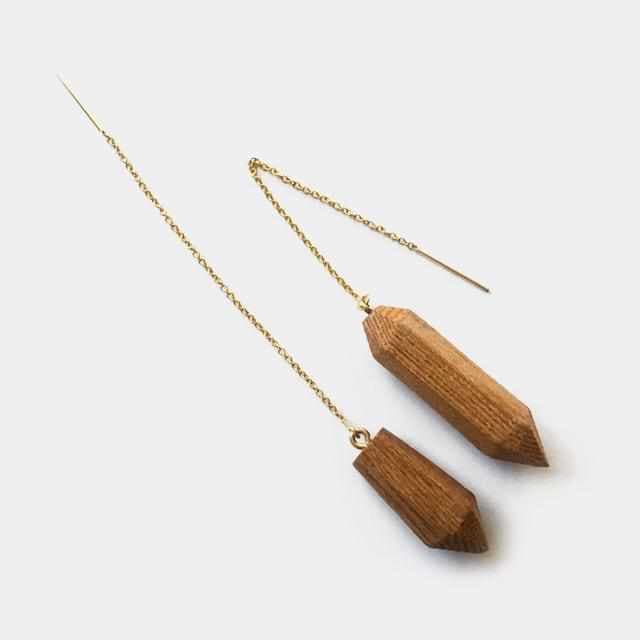
Ikugi (Ijiri Chokokusho) Biwako no Shizuku Earrings
【彦根仏壇】幾木 (井尻彫刻所) びわこのしずく (ピアス/ケヤキ)
zelkovaBECOS伝統工芸楽天市場店
Japanese name彦根仏壇
In the Hikone area of Shiga, a Buddhist altar comes together through joinery, lacquer, maki-e, gold leaf, metal fittings, and specialist roles gathered around the old route from castle town to Nakasendo.
Information last updated 120 days ago
3 images【彦根仏壇】幾木 (井尻彫刻所) びわこのしずく (ピアス/ケヤキ)
zelkovaBECOS伝統工芸楽天市場店
 3 images
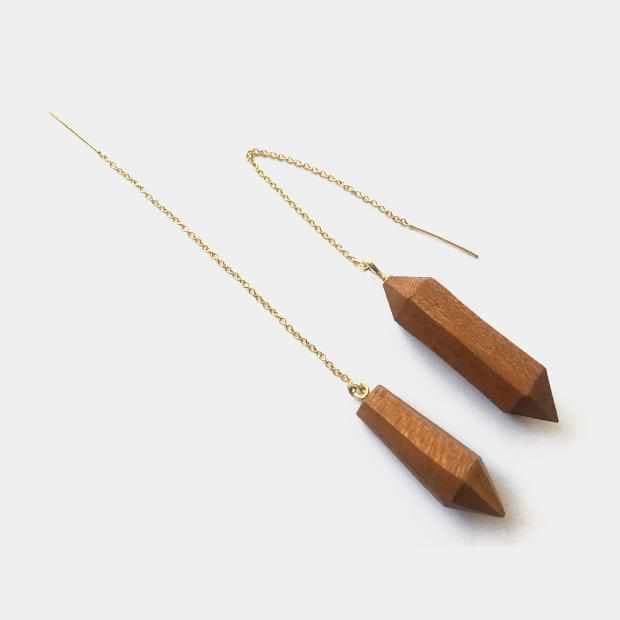
【彦根仏壇】幾木 (井尻彫刻所) びわこのしずく (ピアス/サクラ)
sakuraBECOS伝統工芸楽天市場店
First time buying on Rakuten? How residents in Japan order →
Nanamagari in Hikone, Shiga, links the old castle town with the Nakasendo route. Hikone butsudan is associated with Hikone City and nearby areas including Maibara and Aisho, yet its clearest form is the altar itself: keyaki, hinoki, and sugi shaped into a disassemblable wooden body, lacquer built up through repeated coating and polishing, and maki-e, gold leaf, shell, copper, and brass brought together on the visible surfaces.
Nanamagari sits where Hikone’s castle town met traffic on the Nakasendo route. That geography matters because Hikone butsudan developed with altar-related specialists gathered around this route, supported by the Hikone domain and by household Buddhist altar use in the Kotō and Kohoku region. The production area reaches Hikone City, Maibara City, Aisho Town, and nearby places, while Nanamagari gives the craft a walkable center: a bend-filled street where road, castle town, and altar making belong to the same local map.
The beginning of Hikone butsudan is usually placed in the Edo period, when craftspeople connected with weapons and armor turned skills in lacquer, joinery, and decorative metal fittings toward Buddhist altar making. The continuity is practical: lacquerers, cabinetmakers, and metalworkers carried techniques for coating, fitting, and ornamenting hard materials into a new household object. The large lacquered and gold-leaf altar associated with Hikone is built from that combination of wooden body, polished surface, shining interior, and many fitted parts.
The division called kubu shichishoku places seven specialist roles around one altar. Wood-body makers choose woods such as keyaki, hinoki, and sugi for the frame; shrine-structure makers assemble roof, pillar, and railing parts; carvers cut flowers, arhats, bodhisattvas, and other motifs with chisels and knives. Lacquerers build the surface through base, middle, and final coats with repeated polishing, while maki-e artists use gold and silver powder with shell. Gold-leaf specialists apply leaf to the interior, metal-fitting makers shape copper and brass ornaments, and final assembly brings the separate work back into one object.
The wooden structure may use keyaki, hinoki, sugi, pine, sen, himekomatsu, and ebony, chosen for different parts of the altar. Hikone butsudan uses hozogumi joinery, a structure that allows the altar to be disassembled, which supports work by separate specialists and later repair. For custom dimensions, makers may create a measuring stick called a tsue in place of relying on a fixed drawing. That tool turns the proportions of a particular altar into a physical guide, keeping the process close to the measured room and the wood on the workbench.
The visible character of Hikone butsudan rests on layered surfaces. Wood-grain lacquer brings the grain forward on the front of the altar, while repeated coating, polishing, and burnishing give the lacquer depth and durability. Maki-e adds gold powder, silver powder, and shell; a single altar may use more than 1,000 sheets of gold leaf, and the metal fittings can number from 300 to 800 pieces. The making time, from about two months to as long as two years, follows from those layers, parts, and specialist handoffs.
Hikone butsudan has long belonged to the household Buddhist altar setting, especially rooms with a dedicated butsuma. Makers have also developed unit-style altar spaces and forms that suit flooring rooms or storage furniture, so the altar can be placed in homes without the older room layout. In 1975, Hikone butsudan entered Japan’s national traditional-craft category; in practical terms, that context points to a defined production area, a specialist community, and recognizable materials and processes. The room may change, but the object still gathers wood, lacquer, gold leaf, maki-e, and metal fittings into one focused place for remembrance.
Hikone butsudan is easiest to understand through concrete things: Nanamagari’s route between castle town and road, woods such as keyaki and hinoki, hozogumi joinery, wood-grain lacquer, maki-e, gold leaf, and metal fittings. Its continuity is carried by a network of specialists around one object. As homes shift from dedicated butsuma rooms to flooring interiors and storage-based spaces, the altar keeps the same material grammar while finding a different place in the room.
Compiled from public records and official sources; see the recognition links below. Details may change over time.
Where this product is officially registered, designated, or recognized in Japan.
It is written as 彦根仏壇 in Japanese. Search Rakuten and other Japanese sites with that spelling — the English name will not bring up the listings.
Hikone butsudan is a Buddhist altar and fitting craft associated with Hikone City, Maibara City, Aisho Town, and nearby areas in Shiga. Its place story centers on Nanamagari, the district between Hikone's castle town and the Nakasendo route. One altar is made through seven specialist roles covering wood body work, shrine-structure parts, carving, lacquer, maki-e, gold leaf, metal fittings, and assembly, using woods, lacquer, gold leaf, shell, copper, and brass.
The origin account for Hikone butsudan reaches back to the Edo period and to craftspeople formerly involved with weapons and armor. Hozogumi joinery makes the altar structure disassemblable and supports specialist workflow and repair. Makers may create a custom measuring stick called a tsue for an altar rather than relying only on a fixed drawing. A Hikone butsudan may use more than 1,000 sheets of gold leaf, and metal fittings can number from 300 to 800 pieces.
Buddhist altars became common in private homes during the Edo period, and today many purchases are connected with funerals and remembrance of the deceased. For homes without a dedicated altar room, newer products include unit-style altar spaces and storage furniture suited to flooring interiors. The cooperative can help with altar purchase, washing, and disposal, as well as repair inquiries for temple architecture, shrine palanquins, and festival floats.
Keep craft pieces out of direct sunlight, damp, and sharp temperature swings, and store them where they won't knock against anything. Wood, bamboo, lacquer, and paper don't tolerate water — wipe any moisture off immediately. Specific care notes are on the listing.
Most options are shelf-stable, boxed, and travel well, so they suit gifting or bringing home. Confirm the final storage and delivery terms on the Rakuten listing.
On Rakuten: the shops listed here right now are BECOS伝統工芸楽天市場店. We don't sell directly; purchase, payment, stock, and delivery are all handled on the Rakuten product page.