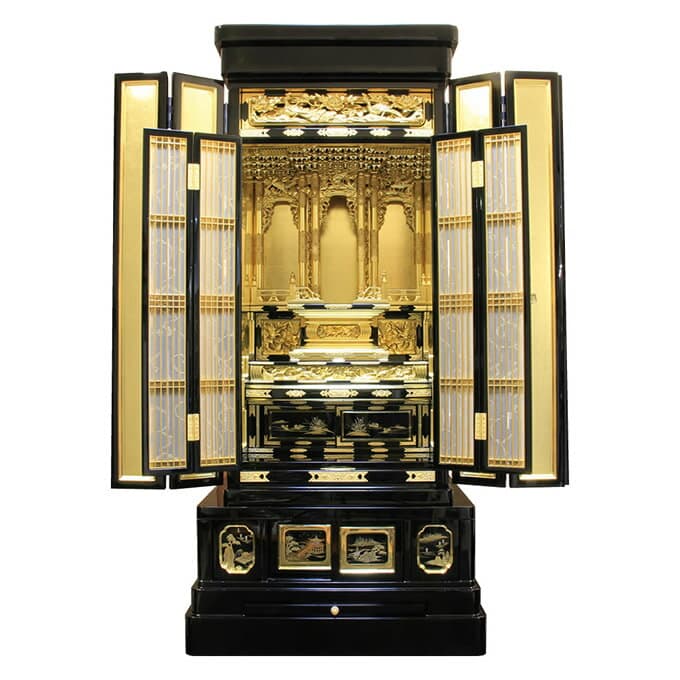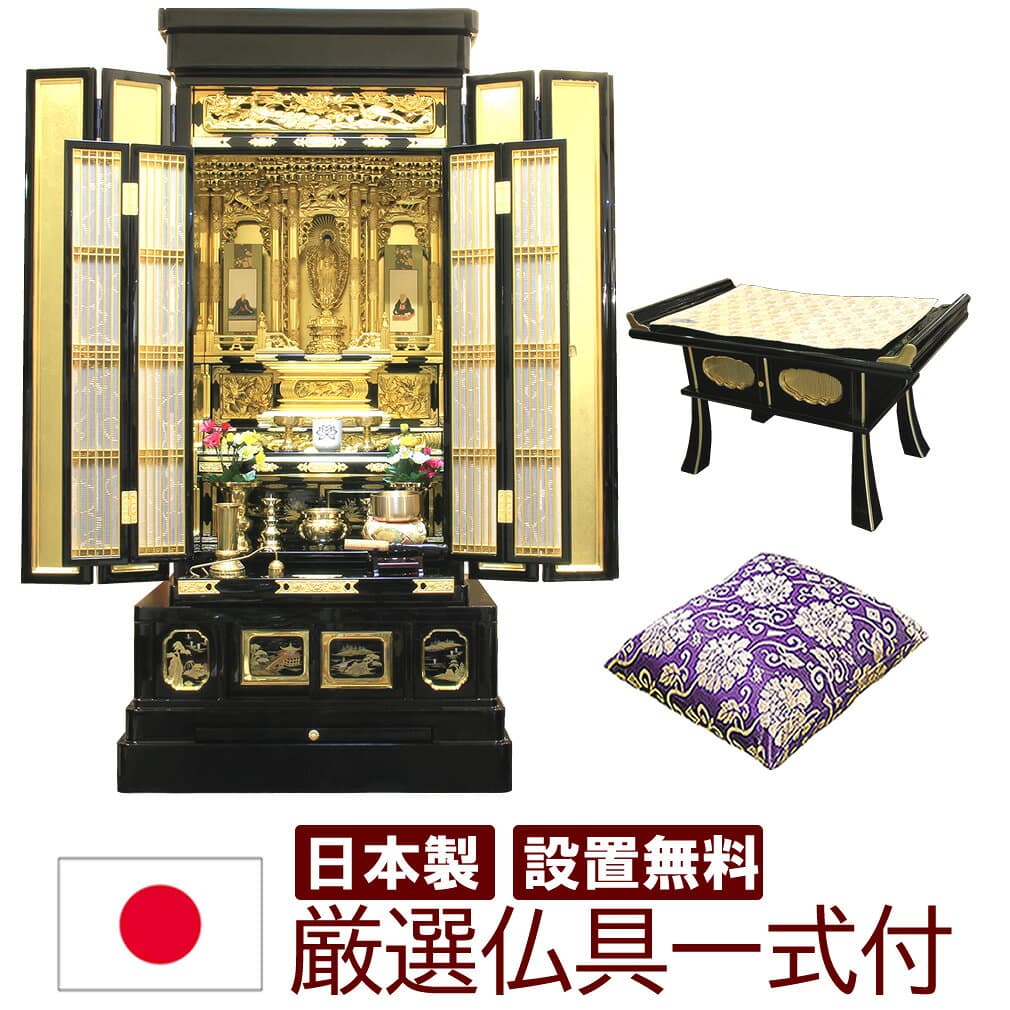
仏具一式セット 金仏壇 日本製 国産 川辺仏壇 配達員がご指定場所に設置まで無料で安心 仏像 経机 座布団もセット 雅 みやび 38-16 高さ115cm 浄土真宗本願寺派 西 漆 金箔 蒔絵 半間仏間にピッタリ リビング マンション 仏間 和室 洋室 床の間 畳 床置き 直置き
仏壇 神棚の松山神佛具店
¥970,000
View on Rakuten →Japanese · new tab
Japanese name川辺仏壇
In Kawabe-cho, Minamikyushu, Kawanabe Butsudan gathers wood base work, carving, miniature palace assembly, metal fittings, maki-e, lacquer, and gold leaf into one Buddhist altar.
Information updated 65 days ago
仏壇 神棚の松山神佛具店
¥970,000
View on Rakuten →Japanese · new tab
金仏壇 日本製 国産 川辺仏壇 高級仏壇の証 川辺仏壇ブランド 完全職人手作り 配達員がご指定場所に設置まで無料で安心 雅 みやび 38-16 高さ115cm 浄土真宗本願寺派 西 用 漆 金箔 蒔絵 半間仏間にピッタリ リビング マンション 仏間 和室 洋室 床の間 畳 床置き 直置き
38-16, height 115 cm仏壇 神棚の松山神佛具店
¥850,000
View on Rakuten →Japanese · new tab
The name Kawanabe Butsudan sits in Kawabe-cho, Minamikyushu, Kagoshima. Its boundary is concrete: the materials are processed in Kawabe town, and the Buddhist altar is manufactured and produced there. Up close, the altar begins with cedar, hiba, and pine in the wooden body, then moves through carving, a small lattice-built palace section, copper fittings, lacquer-drawn maki-e, and gold-leaf finishing. At Kawanabe Butsudan Kogeikaikan, 6140-4 Hirayama, Kawabe-cho, these large workshop processes become small hand-led encounters with raden, maki-e, and gold leaf.
Kawanabe Butsudan is tied to a precise local rule: materials are processed in Kawabe town, and the altar is manufactured and produced in Kawabe town. The place name therefore rests on work done in the town, from the handling of cedar, hiba, and pine before the wooden body is made to the final stage when gold leaf is applied and the parts are assembled. Labels and quality marks on finished altars keep that Kawabe-made boundary attached to the object itself.
Kawanabe Butsudan Kogeikaikan stands at 6140-4 Hirayama, Kawabe-cho, Minamikyushu. Inside, artisans lead small works such as raden accessories and chopsticks, maki-e plates, metalwork-style wind chimes, and gold leaf applied to black plates. Each object brings a large altar-making technique down to hand scale: the glint of blue shell, a lacquer line for maki-e, a metal surface shaped by tools, and the careful placement of gold leaf. Groups can also be received there with advance contact.
The altar starts with wood base work. Cedar, hiba, pine, and related materials are joined and shaved into the body; tools carry the shape forward, while the final adjustment is still done by hand. Carving then draws form out of the wood, with some areas cut deeper because lacquer and gold leaf will come later. The palace section is built from small wooden lattice pieces, and one Kawanabe feature is practical as well as delicate: when bamboo skewers are removed, that palace section can be taken apart.
The metal fittings begin as copper plate worked by bending, hammering, cutting, and chiseling. A chisel set against the plate raises patterns, and the hammer sound belongs to the making as much as the ornament does. Maki-e changes the pace to lacquer. A design is drawn in lacquer over a lacquered surface, then finished with gold powder and blue shell. The moment for sprinkling gold powder depends on how the lacquer is drying, so timing becomes part of the visible surface.
The lacquer stage uses good natural lacquer and careful application so dust does not enter the coating. In the final stage, gold leaf is applied and the prepared parts are assembled with care to avoid scratches. The quality marks connected with Kawanabe Butsudan also point to natural lacquer, hand application, and pure gold-leaf pressing. For the reader, those terms resolve into concrete actions: brushing lacquer, watching the surface, setting gold leaf, and fitting the finished pieces together.
Kawanabe Butsudan remains visible beyond the workbench through the Kagoshima Prefecture Kawanabe Butsudan Cooperative. The cooperative keeps pages on Kawanabe Butsudan and altar care, and its current activities include Kawanabe Craft Marche, workshops, Yoka-do Kawanabe Craft Fair, and a Butsudan Kuyo-sai memorial event. These touchpoints place the craft in ordinary local calendars: a workshop upstairs at the craft hall, an event day in Kawabe, and a memorial gathering around Buddhist altars that have reached the end of use.
Kawanabe Butsudan can be understood through one town and seven linked processes. Kawabe-cho gives the name its boundary; cedar, hiba, and pine form the body; copper fittings carry chiseled patterns; lacquer holds gold powder and blue shell; gold leaf closes the altar in light. When the craft hall in Hirayama turns raden, maki-e, and gold leaf into small works guided by artisans, the altar is no longer only a finished object. It becomes a set of local hand skills that can be watched, handled, and remembered in Kawabe.
Compiled from public records and official sources; see the recognition links below. Details may change over time.
Where this selection is officially registered, designated, or recognized in Japan.
It is written 川辺仏壇 in Japanese. Search Rakuten and other Japanese sites with that spelling — the English name will not return the listings.
Storage varies by product — shelf-stable, refrigerated, or frozen — and is stated on the packaging and the Rakuten listing. Shelf-stable processed foods usually need refrigerating once opened and eating within a few days; chilled and frozen items go straight into storage on arrival. Treat the best-before date on the physical packaging as authoritative.
Kawanabe Buddhist altars is a regional foods from Kagoshima. We compile its regional connection and characteristics against official registries, local sources, and live Rakuten listings.
Most options are shelf-stable, boxed, and travel well, so they suit gifting or bringing home. Confirm the final storage and delivery terms on the Rakuten listing.
We don't sell directly. This page compiles Rakuten listings and affiliate links; purchase, payment, stock, and delivery all happen on the Rakuten listing.