 3 images
Chiba Katsuura Tantanmen Fresh Ramen
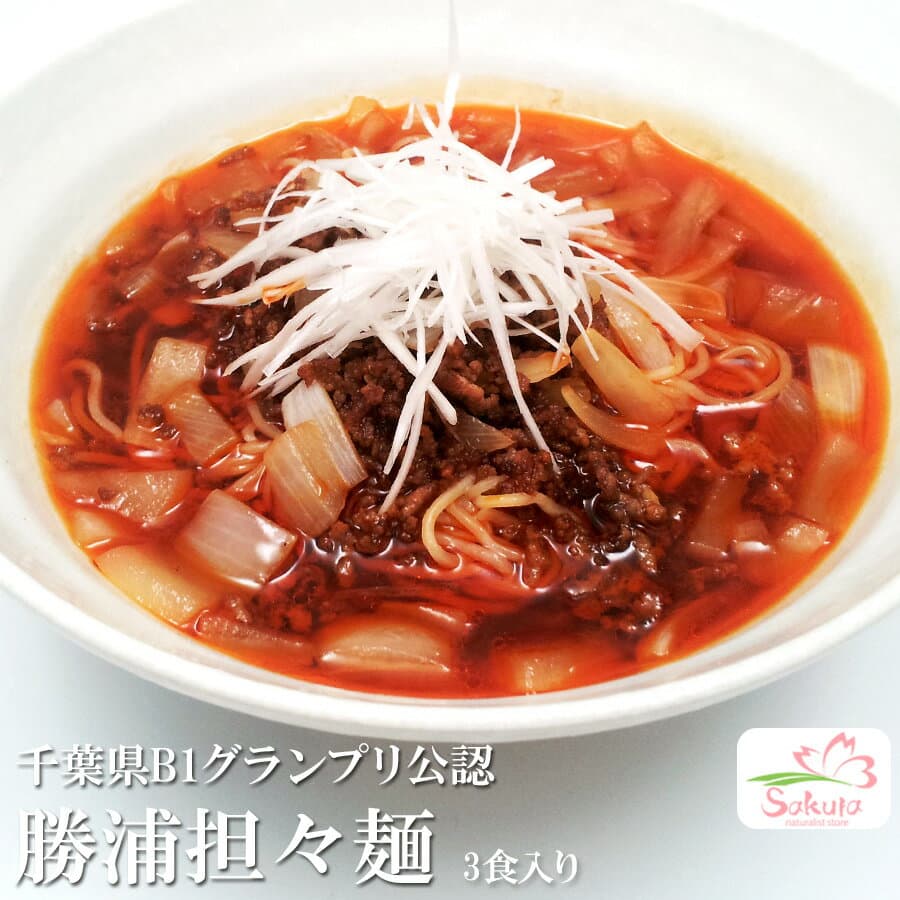
B1グランプリ公認 千葉県 勝浦タンタンメン(3人前・担々麺) 父の日 御中元 お中元
3 servings自然派ストアSakura
4.9 / 11 reviews
Japanese name勝浦タンタンメン
In Chiba’s Katsuura City, soy-sauce broth, chili oil, onion, and minced meat connect a hot bowl once used by ama divers and fishermen with school lunches and about 40 city eateries.
Information last updated 120 days ago
3 imagesB1グランプリ公認 千葉県 勝浦タンタンメン(3人前・担々麺) 父の日 御中元 お中元
3 servings自然派ストアSakura
4.9 / 11 reviews
 3 images
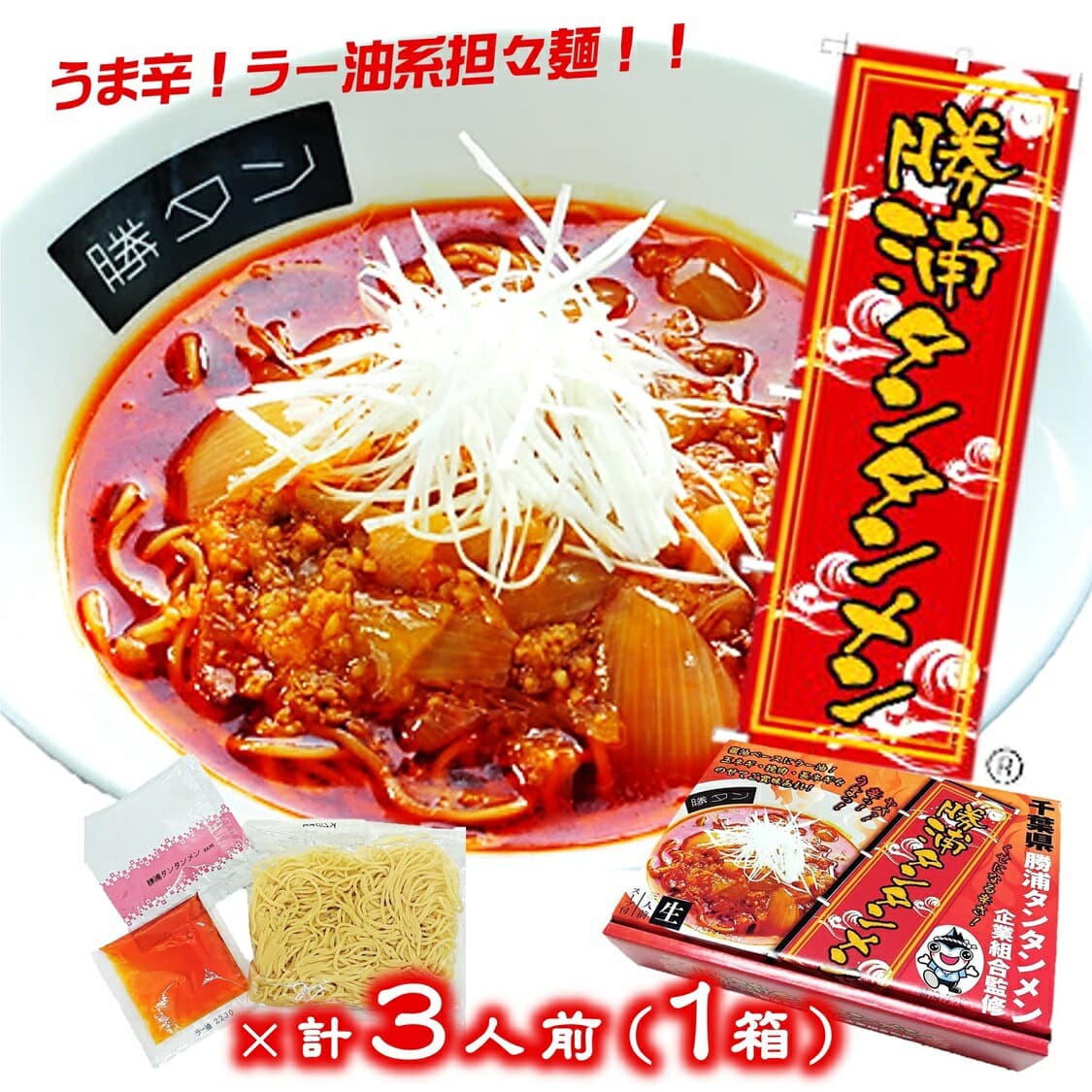
(送料無料)【勝浦タンタンメン】3食入 辛 ご当地 ラーメン 千葉県 勝浦担々麺 勝浦タンタンメン 勝浦 タンタン 麺 勝浦ラーメン 担担麺 醤油ベース ラー油系 ラー油後入れ 辛さ調節可 生麺 B-1グランプリ B級グルメ 年越し ラーメン
3 servings (438g)千葉・鴨川 房総のお土産 亀屋本店
4.5 / 16 reviews
 2 images
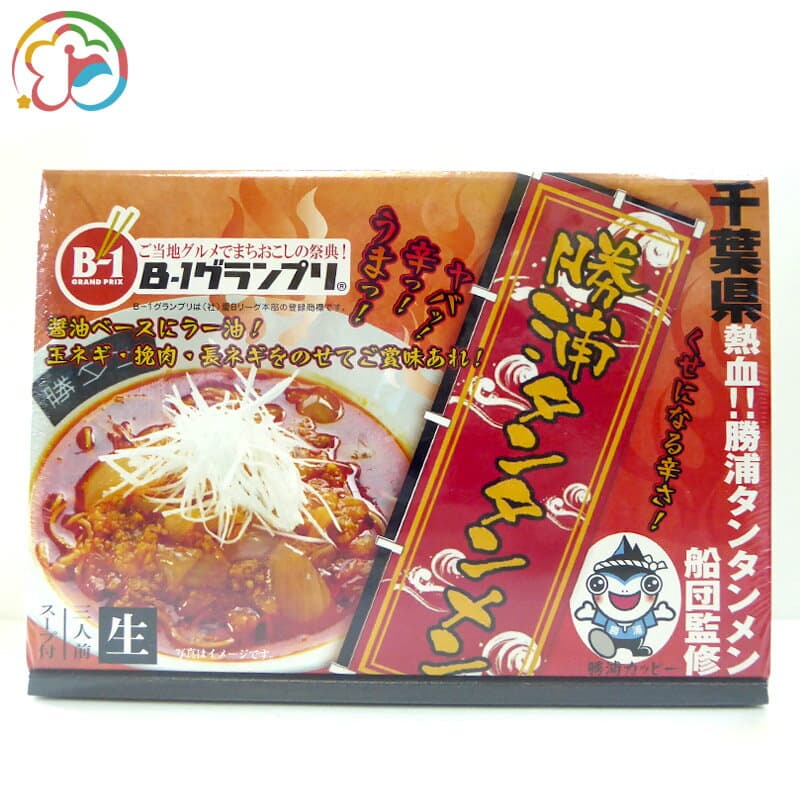
勝浦タンタンメン【B-1グランプリ】【ご当地グルメ】【千葉】【房総】【道の駅】【ローズマリー公園】【生ラーメン】【担々麺】
ローズマリー公園道の駅
5.0 / 5 reviews
First time buying on Rakuten? How residents in Japan order →
Katsuura Tantanmen begins with color: red chili oil over a soy-sauce broth. Chopped onion and minced meat are the usual companions, giving the bowl sweetness, weight, and heat rather than the sesame-rich body many diners associate with tantanmen. Its local shape is concrete: Chiba’s Katsuura City, ama divers and fishermen coming back from cold sea work, and a dish said to have continued for more than 50 years. Today the same flavor frame appears in about 40 city eateries, in school lunch, and in local variations that still keep soy sauce, chili oil, onion, and minced meat at the center.
The first structure of Katsuura Tantanmen is simple and vivid: soy-sauce broth, a generous layer of chili oil, chopped onion, and minced meat. The onion brings sweetness into the heat, while the meat gives the broth a heavier center. Sesame-style tantanmen often leads with nutty richness; Katsuura’s bowl moves through soy sauce, red oil, onion, and meat, so the heat feels tied to ramen rather than to a creamy sesame soup.
Local accounts connect the bowl to ama divers and fishermen warming their bodies after cold work at sea. That setting explains why hot broth and chili oil matter in Katsuura: the bowl belongs to a coastal workday, after wet air and cold water, when heat is practical before it is dramatic. The dish is described as a local taste continuing for more than 50 years, carried by repeated meals in a city built around the sea.
Around 20 years ago, the youth group of the local commerce association noticed that Katsuura’s tantanmen differed from bowls elsewhere. At the time, more than a dozen eateries were already serving it. Looking across those bowls, the shared elements were soy-sauce broth, chili oil, onion, and minced meat, and the name and definition were organized around that center. Individual places still vary the bowl with garlic, nira, scallion, miso-based soup, and different levels of heat.
The bowl now appears at about 40 eateries in Katsuura City, moving through dining rooms, ramen counters, and other local tables without losing its red broth. Some people come to Katsuura with the dish in mind, and some places draw lines. Winter makes the warming logic easy to understand, while summer brings another habit: eating something hot and spicy on purpose. The number matters because it shows a shared city practice rather than a single kitchen’s signature.
Earlier spellings varied across kanji and hiragana, then the name was brought into katakana with Katsuura in front. Use of the name is managed as a local brand: in principle it stays tied to Katsuura City, with a small number of exceptions outside the city. That boundary makes the place visible in a practical way. A bowl called Katsuura Tantanmen points back to Katsuura before it points to any single restaurant.
Katsuura Tantanmen also appears in school lunch, where children meet the same soy sauce, chili oil, onion, and minced meat in a classroom setting. The flavor has spread into menma, sweets, pasta, taiyaki, and steamed buns. In 2026, the dish was chosen for Japan’s 100-Year Food future category. The concrete meaning sits in the everyday spread around it: local lunches, snack forms, and a red broth flavor carried to another generation.
Katsuura Tantanmen stays memorable because its outline is clear: soy-sauce broth, chili oil, onion, minced meat, and the need for warmth after sea work. That outline leaves room for garlic, nira, scallion, miso-based broth, and different heat levels, while still keeping the bowl recognizable across about 40 city eateries. With school lunch and local flavor variations beside it, the name Katsuura remains attached to a red bowl from a coastal city in Chiba.
Compiled from public records and official sources; see the recognition links below. Details may change over time.
Where this product is officially registered, designated, or recognized in Japan.
Regional collective trademark
Registered as a Regional Collective Trademark with the Japan Patent Office.
Sources1
It is written as 勝浦タンタンメン in Japanese. Search Rakuten and other Japanese sites with that spelling — the English name will not bring up the listings.
Katsuura tantanmen is a local ramen family centered on Katsuura City in Chiba. Its core bowl uses soy-sauce broth, chili oil, onion, and minced meat, unlike sesame-style tantanmen. Local accounts link it to ama divers and fishermen warming themselves after cold sea work, and the dish has continued for more than 50 years. About 20 years ago, local groups clarified the shared traits and name; today about 40 city eateries serve it, and the flavor also appears in school lunch and local food variations.
Katsuura tantanmen is centered on Katsuura City, Chiba Prefecture. Its core structure is soy-sauce broth with chili oil, chopped onion, and minced meat. It is described as a chili-oil style tantanmen, different from common sesame-style tantanmen. The bowl became established as a warming meal for local ama divers and fishermen after cold work at sea.
It is eaten as a hot bowl after cold sea work, to warm the body. It can be tried at many shops in Katsuura City; heat and toppings vary by shop. The flavor also appears in school lunch, menma, sweets, pasta, taiyaki, and steamed buns.
Storage varies by product — shelf-stable, refrigerated, or frozen — and is stated on the packaging and the Rakuten listing. Shelf-stable processed foods usually need refrigerating once opened and eating within a few days; chilled and frozen items go straight into storage on arrival. Treat the best-before date on the physical packaging as authoritative.
Most options are shelf-stable, boxed, and travel well, so they suit gifting or bringing home. Confirm the final storage and delivery terms on the Rakuten listing.
On Rakuten: the shops listed here right now are 自然派ストアSakura, 千葉・鴨川 房総のお土産 亀屋本店, ローズマリー公園道の駅. We don't sell directly; purchase, payment, stock, and delivery are all handled on the Rakuten product page.