 3 images
Kitamoto Tomato Curry
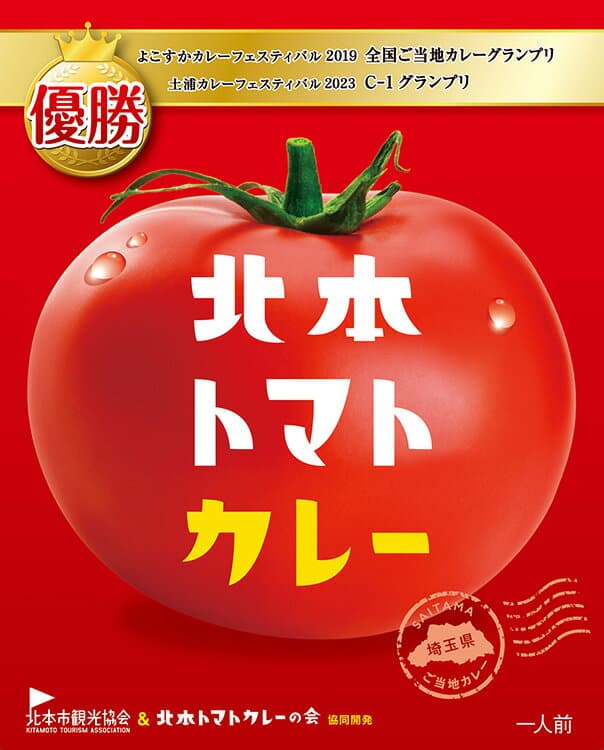
★プレゼント付き★全国ご当地カレーグランプリ優勝!北本トマトカレー 1人前 200g【2箱までメール便OK】
200g single servingアイアイの森 楽天市場店
4.8 / 6 reviews
Japanese name北本トマトカレー
In Saitama Prefecture’s Kitamoto City, tomato reddens the rice, enters the curry roux, and returns on top of the plate.
Information last updated 126 days ago
3 images★プレゼント付き★全国ご当地カレーグランプリ優勝!北本トマトカレー 1人前 200g【2箱までメール便OK】
200g single servingアイアイの森 楽天市場店
4.8 / 6 reviews
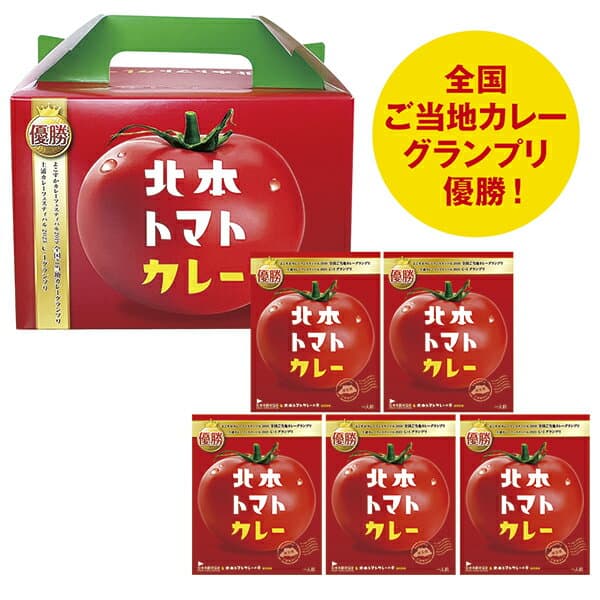
エントリーでP5倍 御中元 ギフト 送料込み 北本トマトカレーギフトボックス KC-01 エントリーでポイント5倍(5月27日01:59迄)
gift box, 200g x 5 packsまるひろオンラインショップ
4.5 / 2 reviews
First time buying on Rakuten? How residents in Japan order →
Kitamoto Tomato Curry comes from Kitamoto City in Saitama Prefecture, where tomato gives the local curry its clearest shape. The dish is defined by three positions: rice reddened with tomato, curry roux made with tomato, and tomato used as a topping. When the red rice, mild tomato-rich roux, and tomato topping meet on one plate, Kitamoto’s city name is carried through a visible, edible structure.
The center of Kitamoto Tomato Curry is tomato and the city that puts it into the plate. Kitamoto City presents the curry as a local gourmet food, and tomato becomes the ingredient that connects the rice, the roux, and the topping.
Its local character is concrete: Saitama Prefecture’s Kitamoto City, tomato as the defining ingredient, and three repeated uses on the plate. The curry carries that link in the red rice, the tomato in the roux, and the tomato on top. A restaurant version can look different from a household version, while the three tomato positions keep the curry tied to Kitamoto.
The boundary of the dish is easy to see. The rice must be turned red with tomato, the curry roux must use tomato, and the topping must include tomato. Those three conditions make tomato part of the curry’s structure, from grain to sauce to final bite.
The same structure leaves room for different hands. Restaurants in Kitamoto make their own versions, and households can follow the same conditions at home. A plate may change in appearance or emphasis, but red rice, tomato roux, and tomato topping keep the name recognizable.
Kitamoto Tomato Curry began in 2011, when Kitamoto held a local gourmet development contest to create a dish for a regional food event. The curry was selected from 24 recipes, then entered as “真っ赤な誘惑 北本トマトカレー” at the 9th Saitama B-class local gourmet competition in Kitamoto.
That beginning explains the dish’s shared-city form. Citizens were central to recipe development, and the curry has no single original restaurant. What continues is concrete: Kitamoto, the 2011 contest, the 24 recipes, and the three tomato conditions that local restaurants and households can keep using.
With plenty of tomato in the roux, Kitamoto Tomato Curry takes on a refreshing sweet-sour note. The curry is described as mild and easy to eat for adults and children, so tomato shapes the plate’s red color and the way the sauce tastes.
This approachable flavor helps the dish move between restaurant tables and home kitchens. Kitamoto City encourages restaurants and households to make original versions under the same three conditions, keeping the format open while the rice, roux, and topping remain tied to tomato.
Because Kitamoto Tomato Curry has no single original restaurant, attention stays with the city and its participants. Local restaurants can make the curry in different ways, and households can prepare their own plates, as long as tomato appears in the rice, roux, and topping.
Competition results sit best in the background of that civic format. The curry won at the 2011 Saitama local gourmet event in Kitamoto and later earned results at curry or local-food events in Yokosuka and Tsuchiura. Those events widened recognition, while the plate still begins with Kitamoto’s tomato and the three red positions that define the dish.
Kitamoto Tomato Curry turns a city ingredient into a clear plate structure: Kitamoto City in Saitama Prefecture, a 2011 contest with 24 recipes, citizen-centered development, no single original restaurant, and tomato in the rice, roux, and topping. Red rice, mild tomato-rich curry, and tomato on top make Kitamoto’s tomato easy to identify, repeat, and share across restaurants and home kitchens.
Compiled from public records and official sources; see the recognition links below. Details may change over time.
Where this product is officially registered, designated, or recognized in Japan.
Regional collective trademark
Registered as a Regional Collective Trademark with the Japan Patent Office.
Sources1
It is written as 北本トマトカレー in Japanese. Search Rakuten and other Japanese sites with that spelling — the English name will not bring up the listings.
Kitamoto tomato curry is a local curry from Kitamoto City in Saitama Prefecture, centered on tomato. Its three conditions are tomato-red rice, tomato in the curry roux, and tomato as a topping. In 2011, Kitamoto selected it from 24 recipes in a local gourmet development contest, then entered it as “真っ赤な誘惑 北本トマトカレー” at a Saitama local gourmet event, where it won. It has no single original restaurant; citizens helped develop it, and restaurants and households can make versions under the same tomato conditions.
In 2011, Kitamoto tomato curry was selected from 24 recipes in a local gourmet development contest. The curry was entered as “真っ赤な誘惑 北本トマトカレー” at the 9th Saitama B-class local gourmet competition in Kitamoto and won that event. Kitamoto tomato curry has no single original restaurant, and citizens were central to recipe development. The tomato-rich roux gives the curry a refreshing sweet-sour note and a mild taste.
City shops serve individual versions, so it is suited to comparing local restaurants rather than seeking a single original shop. Households may make their own versions as long as the rice, roux, and topping all use tomato; the city has run a home-photo event around Kitamoto Tomato Curry Day. The tomato-rich roux is sweet-sour and mild, with a flavor described as easy to eat for both adults and children.
Storage varies by product — shelf-stable, refrigerated, or frozen — and is stated on the packaging and the Rakuten listing. Shelf-stable processed foods usually need refrigerating once opened and eating within a few days; chilled and frozen items go straight into storage on arrival. Treat the best-before date on the physical packaging as authoritative.
Most options are shelf-stable, boxed, and travel well, so they suit gifting or bringing home. Confirm the final storage and delivery terms on the Rakuten listing.
On Rakuten: the shops listed here right now are アイアイの森 楽天市場店, まるひろオンラインショップ. We don't sell directly; purchase, payment, stock, and delivery are all handled on the Rakuten product page.