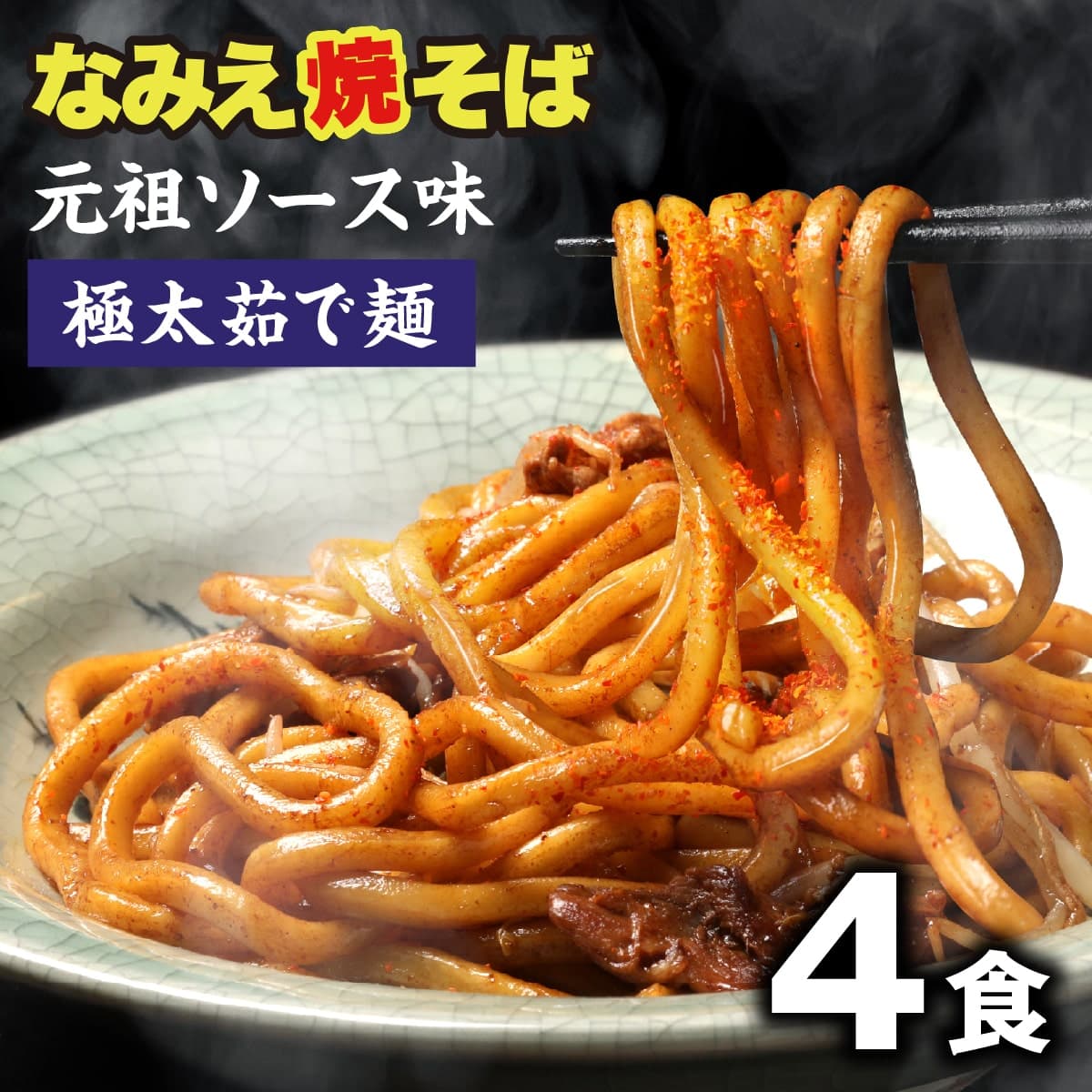
 3 images
Asahiya Namie Yakisoba with Original Sauce
【6/4(木)20時スタート 1,380円→1,000円】 なみえ焼きそば 焼そば 極太麺 なみえ焼きそば お取り寄せグルメ b級グルメ 常温 長持ち 旭屋 やきそば 太麺 ゆでめん 焼きそば麺 業務用 夜食 なみえ焼そば元祖味ソース4食
4 servings旭屋製麺所
4.5 / 649 reviews
Japanese nameなみえ焼そば
From Namie Town in Fukushima, Namie yakisoba is built around extra-thick Chinese noodles, bean sprouts, pork, sauce, ichimi chili pepper, and a filling shape familiar over roughly half a century.
Information last updated 121 days ago
3 images【6/4(木)20時スタート 1,380円→1,000円】 なみえ焼きそば 焼そば 極太麺 なみえ焼きそば お取り寄せグルメ b級グルメ 常温 長持ち 旭屋 やきそば 太麺 ゆでめん 焼きそば麺 業務用 夜食 なみえ焼そば元祖味ソース4食
4 servings旭屋製麺所
4.5 / 649 reviews
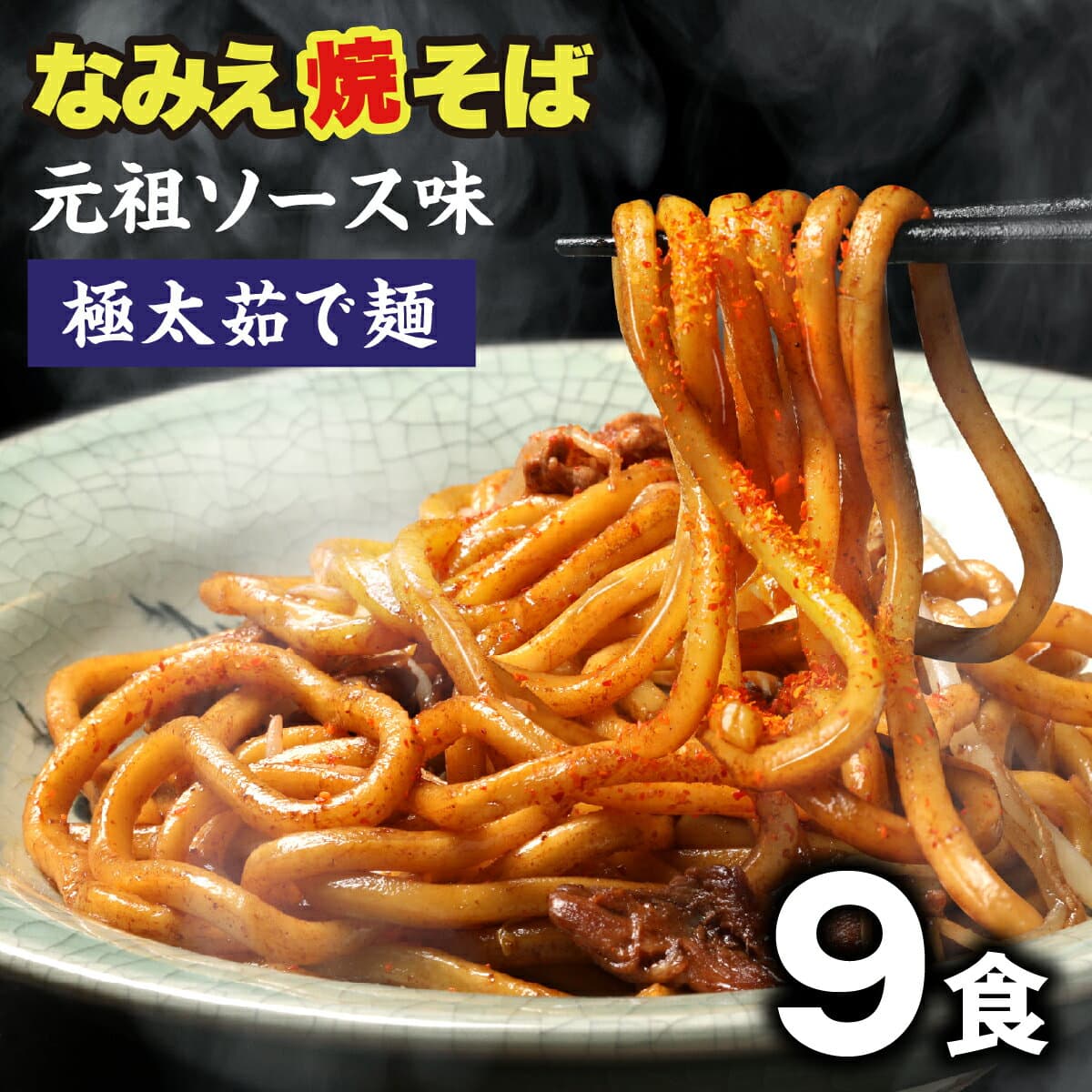 3 images
【6/4(木)20時スタート 2,880円→1,980円】 焼きそば 極太麺 太麺 なみえ焼きそば やきそば 浪江焼きそば お取り寄せグルメ 常温 長持ち 旭屋太麺 福島 焼きそば麺 なみえ焼そば ソース味 9食
9 servings旭屋製麺所
4.7 / 65 reviews
First time buying on Rakuten? How residents in Japan order →
Namie yakisoba announces itself through thickness. In Namie Town, Futaba District, Fukushima, the dish brings together Chinese noodles about three times the usual thickness, bean sprouts, pork, and a rich sauce, often finished with ichimi chili pepper. The bowl has a direct outline: heavy noodles, crisp sprouts, pork flavor, and sauce that holds to the strands so the meal feels substantial from the first bite.
The basic form of Namie yakisoba is thick Chinese noodles, bean sprouts and pork as the main toppings, and a sauce flavor. The noodles are described as about three times the usual thickness, so the first impression is weight and chew. Fukushima’s travel listing frames the dish in the same spare way: extra-thick Chinese noodles, special sauce, pork, and bean sprouts.
Namie yakisoba is said to have been devised about half a century ago for workers who needed a meal that was inexpensive, tasty, and filling. That background gives the thick noodles a practical role: they answer appetite during a workday. Bean sprouts and pork keep the toppings familiar, while the sauce pulls the pan together and gives the noodles the staying power described in the local account.
The name points to Namie Town in Futaba District, Fukushima. The dish is remembered there as a familiar extra-thick noodle yakisoba, and Fukushima’s travel material places it among Namie’s local foods. Its sense of place is carried by concrete details rather than broad labels: the town name, the thick noodles, bean sprouts, pork, and sauce are the clues that let diners recognize it.
In 2008, youth members of the Namie Town Chamber of Commerce formed Namie Yakimen Taikoku around Namie yakisoba and used the dish in town-promotion activity. An everyday plate moved into public events, where Namie’s name appeared with extra-thick noodles, bean sprouts, pork, and sauce. The ingredient base stayed plain; the setting expanded from local meals to gatherings where more people could meet the town through the dish.
After the March 2011 earthquake and the Fukushima Daiichi nuclear accident, Namie residents were scattered by evacuation, and members of Namie Yakimen Taikoku were also dispersed. Later, members cooked for Namie townspeople in Nihonmatsu and gathered from evacuation sites to appear at events. In those places, the noodles, sprouts, pork, and sauce gave displaced townspeople a familiar taste around which to meet.
Home-cooking process details show why the dish feels concentrated: pork and bean sprouts are stir-fried, then noodles and sauce are added; the noodles may be warmed or loosened first, and excess moisture is cooked off so the sauce coats the extra-thick strands. Ichimi chili pepper belongs to the finishing style, adding a dry red heat over the rich sauce and heavy noodles.
Namie yakisoba stays memorable because its outline remains clear: Namie Town, extra-thick Chinese noodles, bean sprouts, pork, sauce, and ichimi chili pepper. A filling worker-oriented meal from roughly half a century ago later moved through 2008 town events and, after 2011, through gatherings in Nihonmatsu and other places. The dish carries Namie most clearly through the thickness of its noodles and the sauce that holds to them.
Compiled from public records and official sources; see the recognition links below. Details may change over time.
Where this product is officially registered, designated, or recognized in Japan.
Regional collective trademark
Registered as a Regional Collective Trademark with the Japan Patent Office.
Sources1
It is written as なみえ焼そば in Japanese. Search Rakuten and other Japanese sites with that spelling — the English name will not bring up the listings.
Namie yakisoba is a local yakisoba from Namie Town, Futaba District, Fukushima. It uses Chinese noodles about three times the usual thickness, plus bean sprouts, pork, and sauce, and is often finished with ichimi chili pepper. The dish was devised about half a century ago as a filling meal for workers, and town restaurants serve it.
In 2008, youth members of the Namie Town Chamber of Commerce formed Namie Yakimen Taikoku around the dish. After 2011, Namie Yakimen Taikoku cooked for Namie townspeople in Nihonmatsu and gathered from evacuation sites for event appearances. Fukushima tourism material presents it under gourmet and souvenir categories, as extra-thick Chinese noodles with special sauce, pork, and bean sprouts. The chamber describes it as an inexpensive, tasty, long-familiar thick-noodle yakisoba from Namie.
It is often finished with ichimi chili pepper. A packaged home version is stir-fried with pork, bean sprouts, noodles, and sauce, then cooked until extra moisture is gone and the sauce coats the thick noodles. Town restaurants in Namie serve it, and it is eaten as a filling meal for workers.
Storage varies by product — shelf-stable, refrigerated, or frozen — and is stated on the packaging and the Rakuten listing. Shelf-stable processed foods usually need refrigerating once opened and eating within a few days; chilled and frozen items go straight into storage on arrival. Treat the best-before date on the physical packaging as authoritative.
Most options are shelf-stable, boxed, and travel well, so they suit gifting or bringing home. Confirm the final storage and delivery terms on the Rakuten listing.
On Rakuten: the shops listed here right now are 旭屋製麺所. We don't sell directly; purchase, payment, stock, and delivery are all handled on the Rakuten product page.