 3 images
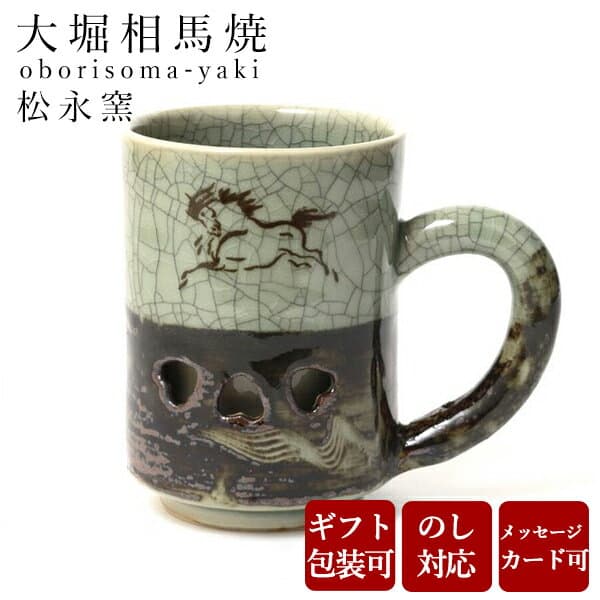
大堀相馬焼 松永窯 Double-Walled Horse Zodiac Mug
【特別価格 4,840円→4,350円】 2026年 干支 午年 マグカップ おしゃれ 大堀相馬焼 松永窯 二重マグ 200cc 陶器 焼き物 古希 お祝い 米寿 プレゼント 結婚祝い ギフト 退職祝い 男性 還暦祝い 喜寿 祝い ギフト プレゼント
200cc縁器屋 楽天市場店
4.7 / 17 reviews
Japanese name大堀相馬焼
Obori Soma ware from Namie Town’s Ohori district is shaped by crackled blue glaze, a double-wall vessel for hot tea, and a horse motif carried by quick brushwork.
Information last updated 121 days ago
3 images【特別価格 4,840円→4,350円】 2026年 干支 午年 マグカップ おしゃれ 大堀相馬焼 松永窯 二重マグ 200cc 陶器 焼き物 古希 お祝い 米寿 プレゼント 結婚祝い ギフト 退職祝い 男性 還暦祝い 喜寿 祝い ギフト プレゼント
200cc縁器屋 楽天市場店
4.7 / 17 reviews
 3 images
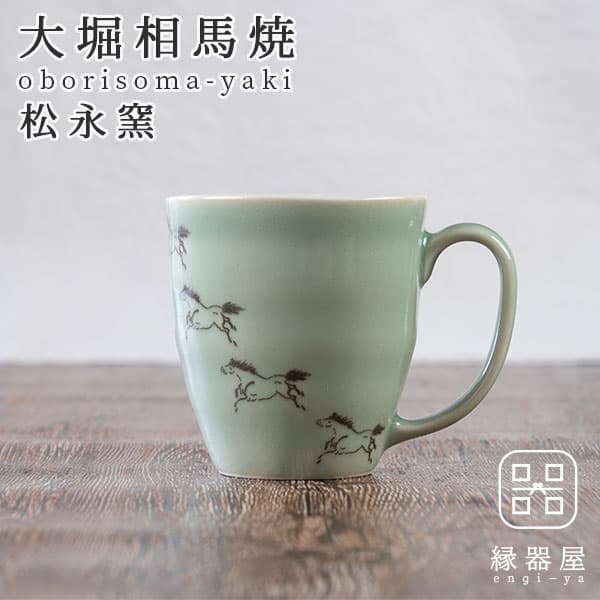
【特別価格 3,960円→3,560円】 2026年 干支 午年 マグカップ おしゃれ 大堀相馬焼 松永窯 馬九行久(うまくいく) マグ(グリーン) 300cc 陶器 焼き物 古希 お祝い 米寿 プレゼント 結婚祝い ギフト 退職祝い 男性 還暦祝い 喜寿 祝い ギフト プレゼント
green, 300cc縁器屋 楽天市場店
4.9 / 21 reviews
First time buying on Rakuten? How residents in Japan order →
Ohori in Namie Town, Futaba District, Fukushima Prefecture, is the place name at the center of Obori Soma ware. The pottery has been made in the Ohori district, with a history placed back to the Genroku years of the Edo period more than 300 years ago. A vessel is often recognized through three concrete details: blue crackle over the glaze, a double wall that separates the inner and outer vessel, and a running horse painted in a trained line. Glaze, form, hot tea, and horse imagery meet in one daily object.
Obori Soma ware carries the name of Ohori, a district of Namie Town in Fukushima Prefecture. It is treated as pottery produced and handed down there, and it is also named as a national traditional craft. In practical reader terms, that designation points to a place, a community of kilns, and recognizable techniques: blue crackle, double-wall construction, and the running horse.
Those three details give the first way into a vessel. Blue crackle begins with glaze and cooling air; the double wall changes how heat from tea reaches the hand; the running horse depends on brush speed, pressure, and training.
Blue crackle begins before the line is visible. Makers apply two or more glazes with different thermal expansion rates; after firing, when the vessel meets outside air, fine cracks spread across the surface and a clear crackling sound can ring out. The visible pattern and the brief sound belong to the same cooling moment.
The surface line reads as a material trace of firing, with glaze and air both present in the finished vessel. The cooperative names blue crackle among the defining traits of Obori Soma ware, so the close view of the glaze becomes one of the most concrete ways to recognize the family.
The double-wall form is easiest to understand through touch. The inner and outer vessels sit apart, leaving space between them; when hot tea is poured inside, heat is less likely to move straight to the hand. The form connects a cup’s shape to an ordinary tea-drinking gesture.
Local pottery history treats double-wall construction as a representative feature today and transmits an attribution to the potter Sakamoto Kumajiro in the late Meiji period. The account places the structure inside a period when vessel form and use were changing in the kiln region.
The running horse gives the vessel a moving line. It is painted in one sweep with skilled brushwork, and the motif is associated with Kano-school brush technique. On a tea bowl or cup, the sense of motion comes from the speed and pressure of the brush.
An early origin account places locally gathered clay, tea bowls, and horse images together; later, in the Meiji period, painters specializing in horse motifs also appeared. These transmitted details keep the focus on hand painting: the horse reaches the ceramic surface through practiced wrist movement and line control.
Early pottery in Ohori village is associated with locally gathered clay used for tea bowls. Later changes brought celadon glaze and other shifts in surface and form; celadon glaze is said to have appeared by the late Edo period, while the Meiji and Taisho periods brought changes in glazes and vessel shapes.
After 2011, the material chain changed sharply. Toyama stone, formerly used for celadon glaze, could no longer be used, so makers tested other clay and glaze materials to find blends suited to Obori Soma ware. Continuity here is concrete work: selecting clay, adjusting glaze, and reading the fired surface.
After the March 2011 earthquake and nuclear accident, the Ohori district was placed under evacuation restrictions. More than 20 kilns had to leave town, and about half later rebuilt kilns elsewhere; makers also restarted activity at new sites within Fukushima Prefecture.
In 2021, the cooperative opened an office and workshop inside Namie no Waza Nariwai-kan in Namie Town. Pottery classes, event appearances, visits, and displays of member works gave the ware a renewed town base for vessels and hand skills. In 2023, evacuation orders were partly lifted around facilities including Togei no Mori Ohori, and production-area recovery moved closer to Ohori again.
Encountering Obori Soma ware today can begin at the Namie workshop and pottery classes. Around hands-on making and displays, double walls, running horses, and blue crackle become tangible details rather than isolated names: vessel form, brush line, and glaze change can be seen together.
Since fiscal 2019, the cooperative has used a regional revitalization cooperation program to attract younger makers, while preserving experienced craft workers’ techniques on video. The continuing scene is concrete: a workshop, young makers, recorded hand movements, and vessels still being fired after displacement.
Obori Soma ware holds Ohori in Namie together with blue crackle from cooling glaze, a double wall shaped for hot tea, the running horse in brushwork, and kiln activity rebuilt after 2011. Its continuity is concrete: temperature in the hand, fine lines in glaze, brush movement on the vessel, and makers testing materials, teaching classes, and firing work after displacement.
Compiled from public records and official sources; see the recognition links below. Details may change over time.
Where this product is officially registered, designated, or recognized in Japan.
It is written as 大堀相馬焼 in Japanese. Search Rakuten and other Japanese sites with that spelling — the English name will not bring up the listings.
Obori Soma ware comes from the Ohori district of Namie Town, Fukushima Prefecture, with more than 300 years of history from the Genroku years of the Edo period. Its defining traits are blue crackle, a double-wall form that keeps heat from hot tea from easily reaching the hand, and a running-horse motif painted in swift brushwork. After 2011, more than 20 kilns evacuated from Ohori, about half rebuilt, and the cooperative opened a workshop base in Namie Town in 2021.
Blue crackle is produced by applying two or more glazes with different thermal expansion rates; after firing, fine cracks spread as the vessel meets outside air and can produce a ringing sound. The double-wall form separates inner and outer vessels so heat from hot tea does not easily reach the hand. The running horse is a key visual trait painted quickly with trained brushwork. After 2011, Toyama stone formerly used for celadon glaze could no longer be used, and makers tested other clay and glaze materials.
It is used as everyday tea vessels and tableware. The double-wall structure lets a person hold a vessel with hot tea because heat is not easily transmitted to the hand. The cooperative runs pottery classes and, at the Namie facility opened in 2021, carries out pottery experiences alongside exhibition and sales of members' work.
Porous earthenware is usually given a "medome" treatment first — simmer it gently in rice-rinsing water (or water with a little flour), then cool, rinse, and air-dry. This reduces staining and odour absorption. Porcelain normally just needs a wash. Follow the listing where it says otherwise.
Handmade earthenware, pieces with gold or silver overglaze, and lacquerware generally should not go in a dishwasher, microwave, or heated drying cabinet; heat-resistant porcelain usually can. Check the Rakuten listing for the specific piece.
Most options are shelf-stable, boxed, and travel well, so they suit gifting or bringing home. Confirm the final storage and delivery terms on the Rakuten listing.
On Rakuten: the shops listed here right now are 縁器屋 楽天市場店. We don't sell directly; purchase, payment, stock, and delivery are all handled on the Rakuten product page.