 3 images
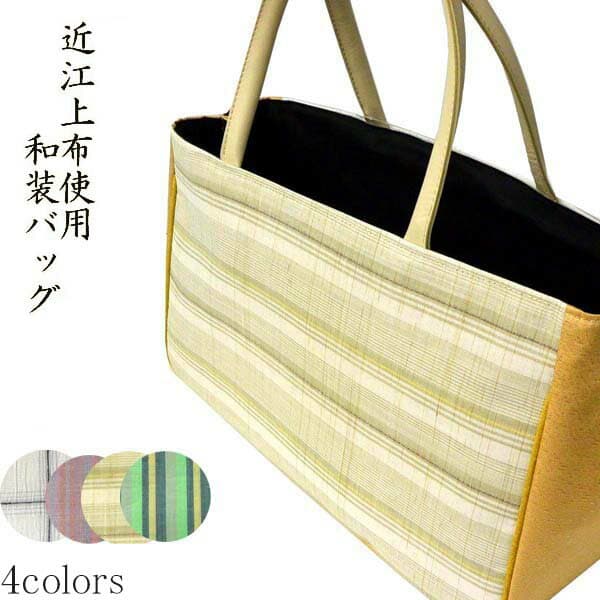
Omi Jofu Japanese-Style Bag
近江上布 和装バッグ
approx. 21 x 34 x 13 cm京都和ぱれる
4.0 / 1 reviews
Japanese name近江上布
In Shiga’s Koto area around Higashiomi and Aisho, moist air from Lake Biwa, the Echi River, ramie, and hemp meet in a plain-woven cloth made for summer air.
Information last updated 119 days ago
3 images近江上布 和装バッグ
approx. 21 x 34 x 13 cm京都和ぱれる
4.0 / 1 reviews
 3 images
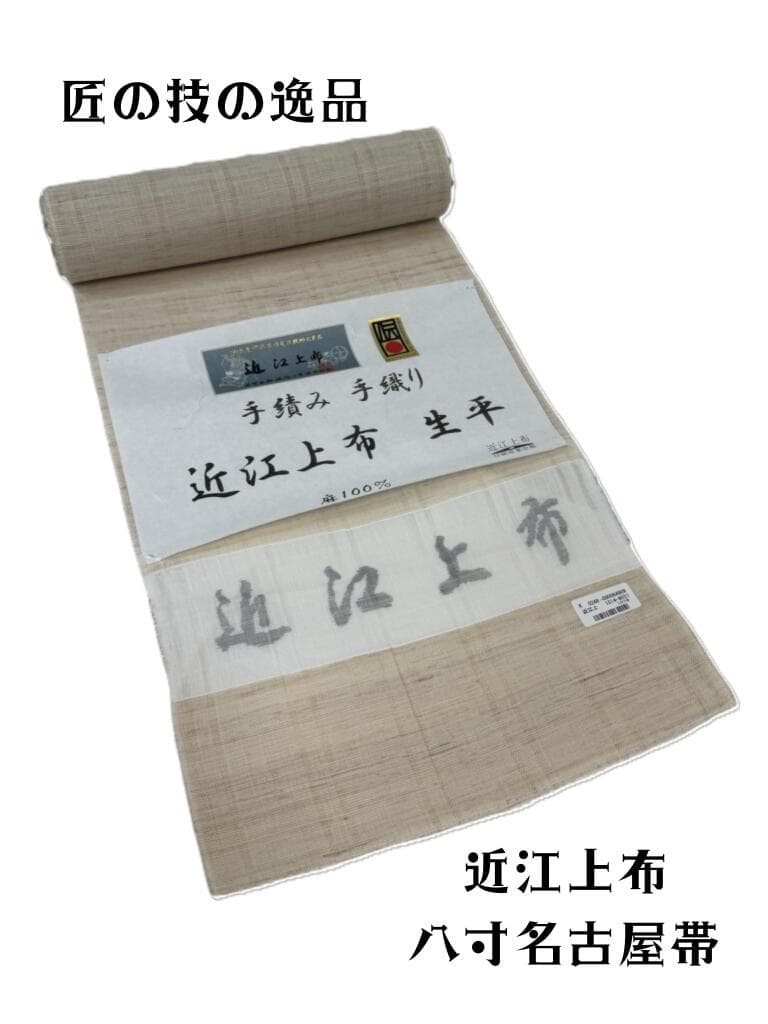
未仕立て品 八寸名古屋帯 伝統工芸品 近江上布 手積み 手織り 生平
unfinished eight-sun京都小林呉服店 楽天市場店
First time buying on Rakuten? How residents in Japan order →
Omi Jofu begins in the Koto hemp-weaving area of Shiga, around Higashiomi and Aisho. The work is tied to mountains, clear rivers running toward Lake Biwa, the Echi River, and lake moisture; hemp yarn snaps more easily when the air is dry, so humidity becomes part of the loom’s conditions. The cloth itself is plain-woven from especially fine hemp yarn, then shaped through named paths: Kibira, kasuri, and the shibo surface of Omi Chijimi.
In Koto, geography is part of the work. Higashiomi and Aisho sit in a hemp-textile area where mountains and rivers face Lake Biwa, and the Echi River runs through the production area. Nearby ramie mattered as raw material, while moist air mattered at the loom: dry hemp thread breaks easily, so the climate helped fine yarn stay workable during weaving.
Omi Jofu is defined by a restrained structure: especially fine hemp yarn, woven in plain weave into top-grade hemp cloth. Around it sit related Omi hemp textiles with different roles. Omi no Asa serves contemporary textile uses, and Omi Chijimi carries rich shibo processing; the cooperative in Aisho gathers companies that preserve and develop this Omi hemp cloth production.
Kibira gives the family one of its clearest material signatures. The warp is ramie, the weft is hand-joined hemp, and the cloth is woven on a ground loom. Koto hemp weaving has a roughly 600-year path, with Kibira and kasuri standing as two inherited branches. In the finished cloth, continuity is concrete: fiber choice, hand-joining, and the ground loom stay visible in the making path.
Kasuri begins before the threads are woven. Warp threads are dyed by kushi-oshi-nasen, while weft threads are dyed by katagami-nasen. After dyeing, the maker aligns the threads on a hand loom so the pattern settles into a softened, slightly blurred surface. The visible result depends on color placement, thread order, and loom alignment.
In the chijimi path, texture is raised by force and touch. Strongly twisted weft thread is woven in, then hand rubbing brings out shibo, the uneven ridges associated with Omi Chijimi. Within the wider Omi hemp-textile group, Omi Jofu is valued as airy, cool, and light summer clothing and as women’s summer kimono cloth. Hemp’s absorbency, drying quality, and softening with use explain why the cloth sits naturally near hot-weather garments and household textiles.
In Aisho, the Omi Jofu Traditional Industry Hall gives these materials a public place: hemp materials, techniques, hand-weaving scenes, and loom experiences are gathered under one roof at Yume Machi Terrace Echi. The hall also works on technique transmission and successor training. In fiscal 2014, the Orihito Project began as part of that training effort, keeping thread, looms, and learners close to the textile’s present tense.
From the moisture along Lake Biwa and the Echi River to ramie warp, hand-joined hemp weft, kasuri alignment, and hand-rubbed shibo, Omi Jofu stays close to the conditions that make it possible. Its summer coolness is built into fine thread, plain weave, and the local work of Aisho and Higashiomi.
Compiled from public records and official sources; see the recognition links below. Details may change over time.
Where this product is officially registered, designated, or recognized in Japan.
Traditional craft
Designated a Traditional Craft (dentō kōgeihin) by Japan's Ministry of Economy, Trade and Industry.
Sources1
It is written as 近江上布 in Japanese. Search Rakuten and other Japanese sites with that spelling — the English name will not bring up the listings.
Omi jofu is a hemp textile from Shiga's Koto area around Higashiomi and Aisho. Lake Biwa humidity and the Echi River suited weaving because dry hemp yarn breaks easily. The cloth is plain-woven from especially fine hemp yarn.
Kibira uses ramie warp, hand-joined hemp weft, and a ground loom. Kasuri uses kushi-oshi-nasen for warp threads and katagami-nasen for weft threads before hand-loom alignment. Nearby ramie is part of the local conditions behind Koto hemp weaving. Related Omi Chijimi raises shibo with strongly twisted weft and hand rubbing.
Omi jofu is used for women's summer kimono cloth and is airy, cool, and lightweight for summer clothing. Hemp textiles have strong coolness among natural fibers and suit summer, with absorbency, drying performance, and increasing softness with use. Related local hemp textiles such as Omi no Asa and Omi Chijimi are used for western clothing fabric, tapestries and other interiors, and tableware.
Naturally dyed textiles shed some colour on first wash. Hand-wash separately with a neutral detergent, avoid long soaking and bleach, and dry in the shade to prevent fading. Silk, ramie, and traditionally dyed pieces often need professional cleaning — the care label on the listing takes precedence.
Most options are shelf-stable, boxed, and travel well, so they suit gifting or bringing home. Confirm the final storage and delivery terms on the Rakuten listing.
On Rakuten: the shops listed here right now are 京都和ぱれる, 京都小林呉服店 楽天市場店. We don't sell directly; purchase, payment, stock, and delivery are all handled on the Rakuten product page.