 3 images
JAゆうき青森 Slow-Aged Aomori Black Garlic
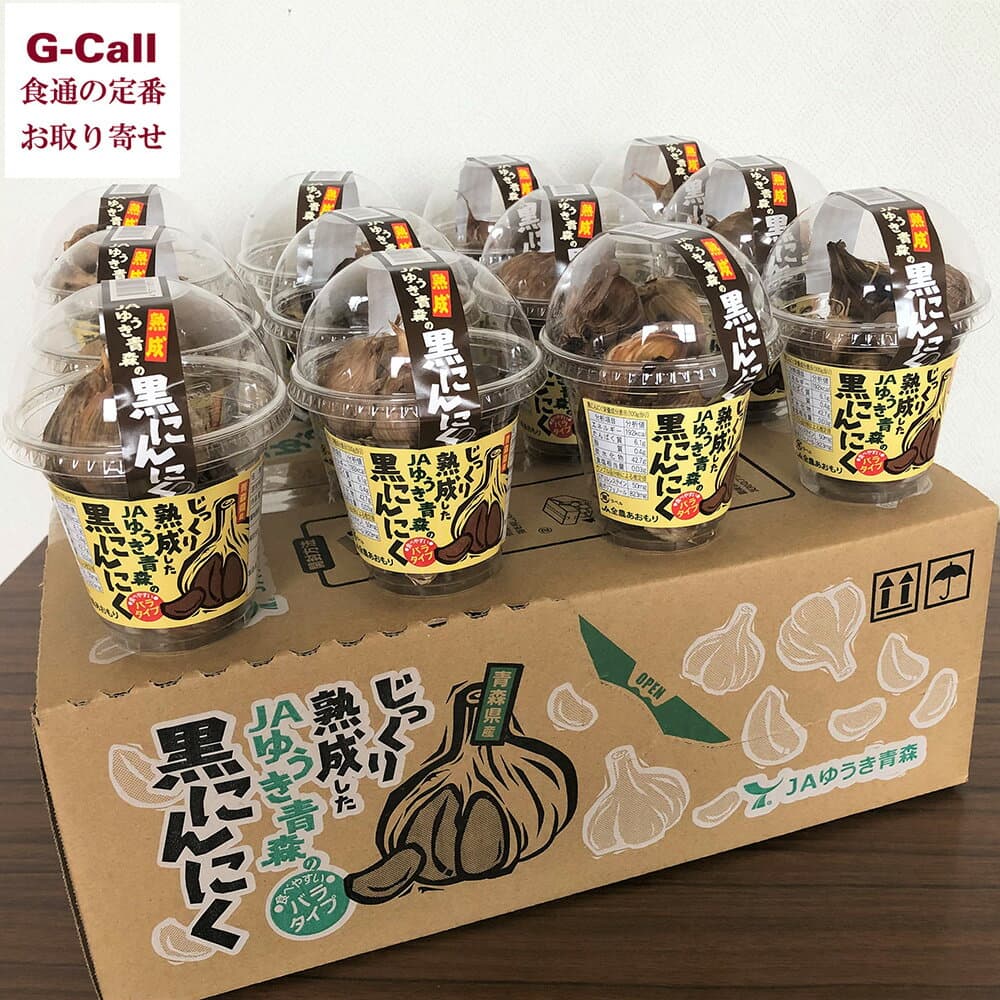
JAゆうき青森 じっくり熟成したJAゆうき青森の黒にんにく 100g 12個入 四国/九州・沖縄送料別 黒ニンニク ホワイト六片種 ポリフェノール 青森 国産 健康食品
100g x 12 packsG-Call 食通の定番 お取り寄せ
Japanese name青森の黒にんにく
Garlic grown in Aomori is planted before winter, then aged in warm humidity until the cloves turn dark, soft, sweet-tart, and fruit-like.
Information last updated 119 days ago
3 imagesJAゆうき青森 じっくり熟成したJAゆうき青森の黒にんにく 100g 12個入 四国/九州・沖縄送料別 黒ニンニク ホワイト六片種 ポリフェノール 青森 国産 健康食品
100g x 12 packsG-Call 食通の定番 お取り寄せ
First time buying on Rakuten? How residents in Japan order →
Aomori black garlic begins with garlic grown in Aomori Prefecture. Planted in autumn, the garlic passes through severe winter and builds sweetness; after several weeks, or roughly two weeks to a month, of aging, the pale cloves darken and their sharp bite softens into a sweet, fruity, smooth texture. Behind that taste are Aomori’s role as a major garlic-producing prefecture and a producer network that includes Towada, Oirase, Takko, Hachinohe, and Tohoku, where locally grown garlic moves through aging, further maturation, and drying.
The material at the center of Aomori black garlic is garlic grown in Aomori Prefecture. Cloves are planted in autumn and pass through the severe winter, a cycle described as helping them accumulate sugar; after aging, the strong raw-garlic pungency becomes gentler, with sweetness and fruit-like aroma coming forward. The dark color is the visible change, while the flavor starts with Aomori-grown garlic.
Aomori is described as a major shipping prefecture for domestic garlic, and its southern area is presented as one of the leading production regions. The local character here is concrete: autumn planting, overwintering, snow, cool conditions, and garlic that later enters warm, humid aging rooms before becoming soft, black, and sweet-tart.
The agricultural setting of southern Aomori is tied to cool weather and root crops. The yamase wind brings cool conditions, and the area has developed production of garlic, nagaimo yam, burdock, daikon, and other root crops. Garlic is planted in autumn, covered through winter by snow, then moves with the season toward harvest and processing.
Seen in that setting, black garlic stays connected to the field. Place names such as Towada, Oirase, Takko, Hachinohe, and Tohoku mark the producer network around it. The aged flavor of each clove is linked to the region’s routines of growing root crops in a cool climate and turning local garlic into a food that can travel beyond the field.
The color of Aomori black garlic comes from aging. Aomori-grown garlic is held in warm, humid conditions for several weeks, or about two weeks to one month. During that time, the Maillard reaction helps the cloves darken, the pungency falls, and the texture softens. After the cloves turn black, further room-temperature maturation and drying help settle the flavor and mouthfeel.
The work is not described as a single formula used by every maker. The material says each company adjusts aging time, temperature, and humidity in its own way; one producer is described as using its own temperature and humidity control to create a soft, jelly-like texture and fruit-like sweetness. The shared boundary is Aomori-grown garlic shaped by aging.
After aging, the clearest sensory change is the loss of sharp pungency. The flavor is described as sweet, fruity, and smooth, with sweetness and acidity resembling prune; one producer description points to a soft texture like jelly and sweetness like fruit. These details explain why black garlic can be eaten by the clove and also used by cooks as a seasoning-like ingredient.
Black garlic often appears in a daily health-food context, but this article does not turn that context into clinical claims. The concrete object is the clove itself: black, soft, sweet-tart, and less harsh than fresh garlic. That flavor shift also explains why cooking competitions and chef talks used it as an ingredient, extending it from simple daily eating into sauces, sweet-savory pairings, and prepared dishes.
Aomori black garlic’s recent turn is traced to development work in 2006 and full-scale production from 2007. Producers were facing pressure from garlic in seasonal gaps and out-of-standard bulbs; connecting garlic to aging inside the prefecture gave some material that might otherwise be discarded a new path, while linking cultivation, processing, and shared promotion.
The Aomori Black Garlic Association began activity in 2008 and became a cooperative in 2013, alongside efforts around quality indicators. If the word tradition is used here, it has a concrete meaning: twenty-first-century continuity in which overwintered Aomori garlic, warm humid aging, and producer coordination formed a new local processed food.
Culinary activity expanded the uses of Aomori black garlic. In 2016, the World Black Garlic Summit was held in Hachinohe, with topics including quality improvement, sixth-sector industrialization, export promotion, ingredient standardization, cooking methods, and overseas use. The association also continued recipe and cooking-grand-prix projects, placing black garlic beyond a daily one-clove habit.
International use also appears in its development. The material notes attention from European chefs as a new ingredient and export records to more than twenty countries. Those facts are strongest when kept close to the food: a sweet-tart black clove moving from Hachinohe events and Aomori producer towns into kitchens that use it for depth, acidity, and gentle sweetness.
Aomori black garlic is compelling because its identity rests on visible steps: prefecture-grown garlic planted in autumn and overwintered, warm humid aging that darkens the cloves, further maturation and drying that soften the texture, and a network of makers in places such as Towada, Oirase, Takko, Hachinohe, and Tohoku. Its cultural meaning is best kept grounded in those facts: southern Aomori’s root-crop landscape, the processing turn after 2006, and culinary events that carried the sweet-tart clove onto more tables.
Compiled from public records and official sources; see the recognition links below. Details may change over time.
Where this product is officially registered, designated, or recognized in Japan.
Regional collective trademark
Registered as a Regional Collective Trademark with the Japan Patent Office.
Sources1
It is written as 青森の黒にんにく in Japanese. Search Rakuten and other Japanese sites with that spelling — the English name will not bring up the listings.
Aomori black garlic is made from garlic grown in Aomori Prefecture, aged in warm humidity, then further matured and dried into dark, soft cloves. Autumn-planted garlic overwinters and accumulates sugar; aging reduces pungency and creates a sweet, fruity, smooth taste with prune-like sweetness and acidity.
The recent development path includes development in 2006, full-scale production from 2007, association activity in 2008, and cooperative organization in 2013. The 2016 World Black Garlic Summit in Hachinohe covered quality improvement, sixth-sector industrialization, export promotion, ingredient standardization, and cooking methods. It is aged for several weeks or roughly two weeks to one month until the cloves darken and pungency falls. The process involves warm, humid aging, the Maillard reaction, further maturation, and drying, while companies adjust time, temperature, and humidity differently.
It is eaten as is, one clove at a time, and is described as a health food, including the phrase one clove of black garlic a day. It is also used as a cooking ingredient, with recipe projects, black garlic cooking grand prix activity, and talks on cooking methods.
Storage varies by product — shelf-stable, refrigerated, or frozen — and is stated on the packaging and the Rakuten listing. Shelf-stable processed foods usually need refrigerating once opened and eating within a few days; chilled and frozen items go straight into storage on arrival. Treat the best-before date on the physical packaging as authoritative.
Most options are shelf-stable, boxed, and travel well, so they suit gifting or bringing home. Confirm the final storage and delivery terms on the Rakuten listing.
On Rakuten: the shops listed here right now are G-Call 食通の定番 お取り寄せ. We don't sell directly; purchase, payment, stock, and delivery are all handled on the Rakuten product page.