 3 images
Tsugaru-nuri Lacquer Chopsticks
箸 お箸 おはし 日本製 津軽塗り箸 呂上げまたは赤上げ 男性用 女性用 単品 一膳 1膳 男 箱なし 普段使い 大人用 高級箸 かわいい おしゃれ 人気 おすすめ 家族 夫婦 持ちやすい 国産 漆塗箸 若狭塗り箸 自分へのご褒美に
Ro-age or Aka-age, single pair, no box八代目 箸匠 はりま屋
4.8 / 41 reviews
Japanese name津軽塗
In Aomori’s Hirosaki and Tsugaru area, hiba wood, firm groundwork, repeated lacquering, and polishing shape Karanuri, Nanakonuri, Monshanuri, and Nishikinuri surfaces for bowls, stacked boxes, trays, chopsticks, and tea utensils.
Information last updated yesterday
3 images箸 お箸 おはし 日本製 津軽塗り箸 呂上げまたは赤上げ 男性用 女性用 単品 一膳 1膳 男 箱なし 普段使い 大人用 高級箸 かわいい おしゃれ 人気 おすすめ 家族 夫婦 持ちやすい 国産 漆塗箸 若狭塗り箸 自分へのご褒美に
Ro-age or Aka-age, single pair, no box八代目 箸匠 はりま屋
4.8 / 41 reviews
 3 images
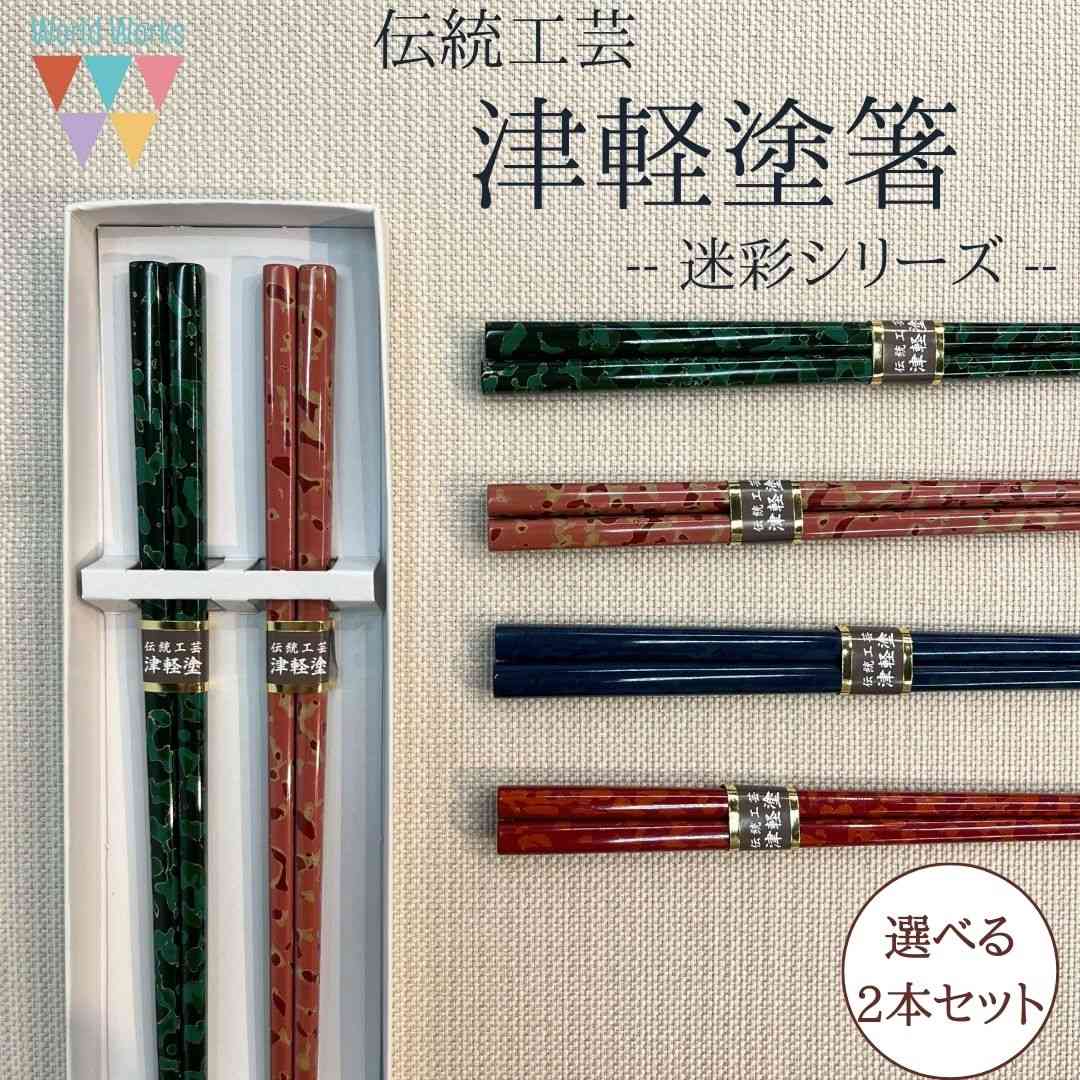
\現在5か月待ちの人気の職人さんが作る津軽塗のお箸/【迷彩シリーズ 】箸 夫婦箸 伝統工芸品 天然木 細い 細箸 紙箱入り 父の日 母の日 結婚祝い ペア 結婚記念日 誕生日 敬老の日 プレゼント ギフト 一点もの 日本製 国産 made in japan 青森県弘前市 丈夫 24cm 22cm
24cm & 22cm, paper boxワールドワークス
5.0 / 6 reviews
 3 images
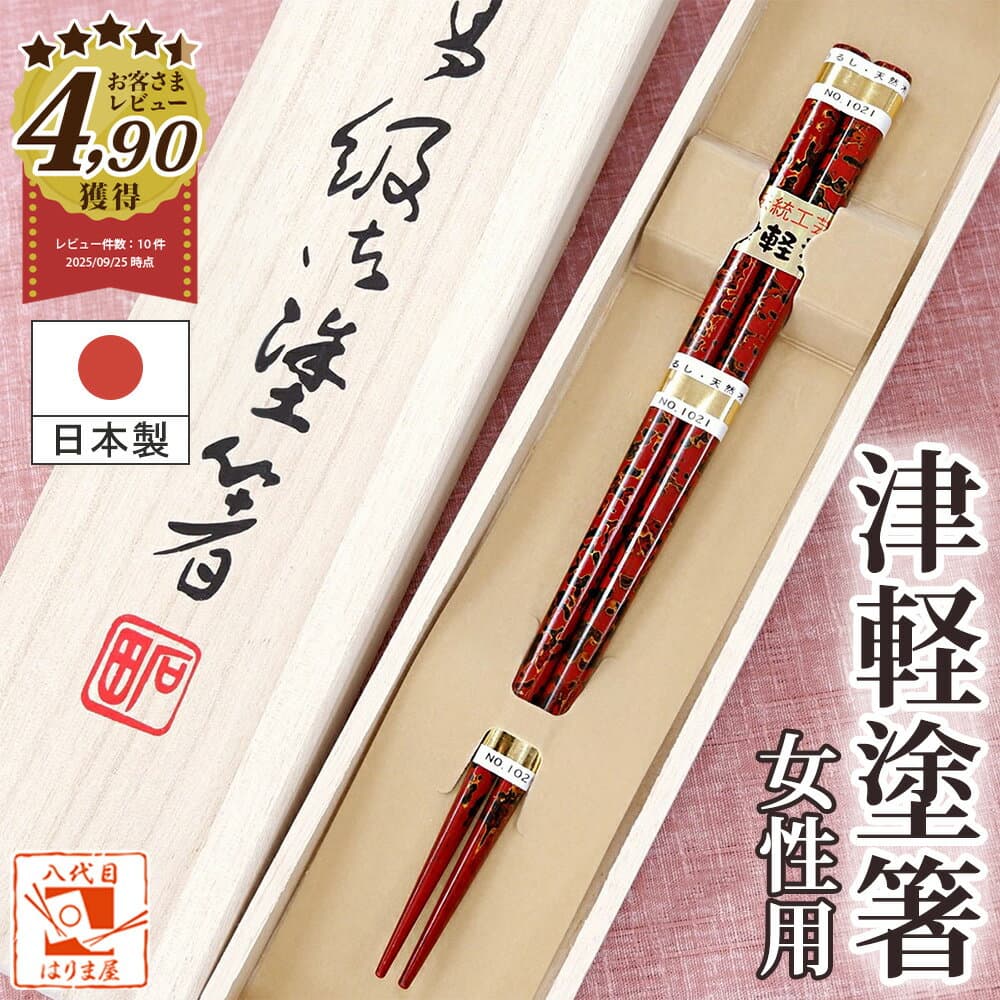
箸 津軽塗箸 女性用一膳 1膳 女 桐箱入り 母の日 プレゼント 実用的 2026 ランキング 義母 還暦祝い 誕生日 母の日ギフト 1膳 おしゃれ 若狭塗 かわいい お返し 内祝い 高級 国産 日本製 漆塗り 初任給 退職祝い 古希 喜寿 傘寿 米寿 祖母 敬老の日 孫 クリスマス
Women's 20.5 cm, 1 pair, paulownia box八代目 箸匠 はりま屋
4.9 / 12 reviews
 3 images
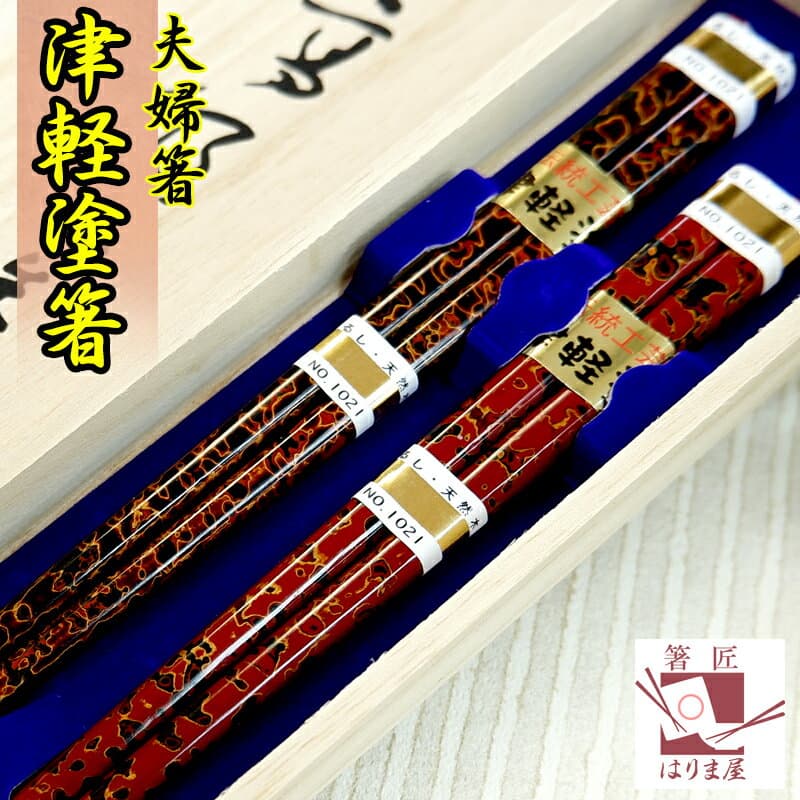
夫婦箸 箸 津軽塗箸 桐箱入り 結婚祝い プレゼント 還暦祝い 誕生日 敬老の日 孫 実用的 父の日 母の日 ペア ギフト セット おしゃれ お祝い 金婚式 友達 お返し 結婚式 両親 結婚記念日 めおと箸 定年 退職祝い クリスマス 古希 喜寿 傘寿 米寿 初任給
pair in paulownia box八代目 箸匠 はりま屋
4.6 / 65 reviews
First time buying on Rakuten? How residents in Japan order →
All 4 listings of this product on Rakuten, lowest price first.
| Listing | Price | Shop | Reviews | Open listing |
|---|---|---|---|---|
Tsugaru-nuri Lacquer Chopsticks Ro-age or Aka-age, single pair, no boxLowest price | ¥3,300 | 八代目 箸匠 はりま屋 | 4.8 / 41 reviews | View on Rakuten → |
Tsugaru-nuri Lacquered Chopsticks Women's 20.5 cm, 1 pair, paulownia boxGift-ready | ¥3,960 | 八代目 箸匠 はりま屋 | 4.9 / 12 reviews | View on Rakuten → |
Tsugaru Lacquer Couple Chopsticks in Paulownia Box pair in paulownia boxMost reviewedGift-ready | ¥7,480 | 八代目 箸匠 はりま屋 | 4.6 / 65 reviews | View on Rakuten → |
Tsugaru-nuri Camouflage Series Couple Chopsticks 24cm & 22cm, paper boxGift-ready | ¥9,250 | ワールドワークス | 5.0 / 6 reviews | View on Rakuten → |
Japanese · new tab
Tsugaru-nuri begins with Hirosaki and the Tsugaru area of Aomori. In this northern lacquerware area, wood preparation, groundwork, lacquer layers, grinding, wiped lacquer, and finishing come together on usable objects. Its character is not a single pattern. Karanuri, Nanakonuri, Monshanuri, and Nishikinuri each reveal lacquer differently, carrying layered surfaces onto bowls, stacked boxes, trays, chopsticks, tea utensils, and other household forms.
The place boundary for Tsugaru-nuri is concrete: it is made and sold mainly around Hirosaki in Aomori Prefecture and the wider Tsugaru area. The region centered on Hirosaki is described as Japan’s northernmost lacquerware production area, and Tsugaru-nuri stands among Aomori’s representative lacquer crafts. Its regional character comes from Hirosaki castle-town workshops, the former Tsugaru domain, local hiba wood, and makers who still work through wood, groundwork, lacquer, and polishing.
The craft’s early development reaches back to the Edo period under the Tsugaru domain. During Tsugaru Nobumasa’s time, lacquer artisans were invited to Hirosaki; the histories name Ikeda Genbee and, later, Seikai Genbee in the line of craft transmission, and describe a lacquer workshop inside Hirosaki Castle grounds. Early lacquered objects included domain furnishings, sword scabbards, document boxes, inkstone boxes, stacked boxes, and portable meal boxes. In the early Meiji years, Aomori exhibited lacquerware under the name Tsugaru-nuri at the 1873 Vienna World Exposition, helping the name attach to this Hirosaki-centered lacquer work.
A Tsugaru-nuri object starts with a wooden base. Locally available hiba and other materials have long been used, shaped by joinery and turning techniques before lacquer work begins. The lacquer sequence then moves through cloth application, groundwork, pattern work, coloring, rough grinding, charcoal polishing, wiped lacquer, glossing, and top coating. Tradition here means a concrete working order: wood, firm groundwork, repeated lacquer films, drying, and polishing until the lower layers can appear at the surface.
Karanuri gives the clearest view of Tsugaru-nuri’s slow build. It begins with hiba wood and moves through repeated painting, drying, grinding, and polishing across forty-eight steps; completion takes at least one and a half to two months. A shaping spatula creates raised and recessed marks in the lacquer, and later polishing opens the layered film so the complex speckled pattern appears. The time in Karanuri is physical: forty-eight operations, lacquer films, drying intervals, and careful grinding held in one surface.
The four representative techniques leave different material clues. Nanakonuri uses rapeseed to create clusters of small ring patterns that recall fish eggs. Monshanuri works from black lacquer designs and rice-husk charcoal powder, called sha in the Tsugaru area, to bring out subtle lines on a dark surface. Nishikinuri builds on Nanakonuri with drawn motifs and tin powder, adding floral and geometric effects. All four surfaces depend on lacquer layers and polishing, while rapeseed, charcoal powder, and tin powder help the eye separate one technique from another.
Tsugaru-nuri lands on recognizable forms. Its main products include bowls, stacked boxes, trays, chopsticks, tea utensils, and flower vessels, and earlier uses also included document boxes, inkstone boxes, portable meal boxes, and sword scabbards. In daily life, the concrete setting is these objects on a table, in a tea setting, in storage, or on display, where Karanuri speckles, Nanakonuri rings, and dark Monshanuri lines can be handled and seen up close.
The present continuity of Tsugaru-nuri is carried by organized technique work. The Tsugaru-nuri Technique Preservation Association is made up of people who have mastered traditional production methods, and it works on research into Edo-period and later techniques, reproduction, successor training, presentations of research results, and securing raw materials and tools. The Important Intangible Cultural Property context points to specific work held in Hirosaki and the Tsugaru area: wooden bases, lacquer adjustment, varied lacquering, polishing, and the community that keeps those skills in practice.
The pull of Tsugaru-nuri lies in details that the hand and eye can follow: Hirosaki and the Tsugaru area, hiba wood, firm groundwork, many lacquer layers, Karanuri’s forty-eight steps, rapeseed rings, rice-husk charcoal powder, and tin powder. When those steps appear on bowls, stacked boxes, trays, chopsticks, and tea utensils, the lacquer surface becomes a usable object shaped by wood, lacquer, polishing, and the makers who continue the work in northern Aomori.
Compiled from public records and official sources; see the recognition links below. Details may change over time.
Where this product is officially registered, designated, or recognized in Japan.
Traditional craft
Designated a Traditional Craft (dentō kōgeihin) by Japan's Ministry of Economy, Trade and Industry.
Sources1
It is written as 津軽塗 in Japanese. Search Rakuten and other Japanese sites with that spelling — the English name will not bring up the listings.
Tsugaru lacquerware (Tsugaru-nuri) is lacquerware from Hirosaki and the Tsugaru area of Aomori Prefecture. It is built from wooden bases such as hiba through firm groundwork, repeated lacquering, drying, grinding, polishing, wiped lacquer, and finishing. Four representative techniques are Karanuri, Nanakonuri, Monshanuri, and Nishikinuri. Common forms include bowls, stacked boxes, trays, chopsticks, tea utensils, and flower vessels.
The Tsugaru area centered on Hirosaki is described as Japan’s northernmost lacquerware production area. Karanuri starts from a hiba wood base and passes through repeated painting, drying, grinding, and polishing across forty-eight steps, taking at least one and a half to two months. Nanakonuri uses rapeseed for small ring patterns; Monshanuri uses rice-husk charcoal powder; Nishikinuri uses drawn motifs and tin powder. The Tsugaru-nuri Technique Preservation Association works on technique research, reproduction, successor training, research presentations, and securing materials and tools.
It is used as everyday tableware, tea ware, display pieces, and household objects, including bowls, chopsticks, trays, stacked boxes, tea utensils, and flower vessels. Aomori Prefecture’s cultural-property page encourages use at home as daily goods and describes the craft as durable enough to be used rather than only displayed. Historical association material records use for domain furnishings and as gifts to the shogunate, other domains, the court, and court nobles.
Porous earthenware is usually given a "medome" treatment first — simmer it gently in rice-rinsing water (or water with a little flour), then cool, rinse, and air-dry. This reduces staining and odour absorption. Porcelain normally just needs a wash. Follow the listing where it says otherwise.
Handmade earthenware, pieces with gold or silver overglaze, and lacquerware generally should not go in a dishwasher, microwave, or heated drying cabinet; heat-resistant porcelain usually can. Check the Rakuten listing for the specific piece.
Most options are shelf-stable, boxed, and travel well, so they suit gifting or bringing home. Confirm the final storage and delivery terms on the Rakuten listing.
On Rakuten: the shops listed here right now are 八代目 箸匠 はりま屋, ワールドワークス. We don't sell directly; purchase, payment, stock, and delivery are all handled on the Rakuten product page.