 3 images
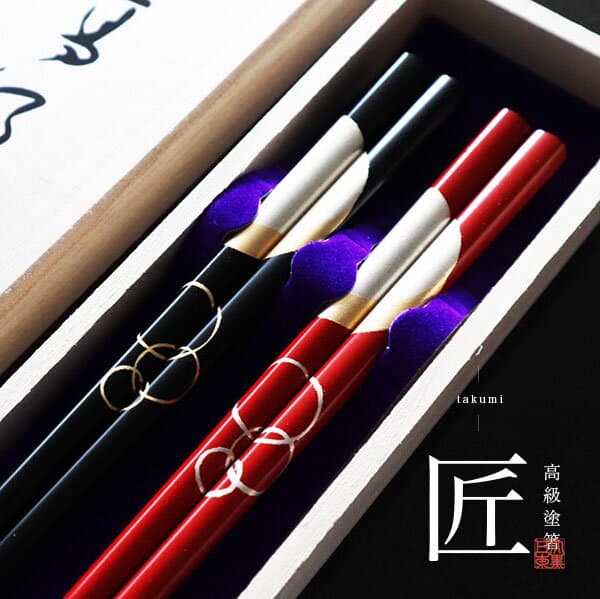
Wajima Lacquer Yoimachizuki Couple Chopsticks & Hanasakura Chopstick Rests Set
夫婦箸 箸置き セット 輪島塗 木製 漆塗り 宵待月 華桜 箸 桐箱 木箱 国産 日本製 一双 おしゃれ 高級 ギフト プレゼント お祝い 御祝 男性 女性 父の日 母の日 両親 敬老の日 結婚祝い 還暦祝い 記念品
paulownia box木製漆器専門 漆木屋
4.8 / 28 reviews
Japanese name輪島塗
In Wajima City, Ishikawa, wooden bases, cloth reinforcement, and local jinoko undercoat sit beneath layered lacquer on repairable bowls, cups, trays, and chopsticks made through linked hands.
Information last updated 119 days ago
3 images夫婦箸 箸置き セット 輪島塗 木製 漆塗り 宵待月 華桜 箸 桐箱 木箱 国産 日本製 一双 おしゃれ 高級 ギフト プレゼント お祝い 御祝 男性 女性 父の日 母の日 両親 敬老の日 結婚祝い 還暦祝い 記念品
paulownia box木製漆器専門 漆木屋
4.8 / 28 reviews
 3 images
輪島塗 夫婦箸 宵待月 結婚祝い プレゼント 金婚式 結婚記念日 贈り物 ペア箸 お箸 セット ペア 還暦祝い 誕生日 ギフト めおと箸 お祝い 両親 御祝
22.5cm / 21.5cm, paulownia boxダイヤモンドジュエリー DEX
4.3 / 21 reviews
First time buying on Rakuten? How residents in Japan order →
Wajima-nuri is read from the inside of the vessel as much as from its shine. In Wajima City, Ishikawa, a wooden base gives form to a bowl, cup, tray, or pair of chopsticks; cloth reinforces vulnerable areas; Wajima jinoko, a local diatomaceous-earth powder, enters the undercoat. By the time deep color and gloss appear on the surface, the object already carries wood, cloth, powdered earth, lacquer, and repeated handwork beneath the eye.
The name Wajima-nuri is tied to Wajima City and to three craft conditions: a wooden base, cloth reinforcement, and an undercoat made with Wajima jinoko. The wooden base gives the object its shape, cloth strengthens the parts that need support, and the local diatomaceous-earth powder becomes part of the lower lacquer structure. The black, vermilion, or glossy surface rests on this quieter combination of shaped wood, applied cloth, undercoat, and lacquer.
The hardness associated with Wajima-nuri comes from repeated coating and handwork. The making process includes more than twenty coating stages, and the total number of hand operations runs from seventy-five to one hundred twenty-four. Durability becomes tangible through that sequence: wood, cloth, jinoko, lacquer layers, and time. Repair belongs to the same practical character, because damaged lacquerware can be treated and returned to use as a bowl, cup, tray, or other handled object.
A Wajima-nuri piece moves through nearly thirty processes from wooden base to final decoration, with multiple craftspeople and artists taking responsibility for different stages. The production area in Wajima has a human scale as well: nearly one thousand craftspeople and artists form a community around wood bases, lacquer work, and decoration. The smoothness and gloss at the end carry the accumulation of each handoff before the vessel reaches the table.
Chinkin makes the movement of a tool visible on the lacquered surface. A chisel cuts lines or planes into the face, and gold leaf or a similar material is set into the carved design. The detail brings together blade direction, hand pressure, lacquer surface, and metal-colored material. On a bowl, tray, or lacquer panel, the bright line can be traced back to the moment when the cut and the lacquer layer met.
The origin of Wajima-nuri has multiple theories and no settled single account. The clearer timeline begins in the early Edo period: by around 1630 it had taken a form close to today’s, and by 1716 to 1736 the process was largely similar to the present workflow. Around the eighteenth century, ko-based networks expanded demand and encouraged quality improvements, while Kitamaebune shipping routes carried Wajima-nuri farther from the city into households and ceremonial settings.
Wajima-nuri enters daily life through objects that can be held: bowls, cups, trays, chopsticks, tea saucers, small plates, and stacked boxes. Before the Showa period, it was commonly used as sturdy practical ware for weddings, funerals, and other rites. Its sensory character sits in specific details: deep color, gloss, warmth in the hand, and a smooth surface. Those qualities are the table-side result of wood, undercoat, lacquer layers, and repeated hand operations.
The 2024 Noto Peninsula earthquake and the heavy rain later that year severely damaged Wajima-nuri workshops, tools, and people. Recovery efforts and exhibitions have placed mid-career and younger makers within the ongoing handoff of skills. Continuity here is practical: whether a workspace can operate again, whether tools can be held again, and whether the stages from wooden base to decoration can keep passing between trained hands in Wajima City.
Wajima-nuri’s strength begins below the shine, in a wooden base, cloth reinforcement, and Wajima jinoko undercoat. More than twenty coating stages, seventy-five to one hundred twenty-four hand operations, and nearly thirty linked processes carry that structure into bowls, cups, trays, chopsticks, and chinkin decoration. After 2024, the craft’s present tense remains in Wajima’s workshops, tools, makers, and repairable objects.
Compiled from public records and official sources; see the recognition links below. Details may change over time.
Where this product is officially registered, designated, or recognized in Japan.
It is written as 輪島塗 in Japanese. Search Rakuten and other Japanese sites with that spelling — the English name will not bring up the listings.
Wajima lacquerware (Wajima-nuri) is made in Wajima City, Ishikawa, and is defined by a wooden base, cloth reinforcement, and an undercoat of Wajima jinoko, a local diatomaceous-earth powder. Production includes more than twenty coating stages, seventy-five to one hundred twenty-four hand operations, and close to thirty steps from base to decoration, shared among several craftspeople. Chinkin decoration cuts the lacquer surface with a chisel and sets gold leaf into the cuts.
The 2024 Noto Peninsula earthquake and later heavy rain caused serious damage to Wajima-nuri workshops, tools, and people. The origin of Wajima-nuri is uncertain, though by around 1630 it had taken a form close to today's, and by 1716 to 1736 its process was largely similar to the present workflow. Object forms include bowls, cups, trays, chopsticks, tea saucers, small plates, and stacked boxes. Sensory traits associated with Wajima-nuri include deep color, gloss, warmth in the hand, and a smooth surface.
Wajima-nuri pieces such as bowls, cups, trays, chopsticks, and small plates are used as tableware. Before the Showa period, Wajima-nuri was commonly used as sturdy, practical ware for weddings, funerals, and other ceremonial occasions. Damaged Wajima-nuri can be repaired, allowing pieces to remain in use over time.
Porous earthenware is usually given a "medome" treatment first — simmer it gently in rice-rinsing water (or water with a little flour), then cool, rinse, and air-dry. This reduces staining and odour absorption. Porcelain normally just needs a wash. Follow the listing where it says otherwise.
Handmade earthenware, pieces with gold or silver overglaze, and lacquerware generally should not go in a dishwasher, microwave, or heated drying cabinet; heat-resistant porcelain usually can. Check the Rakuten listing for the specific piece.
Most options are shelf-stable, boxed, and travel well, so they suit gifting or bringing home. Confirm the final storage and delivery terms on the Rakuten listing.
On Rakuten: the shops listed here right now are 木製漆器専門 漆木屋, ダイヤモンドジュエリー DEX. We don't sell directly; purchase, payment, stock, and delivery are all handled on the Rakuten product page.