 3 images
Pesticide-Free Bōshū Loquats from Chiba
2027年6月分予約 無農薬 房州 びわ L ~ 4L サイズ 1kg ~ 5kg 入 千葉産 枇杷 ビワ 茂木 田中 露地栽培 産地直送 SU
L-4L, 1-5 kgはちまるはち お中元 お歳暮
5.0 / 1 reviews
Japanese name房州びわ
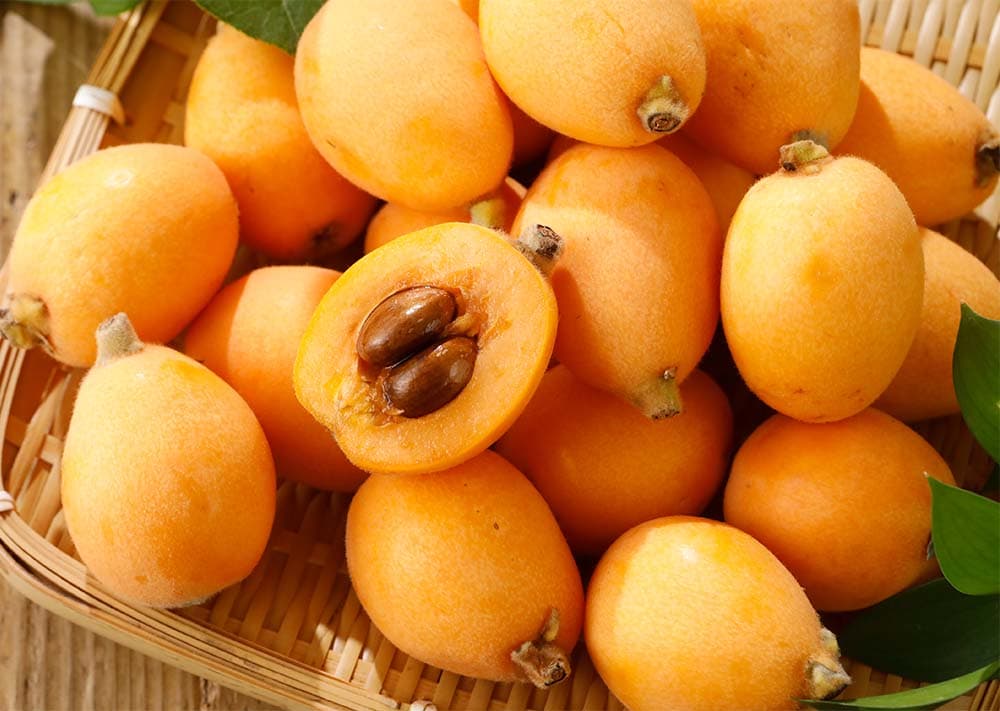
Around Minamiboso, Tateyama, and Kyonan, yellow-orange loquats grow through winter on seaside hillsides; growers thin flower clusters, bag each young fruit, and bring a short early-summer sweetness to the table.
Information last updated 21 days ago
3 images2027年6月分予約 無農薬 房州 びわ L ~ 4L サイズ 1kg ~ 5kg 入 千葉産 枇杷 ビワ 茂木 田中 露地栽培 産地直送 SU
L-4L, 1-5 kgはちまるはち お中元 お歳暮
5.0 / 1 reviews
First time buying on Rakuten? How residents in Japan order →
BOSHU biwa belongs to the southern end of Chiba’s Boso Peninsula, where Minamiboso, Tateyama, and Kyonan face the sea. The Awa area is warmed in winter by the Kuroshio Current, and many orchards sit on south- to east-facing slopes where cold air is less likely to settle. That matters because loquat flowers and young fruit develop through winter and are vulnerable to freezing. Behind the large, juicy, yellow-orange fruit is a season of pruning, thinning, hand bagging, color checks, and careful handling before the short harvest window closes.
BOSHU biwa grows near the southern end of the Boso Peninsula, especially around Minamiboso, Tateyama, and Kyonan on Chiba’s western coastal side. The Awa area’s maritime climate is influenced by the Kuroshio Current, giving winters a milder edge than the fruit would find inland. Loquat flowers and young fruit form during the cold months, and fruit can be damaged below minus 3 C, so orchards are often placed on south- to east-facing slopes where cold air does not linger. The fruit’s geography begins with that practical choice of hillside.
BOSHU biwa refers to the large, juicy loquats grown in the southern Boso area of Chiba, with Minamiboso at the center of the growing landscape. Chiba describes the area’s loquats by this name and connects it to the local growing region; a regional collective trademark in 2007 later gave the name an administrative boundary, while the reader-facing identity remains the fruit itself: yellow-orange skin, soft flesh, and a clean sweetness from coastal orchards. Local descriptions name varieties such as Tomifusa, Mizuho, Ofusa, Tanaka, Fusamitsu, and Kibou, each with differences in size, acidity, sweetness, and texture.
Loquat cultivation in Chiba is described as beginning around 1751, giving the area more than 270 years of growing continuity. By the mid-Edo period, BOSHU biwa was being sent to Edo markets, helped by coastal routes that could move delicate fruit toward the city. In 1909, Kimura Kanekichi of present-day Minamiboso’s Tomiura area began the practice of presenting selected fruit to the Imperial Household; with interruptions during wartime and the COVID-19 period, that practice has remained tied to producer attention to shape, color, sugar level, and uniformity.
A loquat flower cluster can carry dozens of buds, so growers thin buds from late October through December and later reduce a cluster to one or two fruit when bagging. Greenhouse fruit is commonly bagged in January or February, while open-field fruit is bagged around April. The bags protect the delicate skin from insects and strong sunlight, and harvesters watch the fruit color from the blossom end toward the stem before picking. After harvest, individual fruit may be weighed, aligned in boxes, and inspected several times with minimal handling so the fine surface hairs remain intact.
The BOSHU biwa season moves quickly from greenhouse orchards to open-field orchards. Chiba gives the greenhouse shipment period as roughly late April to late May and open-field fruit as late May to late June, while Minamiboso travel material describes May for greenhouse biwa and June for open-field biwa. The varieties add nuance inside that short window: Tomifusa is noted for soft flesh and sweetness, Mizuho for large fruit with balanced sweetness and acidity, Ofusa for size and juice, Tanaka for moderate acidity, and Fusamitsu and Kibou for their own sweetness and texture. The family is a brief early-summer range rather than a single flavor.
BOSHU biwa is often best understood at room temperature, where aroma and sweetness are easier to sense; if chilled, local guidance suggests doing so only briefly before eating. The fruit is rinsed gently just before serving and peeled by hand from the blossom end toward the stem, revealing soft, juicy flesh. Very ripe fruit is fragile, which gives Minamiboso’s biwa-picking experiences a close-to-orchard appeal during the June open-field season. Jam, canned fruit, ice cream, and biwa soft serve carry the fruit’s short harvest into forms that last beyond a few weeks.
BOSHU biwa is shaped by exact conditions rather than vague romance: Chiba’s southern coastal slopes, the winter warmth of the Kuroshio-influenced Awa area, a fruit that freezes and bruises easily, months of thinning and hand bagging, and a harvest that passes from greenhouse fruit to open-field fruit in early summer. Peel back the yellow-orange skin, and the soft flesh carries the work of Minamiboso, Tateyama, and Kyonan in a clean, juicy sweetness.
Compiled from public records and official sources; see the recognition links below. Details may change over time.
Where this product is officially registered, designated, or recognized in Japan.
Regional collective trademark
Registered as a Regional Collective Trademark with the Japan Patent Office.
Sources1
It is written as 房州びわ in Japanese. Search Rakuten and other Japanese sites with that spelling — the English name will not bring up the listings.
BOSHU biwa is a large, juicy loquat grown in southern Chiba's Boso area, especially around Minamiboso, Tateyama, and Kyonan. The Awa area's winters are warmed by the Kuroshio Current, so orchards favor south- to east-facing slopes where cold air does not settle. Cultivation is said to have begun around 1751, with mid-Edo shipments to Edo markets. Growers thin and hand-bag young fruit, harvesting greenhouse fruit from late April to May and open-field fruit from late May to June.
Loquat cultivation in Chiba is described as continuing for more than 270 years since it began around 1751. The Imperial Household presentation of BOSHU biwa began in 1909 with Kimura Kanekichi of present-day Minamiboso's Tomiura area. Growers thin flower clusters and fruit in autumn and winter, then bag young fruit one by one to protect the skin from insects and strong sunlight. Major varieties include Tomifusa, Mizuho, Ofusa, Tanaka, Fusamitsu, and Kibou, which differ in size, acidity, sweetness, and texture.
BOSHU biwa is commonly eaten at room temperature or chilled only briefly, since sweetness and aroma are easier to sense at room temperature; it is rinsed before eating and peeled by hand from the blossom end toward the stem. Tomiura Biwa Club has developed more than 30 loquat-related products, including canned loquat, jam, ice cream, and shampoo, to make use of the short harvest season. Gift fruit is weighed individually, packed carefully in boxes, and inspected multiple times to preserve the fine hairs on the skin.
Storage varies by product — shelf-stable, refrigerated, or frozen — and is stated on the packaging and the Rakuten listing. Shelf-stable processed foods usually need refrigerating once opened and eating within a few days; chilled and frozen items go straight into storage on arrival. Treat the best-before date on the physical packaging as authoritative.
Most options are shelf-stable, boxed, and travel well, so they suit gifting or bringing home. Confirm the final storage and delivery terms on the Rakuten listing.
On Rakuten: the shops listed here right now are はちまるはち お中元 お歳暮. We don't sell directly; purchase, payment, stock, and delivery are all handled on the Rakuten product page.