 3 images
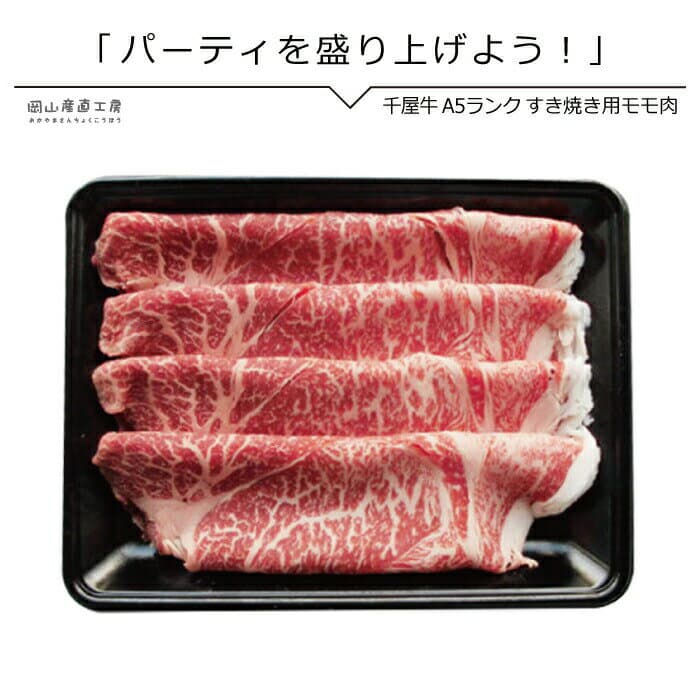
Chiya Beef Round for Sukiyaki
【6/4(木) 20時開始 8,700円→7,830円】 送料無料 ギフト すき焼き肉 千屋牛専門店のモモすき焼き用500g お肉 北海道沖縄一部地域配送不可
500g岡山産直工房
5.0 / 4 reviews
Japanese name千屋牛
In the Chiya area of Niimi City, Okayama, this Kuroge Washu beef is defined by local fattening rules, the Takahashi River’s water, and a taste built around fine marbling, red meat, and sweetness.
Information last updated 120 days ago
3 images【6/4(木) 20時開始 8,700円→7,830円】 送料無料 ギフト すき焼き肉 千屋牛専門店のモモすき焼き用500g お肉 北海道沖縄一部地域配送不可
500g岡山産直工房
5.0 / 4 reviews
 3 images
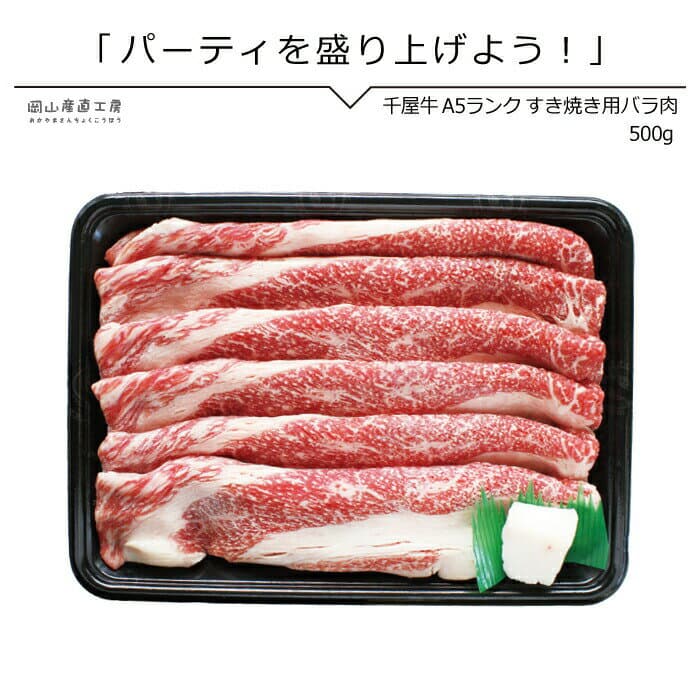
【6/4(木) 20時開始 6,200円→5,580円】 送料無料 ギフト すき焼き肉 千屋牛専門店のバラすき焼き用500g 北海道沖縄一部地域配送不可
500g岡山産直工房
4.8 / 4 reviews
 3 images
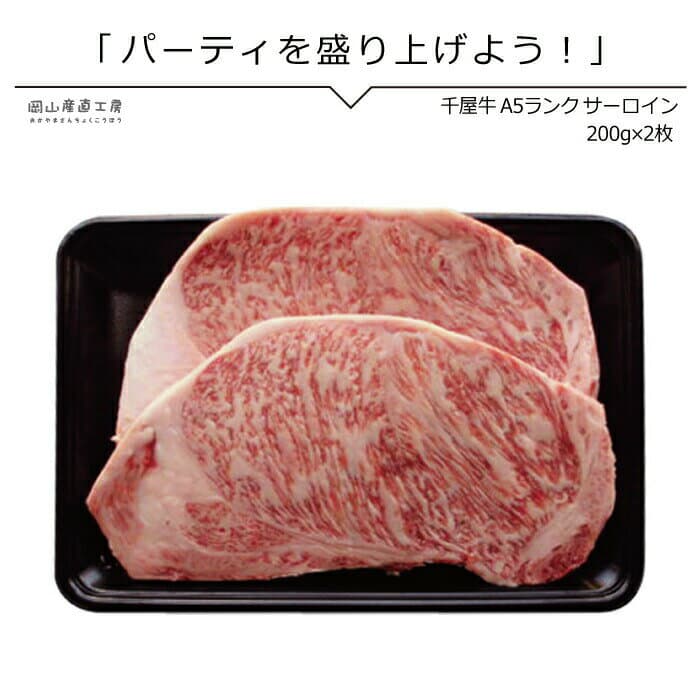
【6/4(木) 20時開始 12,000円→10,800円】 送料無料 ギフト ステーキ肉 千屋牛専門店のサーロインステーキ200g 2枚 A5ランク 北海道沖縄一部地域配送不可
200g x 2 steaks岡山産直工房
4.0 / 3 reviews
First time buying on Rakuten? How residents in Japan order →
Chiya-gyu is centered on the Chiya area of Niimi City in Okayama Prefecture, where Kuroge Washu cattle are raised in a setting described through the Takahashi River’s water, the Setouchi-area climate, and fertile soil. The name also has a production boundary: cattle are either bred and fattened in Niimi, or Okayama-born calves are brought to Niimi and fattened there for about 18 months or longer, with meat quality grade 3 or above.
The main production area for Chiya-gyu is the Chiya district of Niimi City, Okayama. Set around the Chugoku Mountains, the cattle’s growing environment is described through clean Takahashi River water, Setouchi-area climate, and fertile soil, giving the beef a concrete place frame before any discussion of taste. Niimi’s cattle background is also tied to the Takeno-tani tsuru lineage. In the Chugoku region, tsuru cattle lines were maintained from the late Edo period, and Takeno-tani tsuru was developed in Niimi; that lineage gives Chiya-gyu a local breeding context rooted in named cattle lines.
The Chiya-gyu name rests on birthplace, fattening place, and grade. Eligible cattle are bred and fattened within Niimi City, or Okayama-born calves are introduced and fattened in Niimi for about 18 months or longer; the beef must also reach meat quality grade 3 or above. Those conditions turn the name into a map of production. Chiya-gyu points to Niimi fattening, Okayama calf origin in the introduced-calf route, and a grade line that separates the family from a general image of Okayama beef.
Feed and management make the production setting easier to picture. Domestic rice straw, designated compound feed, and pasture grass are named as part of the raising context; cattle also carry 10-digit ear tags that connect each animal to birth date and feeding location. One Okayama University example follows the route from calf to finished beef. Calves from Tsudaka Farm were shipped at 8 to 9 months of age, then fattened for 20 to 22 months at Tetta Wagyu Farm in Niimi with fermented feeds that included okara, king oyster mushroom medium, and Okayama-grown paddy rice. That is a specific university-farm case, not a claim about every Chiya-gyu animal, but it shows how Okayama calf production can connect to Niimi fattening.
The eating character of Chiya-gyu is described through fine marbling, red meat, meat sweetness, tenderness, and concentrated umami. The marbling brings a smooth fat impression, while the red meat keeps the beef flavor present, especially in yakiniku and steak. Cut-by-cut uses make those traits practical. Tenderloin is linked with steak, roast beef, and beef cutlet, while shoulder and shank are suited to curry, stew, and pot-au-feu. These named dishes translate grade and marbling into texture, sweetness, and depth on the plate.
In Niimi, Chiya-gyu appears in yakiniku, steak, shabu-shabu, sukiyaki, ceramic-plate grilling, beef rice bowls, ramen, udon, soba, curry, and charcoal grilling. The same beef moves across grilled dishes, broth, rice, and noodles. That range keeps the beef close to the city’s food routes. A traveler may meet Chiya-gyu as a bowl of udon, a ceramic-plate set, or a yakiniku meal, each one tying the Niimi name to a concrete dish rather than an abstract regional label.
Okayama University’s Tsudaka Farm opened in November 1978 with a purpose that included contributing to the promotion of regional Chiya-gyu. The farm sits next to Okayama Airport on 31 hectares, keeps about 70 Wagyu cattle, and functions as a Kuroge Washu calf-production and student-training site. The Tsudaka Farm case shows one educational path into the Chiya-gyu family. The farm selected calves from Okayama-line cows and bulls, shipped about 40 quality calves a year, and sent some calves into Niimi for fattening, linking the university farm, Tetta Wagyu Farm, and Niimi’s beef production area through a visible route.
Chiya-gyu is held together by Niimi’s Chiya district, Takahashi River water, the Takeno-tani tsuru lineage, about 18 months or longer of Niimi fattening for introduced Okayama calves, meat quality grade 3 or above, and a taste language of marbling and red meat. From calf production to Niimi fattening, and from yakiniku to rice bowls and udon, this Okayama Kuroge Washu family carries its place through cattle lines, production rules, and local dishes.
Compiled from public records and official sources; see the recognition links below. Details may change over time.
Where this product is officially registered, designated, or recognized in Japan.
Regional collective trademark
Registered as a Regional Collective Trademark with the Japan Patent Office.
Sources1
It is written as 千屋牛 in Japanese. Search Rakuten and other Japanese sites with that spelling — the English name will not bring up the listings.
Chiya beef is Kuroge Washu beef centered on the Chiya area of Niimi City, Okayama. The name applies to cattle bred and fattened in Niimi, or to Okayama-born calves fattened in Niimi for about 18 months or longer. Meat quality grade 3 or above is required.
Tokusen Chiya-gyu is meat quality grade 4 or above. The local cattle background is tied to Takeno-tani tsuru, a lineage developed in Niimi. Takahashi River water, Setouchi-area climate, and fertile soil are named as part of the growing environment. Chiya beef is described through fine marbling, red meat, meat sweetness, tenderness, and concentrated umami.
It is eaten as yakiniku, steak, shabu-shabu, and sukiyaki. Fillet is suited to steak, roast beef, and beef cutlets; shoulder and shank are suited to curry, stew, and pot-au-feu. In Niimi it is also served as ceramic-plate grilling, charcoal grilling, beef rice bowls, ramen, udon, soba, and curry, and sold as retail meat and processed items such as croquettes.
Storage varies by product — shelf-stable, refrigerated, or frozen — and is stated on the packaging and the Rakuten listing. Shelf-stable processed foods usually need refrigerating once opened and eating within a few days; chilled and frozen items go straight into storage on arrival. Treat the best-before date on the physical packaging as authoritative.
Most options are shelf-stable, boxed, and travel well, so they suit gifting or bringing home. Confirm the final storage and delivery terms on the Rakuten listing.
On Rakuten: the shops listed here right now are 岡山産直工房. We don't sell directly; purchase, payment, stock, and delivery are all handled on the Rakuten product page.