 3 images
JA Esashi Iwate Sun Fuji Apples
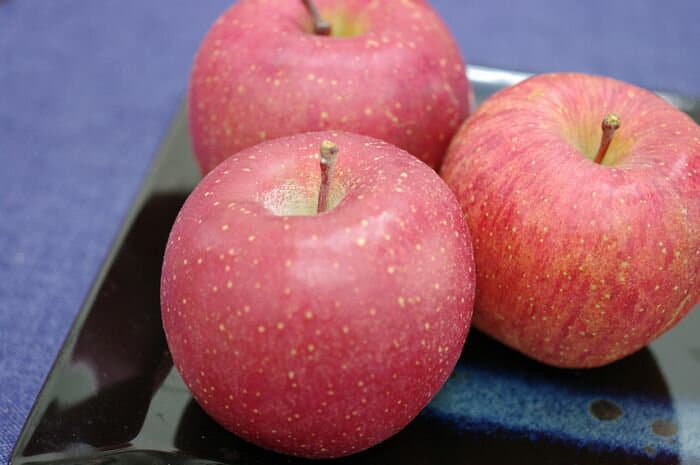
江刺りんご通信販売 岩手県サンふじ御歳暮に JA江刺富士林檎 糖度14度 中箱 約7玉〜約9玉
medium box, approx. 7-9 apples果物百貨店 浜中屋
4.5 / 8 reviews
Japanese name江刺りんご
Esashi's harvest runs September to November; late-picked San Fuji grows rich with honey.
Esashi apples grow in Oshu City's Esashi area, where elevation, temperature swings, thinning, leaf picking, fruit turning, dwarf trees, and shared sorting rules shape color, sweetness, crunch, and continuity.
Information last updated 121 days ago
3 images江刺りんご通信販売 岩手県サンふじ御歳暮に JA江刺富士林檎 糖度14度 中箱 約7玉〜約9玉
medium box, approx. 7-9 apples果物百貨店 浜中屋
4.5 / 8 reviews
3 images江刺りんご販売 岩手県サンふじ御歳暮に JA江刺富士林檎通販 糖度14度 小箱 約5玉〜約6玉
small box, approx. 5-6 apples果物百貨店 浜中屋
4.5 / 2 reviews
3 images江刺りんごお取り寄せ通販 岩手県サンふじ御歳暮に JA江刺富士林檎販売 糖度14度 5kg 約12玉〜約18玉
approx. 5kg果物百貨店 浜中屋
4.0 / 3 reviews
First time buying on Rakuten? How residents in Japan order →
In the Esashi area of Oshu City, Iwate, apple orchards spread across flatland, mid-mountain, and mountain zones. Elevation and day-night temperature differences affect coloring and eating quality, while local soil with lime and phosphoric acid, supported by compost from rice and livestock farming, is described as suited to sweet, well-colored apples. The work behind Esashi apples begins long before harvest: winter pruning, spring pollination, flower thinning, fruit thinning, leaf picking, and repeated fruit turning all guide sunlight and ripeness toward the fruit left on the trees.
Esashi apples are grown in Oshu City's Esashi area in Iwate. The orchards extend from flatland to mid-mountain and mountain zones, so elevation helps create differences in color and eating quality. Large temperature swings between day and night, soil rich in lime and phosphoric acid, and compost tied to local rice and livestock farming are all described as conditions that help produce sweet, well-colored fruit.
The orchard year begins with pruning in February and March, followed by fertilizing and pollination in April and May. Flower thinning and fruit thinning come in May and June, then leaf picking and fruit turning continue from August to November before harvest from September to November. Each task gives growers another chance to manage tree strength, sunlight, and maturity instead of leaving ripening to the season alone.
One of the clearest numbers in Esashi apple growing is the thinning figure. JA Esashi says about 95 percent of young fruit are removed, leaving roughly 200 apples on a tree, so nutrients and sunlight are concentrated into the remaining fruit. That practice turns sweetness from a vague compliment into a visible orchard decision made among flowers, leaves, branches, and fruit.
All Esashi growing sites use dwarf cultivation, keeping trees lower so workers can reach, inspect, and harvest more easily. The apples are grown without bags, allowing sunlight to reach the skin and helping color, moderate acidity, and sweetness develop. Because unbagged fruit can show uneven color from sun exposure, workers pick surrounding leaves and turn the fruit repeatedly, watching the apple closely while it ripens on the tree.
The modern Esashi apple brand took shape after a shared sorting facility was built in 1979, when producers moved from individual selection toward common rules. Today's sorting combines trained visual grading, light-sensor checks for sugar level, maturity, acidity, honey core, and internal abnormalities, plus appearance checks for color and size. JA Esashi also handles production guidance, collection, and processing, so the sorting house connects orchard labor with community-wide quality boundaries.
The Esashi apple family includes several named varieties. Beni Roman, an Esashi original harvested in August, is described for its crisp texture; late-harvest San Fuji is introduced for its rich honey core, alongside names such as Jonagold, Sun Tsugaru, and Shinano Gold. The same production area also appears in processed uses: juice made from San Fuji, Jonagold, and Sun Tsugaru, and apple wine made with Esashi San Fuji.
Iwate Prefecture's Esashi apple baton project responds to aging producers and the possibility of shrinking cultivated area. People interested in taking over orchards first join work-experience sessions from May to September, including fruit thinning, leaf picking, fruit turning, and harvest, then move through orchard matching and one to two years of cultivation training. From the third year onward, they can farm independently by taking over orchards that already carry harvestable trees.
The shape of Esashi apples comes from Oshu City's Esashi landscape, from lime- and phosphoric-acid-rich soil, from winter pruning and summer fruit turning, and from the shared sorting rules built around sugar, acidity, maturity, honey core, color, and size. When a tree is thinned to about 200 apples and a new grower can inherit a productive orchard, the fruit carries both close handwork and a practical plan for keeping the Esashi orchards alive.
Compiled from public records and official sources; see the recognition links below. Details may change over time.
Where this product is officially registered, designated, or recognized in Japan.
Regional collective trademark
Registered as a Regional Collective Trademark with the Japan Patent Office.
Sources1
It is written as 江刺りんご in Japanese. Search Rakuten and other Japanese sites with that spelling — the English name will not bring up the listings.
Esashi apples are a regional apple family from the Esashi area of Oshu City in Iwate. Orchards span flatland, mid-mountain, and mountain zones, where day-night temperature swings, lime- and phosphoric-acid-rich soil, and compost from rice and livestock farming support sweet, well-colored fruit. The modern brand took shape after a shared sorting facility was built in 1979.
JA Esashi says about 95 percent of young fruit are thinned so roughly 200 apples remain on a tree. All Esashi growing sites use dwarf cultivation, and the apples are grown without bags to expose fruit to sunlight. Sorting checks include sugar level, maturity, acidity, honey core, internal abnormalities, color, and size. The Esashi apple family includes varieties such as Beni Roman, San Fuji, Jonagold, Sun Tsugaru, and Shinano Gold.
JA Esashi and Oshu City both emphasize harvesting close to full ripeness and eating the apples while they are in season; Oshu City notes that the fruit does not need waiting time for ripening after arrival. Varieties differ in texture and flavor: Beni Roman is an August early variety with a crisp texture, San Fuji is honey-rich when harvested late, and Shinano Gold is a recommended variety in an Oshu City interview. JA Esashi lists apple juice made from San Fuji, Jonagold, and Sun Tsugaru, and wine using Esashi San Fuji apples.
Fresh produce doesn't keep, so start with the grower's note in the box. Most fruit ripens best at room temperature and is at its most fragrant when it is ready to eat; refrigerate only once it is cut or fully ripe, and eat it soon after. Chilling too early stalls ripening and flattens the flavour. Follow the listing and the enclosed note for the specific variety.
Most options are shelf-stable, boxed, and travel well, so they suit gifting or bringing home. Confirm the final storage and delivery terms on the Rakuten listing.
On Rakuten: the shops listed here right now are 果物百貨店 浜中屋. We don't sell directly; purchase, payment, stock, and delivery are all handled on the Rakuten product page.