 3 images
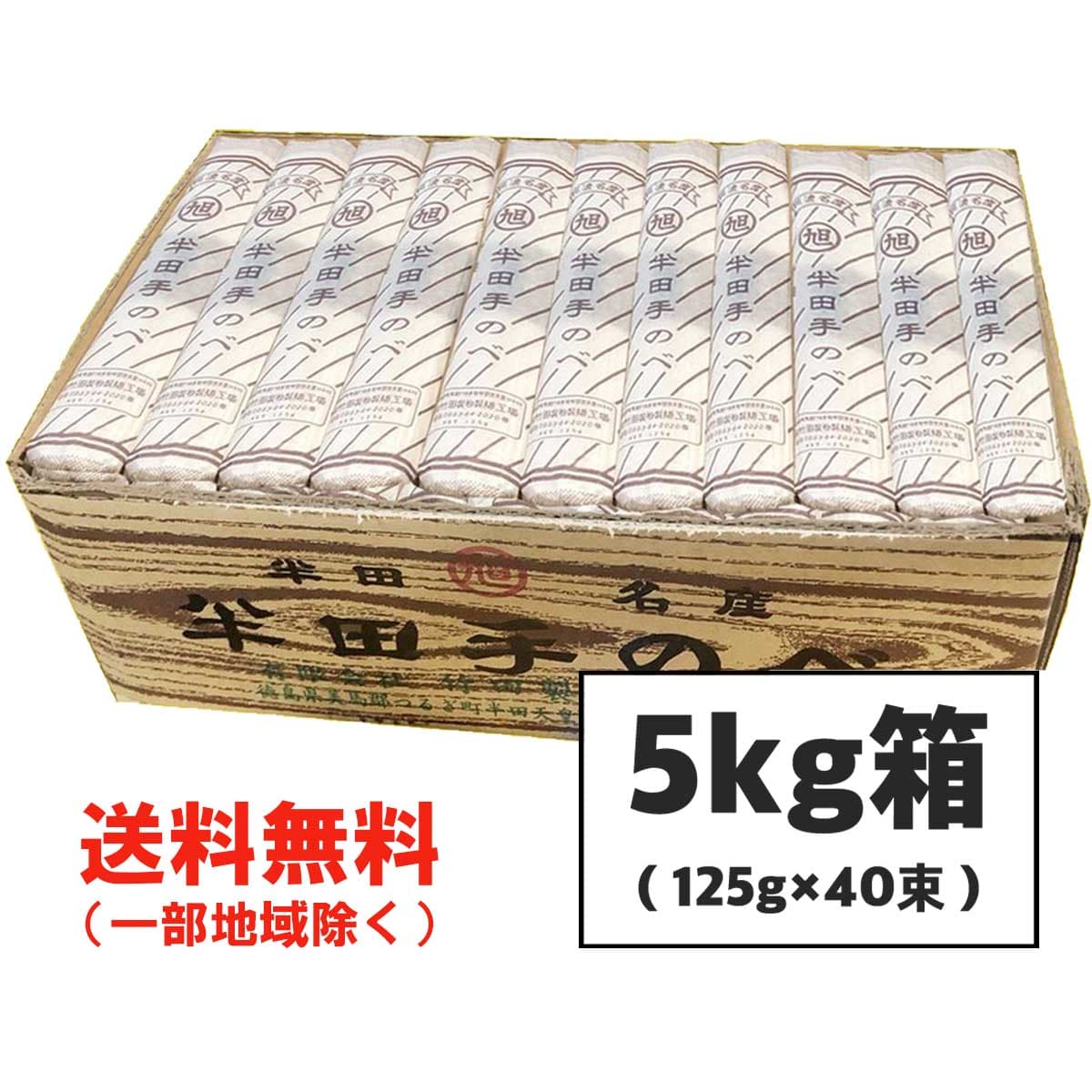
Takeda Seimen Hand-Stretched Handa Somen
期間特価あす楽★半田そうめん (手のべ) 5kg(125g×40束) 竹田製麺 ■ギフト対応不可■ 徳島より発送 手延べ 素麺 送料無料(北海道・東北・沖縄除く)
5kg box (125g x 40 bundles)お得に選べるフードショップ
4.8 / 189 reviews
Japanese name半田そうめん
In Tokushima’s Handa district, Handa somen is shaped by mountain wind, Yoshino River water, wheat, and a slightly thicker noodle body with a clear, firm bite.
Information last updated 113 days ago
3 images期間特価あす楽★半田そうめん (手のべ) 5kg(125g×40束) 竹田製麺 ■ギフト対応不可■ 徳島より発送 手延べ 素麺 送料無料(北海道・東北・沖縄除く)
5kg box (125g x 40 bundles)お得に選べるフードショップ
4.8 / 189 reviews
 3 images
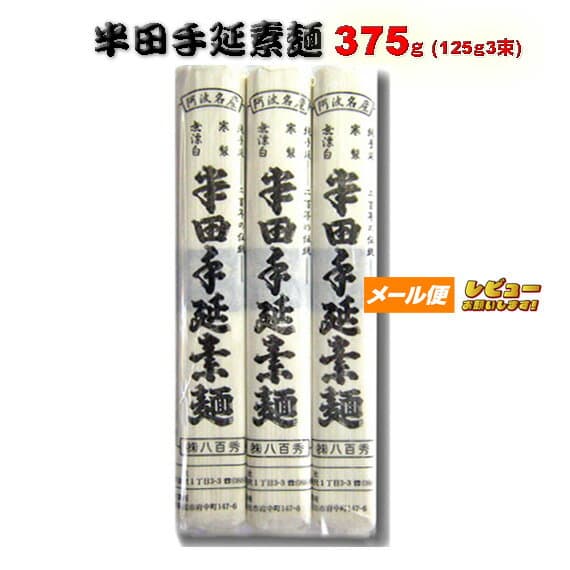
【ゆうパケット】八百秀 半田そうめん 手延べ 375g(麺包紙3束)(中太) お取り寄せ 手延べ素麺 [徳島県名産品 贈答 家庭用 素麺 煮麺 温麺 鍋の〆 保存食 中元 歳暮]
375g (125g x 3 bundles, medium-thick)いいもの一番館
4.7 / 291 reviews
 3 images
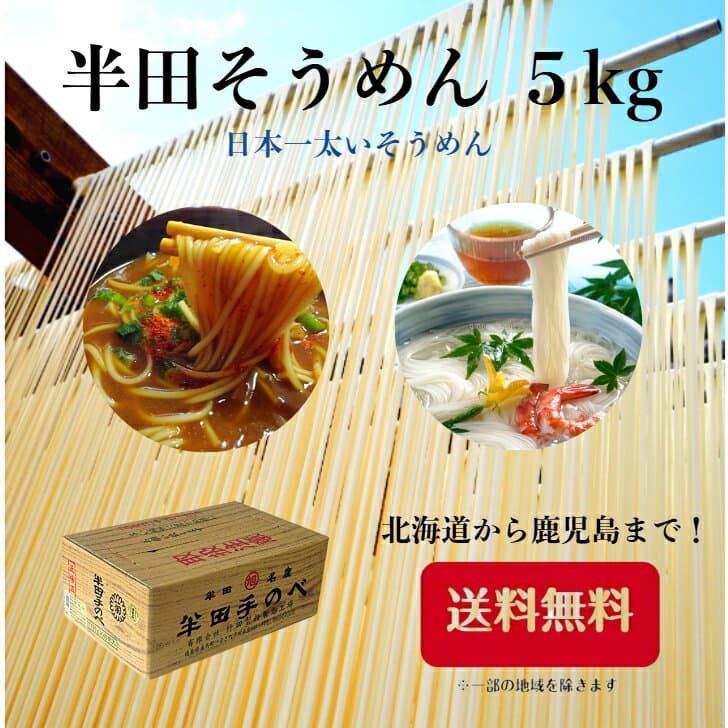
手延べ半田そうめん 竹田製麺 手延べ 5キロ (125g×40束) 半田素麺 送料無料 そうめん 熨斗 包装 ギフト 自家需要 節約 保存食 グルメ 簡単 お中元 お歳暮 贈りもの 手延べ 太口 麺線 コシ のど越し 伝統製法 徳島名産 徳島 にゅうめん 贈答品 特産品 乾麺 モチモチ
5 kg (125 g x 40 bundles)sanada
4.8 / 137 reviews
 3 images
送料無料 徳島の名産直送ギフト34H(半田そうめん&鳴門わかめ&すだち)ギフト 贈答品 お中元 お歳暮 内祝 熨斗 メッセージカード
1kg somen + 20g wakame + approx. 250g sudachi gift box徳島県物産センター
4.8 / 8 reviews
First time buying on Rakuten? How residents in Japan order →
All 4 listings of this product on Rakuten, lowest price first.
| Listing | Price | Shop | Reviews | Open listing |
|---|---|---|---|---|
八百秀 Handa Hand-Stretched Somen Noodles 375g (125g x 3 bundles, medium-thick)Lowest priceMost reviewedGift-readyValue pick | ¥880 | いいもの一番館 | 4.7 / 291 reviews | View on Rakuten → |
Tokushima Specialty Gift Set 34H: Handa Somen, Naruto Wakame & Sudachi 1kg somen + 20g wakame + approx. 250g sudachi gift boxGift-ready | ¥4,530 | 徳島県物産センター | 4.8 / 8 reviews | View on Rakuten → |
Takeda Seimen Hand-Stretched Handa Somen 5kg box (125g x 40 bundles)Gift-ready | ¥5,418 | お得に選べるフードショップ | 4.8 / 189 reviews | View on Rakuten → |
竹田製麺 Hand-Stretched Handa Somen 5 kg (125 g x 40 bundles)Gift-ready | ¥5,690 | sanada | 4.8 / 137 reviews | View on Rakuten → |
Japanese · new tab
Handa somen comes into focus in Handa district, Tsurugi Town, Tokushima, where a bowl of noodles carries more weight than the usual image of thin summer somen. The noodles are described as slightly thick and firm, with enough bite to feel substantial when served cold or warm. Around the Handa name, the concrete frame is steady: cold wind descending from the Shikoku Mountains, clear Yoshino River water, wheat, and the work of local noodle makers.
The center of Handa somen is Handa district in Tsurugi Town, Tokushima. Descriptions of the noodle repeatedly name the Shikoku Mountains, the Yoshino River, and wheat: cold wind comes down from the mountains, water is associated with the river, and wheat gives the noodle its base material. These details make the place connection tangible.
Handa somen is also treated as part of Tokushima local cooking, while its main place anchor remains Handa. The noodle’s thickness, firmness, and differences among makers are best understood through Handa’s climate, elevation, water, and producer community.
The origin account is usually tied to Edo-period river boats. Boatmen are said to have carried somen-making methods from Miwa through Awaji and Naruto into Handa along transport routes on the river; because more than one theory is acknowledged, the account works best as a cautious local memory.
After that, noodle making took root around household use and side work in Handa. River transport, domestic making, winter labor, and a climate suited to noodles helped the technique become one of the district’s local industries. The Handa name also carries an account of roughly two centuries of continuity, without needing a single fixed founding date.
Earlier Handa somen making was closely tied to the cold season, roughly from November through March. After the autumn festivals, outdoor drying called kadoshi or niwaboshi could be seen around town, with white noodle strands hanging in the winter air.
That rhythm has changed. Production is no longer limited to the cold months, and year-round making is part of the present picture. Outdoor drying remains part of Handa’s remembered winter scene, while only a smaller number of makers continue it today.
The most immediate trait of Handa somen is its slightly thicker body and strong koshi, the firmness that gives the noodle a clear bite. Served cold, it can hold dipping sauce, ginger, herbs, egg, shiitake, or sudachi; served as warm nyumen, the noodle brings its own texture to the broth.
There are also maker-to-maker differences within Handa district. Elevation, wheat type, blend, and salt can all affect the eating feel, so the Handa name leaves room for small variations among local noodle makers.
The table uses are specific. For a cold serving, the noodles are boiled in plenty of hot water, rinsed in running water, drained, and served with dipping sauce and garnishes such as egg, shiitake, herbs, ginger, and sudachi. Tokushima’s citrus makes the thicker noodle feel bright and clean.
Handa somen is also used for warm nyumen and sudachi somen. The noodle ends are called fushi, and fushi soup gives even those short pieces a place in the meal, carrying the same firm noodle character into a household bowl.
Handa somen is supported by noodle makers and a cooperative in the Handa district. A Tokushima western-area listing identifies Akagawa Seimen in Tsurugi Town’s Handa Ono area as a local maker, giving the producer community a concrete place on the town map.
The cooperative also uses a regional collective trademark with member and production-area seals to connect the Handa name with makers and goods from the Handa district. Those marks function as a boundary for name, place, and makers; the bowl itself still draws attention to mountain wind, Yoshino River water, wheat, firm noodles, and local work.
Handa somen does not need inflated claims to stand apart. Tsurugi’s Handa district, cold wind from the Shikoku Mountains, Yoshino River water, wheat, winter kadoshi memories, and table uses such as cold somen, nyumen, sudachi somen, and fushi soup already give the noodle a clear shape. It is slightly thick, firm, and substantial, with small differences among makers that keep the Handa name tied to local work.
Compiled from public records and official sources; see the recognition links below. Details may change over time.
Where this product is officially registered, designated, or recognized in Japan.
Regional collective trademark
Registered as a Regional Collective Trademark with the Japan Patent Office.
Sources1
It is written as 半田そうめん in Japanese. Search Rakuten and other Japanese sites with that spelling — the English name will not bring up the listings.
Handa somen is a regional noodle from Handa district in Tsurugi Town, Tokushima, linked to cold wind off the Shikoku Mountains, Yoshino River water, and wheat. It is slightly thicker than typical somen, with notable firmness. Origin accounts vary, but often describe Edo-period river boatmen bringing the method from Miwa through Awaji and Naruto into Handa. Making was once confined to the cold months from November to March, though production is now also year-round.
Handa somen carries an account of about 200 years of continuity, without a single confirmed founding date in the supplied material. Kadoshi outdoor drying appeared after autumn festivals as a winter scene in earlier Handa somen making. Outdoor drying today continues among fewer makers even as most production has shifted to a year-round schedule. Differences among Handa district makers can be tied to elevation, wheat type, blend, and salt.
Handa somen is typically boiled in plenty of hot water, rinsed under running water, drained, and served cold with dipping sauce and garnishes such as egg, shiitake, herbs, ginger, and sudachi. It is also served warm as nyumen. Noodle ends, called fushi, are often used to make fushi soup.
Storage varies by product — shelf-stable, refrigerated, or frozen — and is stated on the packaging and the Rakuten listing. Shelf-stable processed foods usually need refrigerating once opened and eating within a few days; chilled and frozen items go straight into storage on arrival. Treat the best-before date on the physical packaging as authoritative.
Most options are shelf-stable, boxed, and travel well, so they suit gifting or bringing home. Confirm the final storage and delivery terms on the Rakuten listing.
On Rakuten: the shops listed here right now are お得に選べるフードショップ, いいもの一番館, sanada, 徳島県物産センター. We don't sell directly; purchase, payment, stock, and delivery are all handled on the Rakuten product page.