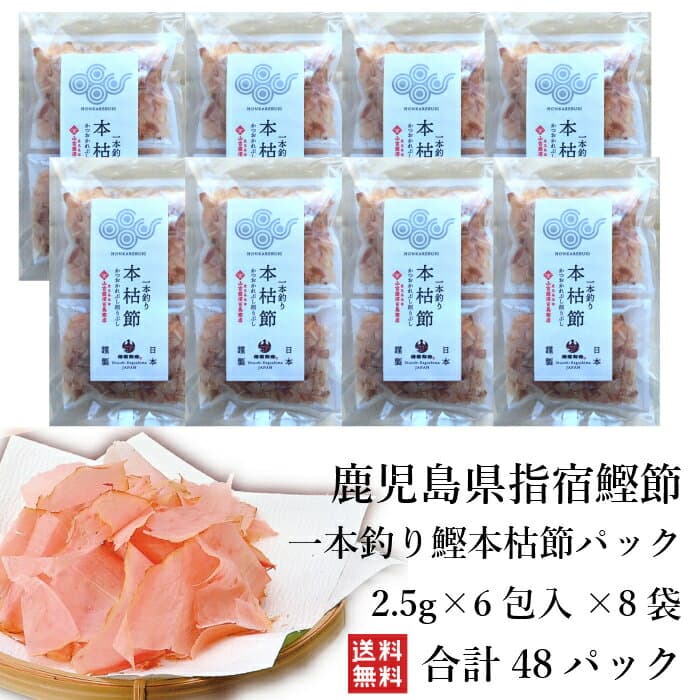
Yamakichi Kunisawa Hyakuma Shoten Pole-and-Line Caught Honkarebushi Bonito Flakes
【送料無料】【山吉国澤百馬商店 一本釣り鰹本枯節パック 2.5g×6包入×8袋】鹿児島 鰹節 本枯れ節 お取り寄せ お土産 本枯れ節 特産品 かつお節 指宿鰹節 削り節 鰹節本枯 かつお節 かつおぶし 特産品 鹿児島特産品 指宿特産品 ギフト 贈物 贈り物
指宿特産品ショップ
4.9 / 12 reviews
Japanese name指宿鰹節
In southern Ibusuki, Kagoshima, Yamagawa Port anchors a katsuobushi community known for honkare-honbushi, a bonito preparation shaped by repeated smoking, mold cultivation, and sun-drying over four to six months.
Information last updated 166 days ago
Ordering from abroad works when the recipient has a Japanese address.
2 of the 3 listings below are sold as gifts in the shop's own wording (ギフト, のし対応 …), marked “Gift-ready”.
【送料無料】【山吉国澤百馬商店 一本釣り鰹本枯節パック 2.5g×6包入×8袋】鹿児島 鰹節 本枯れ節 お取り寄せ お土産 本枯れ節 特産品 かつお節 指宿鰹節 削り節 鰹節本枯 かつお節 かつおぶし 特産品 鹿児島特産品 指宿特産品 ギフト 贈物 贈り物
指宿特産品ショップ
4.9 / 12 reviews
坂井商店【一本釣鰹 本枯れ本節 こころ節 1kg(大きさによって3~5本)】鹿児島 指宿 本枯れ節 本枯れ節 お土産 特産品 かつお節 指宿鰹節 削り節 本枯節 鰹節本枯 かつおぶし【※全国送料無料対象商品】 特産品 鹿児島特産品 指宿特産品 ギフト 贈り物 御祝 父の日 夏ギフト
指宿特産品ショップ
4.8 / 12 reviews
送料無料 山吉国澤百馬商店 一本釣り鰹本枯節パック 2.5g×6包入×8袋 (48パック入)鹿児島 鰹節 本枯れ節 お取り寄せ お土産 本枯れ節 特産品 かつお節 指宿鰹節 削り節 鰹節本枯 かつお節 かつおぶし 特産品 鹿児島特産品
金柑ジャムのお店サンサンフード
5.0 / 2 reviews
First time buying on Rakuten? How residents in Japan order →
At the southern end of Ibusuki City in Kagoshima, Yamagawa Port sits in a harbor long compared to a crane with open wings. The port connects the Yamagawa area to the Kuroshio current, bonito fishing, and katsuobushi makers. Ibusuki katsuobushi is centered on bonito cut, simmered, repaired, smoked and dried, shaved, molded, and sun-dried into honkare-honbushi, with the work usually taking four to six months.
Yamagawa town lies at the southern end of Ibusuki City, where the port formed on a bay created by volcanic activity about 5,700 years ago. Its distinctive shape gave rise to the name “crane harbor,” a concrete image that ties the place to ships, shelter, and fish landing.
The harbor’s setting near the Kuroshio current helped make Yamagawa a fishing and trading port. Ibusuki katsuobushi is grounded in that working geography: a natural harbor, bonito landings, and seafood processors in the Yamagawa area.
In the Meiji and Taisho periods, Yamagawa Port developed as a bonito-fishing base for the seas around Amami. Fishers from Kochi and Ehime moved there in search of good raw material for katsuobushi and taught their methods to local people.
That movement gives the local tradition a specific shape. It rests on fishers, bonito, port access, and production methods that took root in Yamagawa, where makers continued the work of honkare-honbushi.
Ibusuki katsuobushi is closely associated with honkare-honbushi. Kagoshima food materials describe Ibusuki City as producing more than 70 percent of Japan’s honkare-honbushi and name refined aroma and deep richness as its characteristics.
The Yamagawa producers also place Ibusuki katsuobushi within washoku and dashi. When shaved bonito meets hot water, the aroma from fish, smoke, drying, and careful finishing becomes part of the base flavor for soups, noodle broths, and Japanese cooking.
The bonito is first cut into the size needed for each finished block. After the head and organs are removed, the fish is divided according to honbushi or kamebushi form, then simmered; honbushi takes about two hours fifteen minutes to two hours forty minutes, while kamebushi takes about two hours fifteen minutes to two hours thirty minutes.
After simmering, bones are removed and gaps are repaired with a paste made from bonito flesh called momi. The repair is applied with a bamboo spatula, giving the fish a stable surface before the later mold stage.
Smoking and drying are repeated steps rather than a single pass. Kamebushi is usually smoked and dried six to eight times, while honbushi is repeated ten to fifteen times; at this stage the result is arabushi, marked by the work of smoke and drying.
The surface is then shaved with a small knife to remove tar and fat that emerged during drying, producing hadakabushi. The blocks are placed in a room for mold cultivation and sun-drying, with the first through fourth mold stages developing over three to four weeks before honkarebushi is complete.
Ibusuki katsuobushi appears most clearly in cooking as dashi and shaved flakes. The Yamagawa makers present katsuobushi as a material that supports washoku flavor, and Ibusuki food settings also use it in local dishes such as ibukara fried chicken served with shaved katsuobushi or bonito stock.
These uses connect the port to the table. Bonito processed in Yamagawa over four to six months becomes honkare-honbushi, then returns to everyday flavor as shavings, broth, or a local plate in Ibusuki.
Ibusuki katsuobushi begins with Yamagawa Port and ends in aroma rising from dashi. A volcanic bay formed about 5,700 years ago, fishers who came in the Meiji and Taisho periods, months of smoking, mold cultivation, and sun-drying, and the refined depth of honkare-honbushi all give this Kagoshima port town its place in Japanese cooking.
Compiled from public records and official sources; see the recognition links below. Details may change over time.
Where this product is officially registered, designated, or recognized in Japan.
Regional collective trademark
Registered as a Regional Collective Trademark with the Japan Patent Office.
Sources1
It is written as 指宿鰹節 in Japanese. Search Rakuten and other Japanese sites with that spelling — the English name will not bring up the listings.
Ibusuki katsuobushi is a katsuobushi tradition from the Yamagawa area of Ibusuki City, Kagoshima, centered on Yamagawa Port, a bay formed by volcanic activity about 5,700 years ago and known as the crane harbor. In the Meiji and Taisho periods the port became a bonito-fishing base for the Amami seas, as fishers from Kochi and Ehime settled there and taught local methods. Ibusuki is known for honkare-honbushi, made over four to six months through simmering, repeated drying, and sun-curing.
Ibusuki City is described as producing more than 70 percent of Japan's honkare-honbushi, characterized by refined aroma and deep richness. The full process includes cutting, simmering, bone removal and repair, smoking-drying, surface shaving, mold cultivation, and sun-drying. During smoking-drying, kamebushi is typically dried six to eight times and honbushi ten to fifteen times. Hadakabushi is molded and sun-dried over three to four weeks, developing through first to fourth mold stages before becoming honkarebushi.
Ibusuki katsuobushi is used for dashi and shaved flakes. Local ibukara fried chicken may be served with shaved katsuobushi or bonito stock, prepared differently by different restaurants. Honkare-honbushi, valued for its refined aroma and richness, is associated with dashi that calls for high-grade stock.
Storage varies by product — shelf-stable, refrigerated, or frozen — and is stated on the packaging and the Rakuten listing. Shelf-stable processed foods usually need refrigerating once opened and eating within a few days; chilled and frozen items go straight into storage on arrival. Treat the best-before date on the physical packaging as authoritative.
Most options are shelf-stable, boxed, and travel well, so they suit gifting or bringing home. Confirm the final storage and delivery terms on the Rakuten listing.
On Rakuten: the shops listed here right now are 指宿特産品ショップ, 金柑ジャムのお店サンサンフード. We don't sell directly; purchase, payment, stock, and delivery are all handled on the Rakuten product page.