 3 images
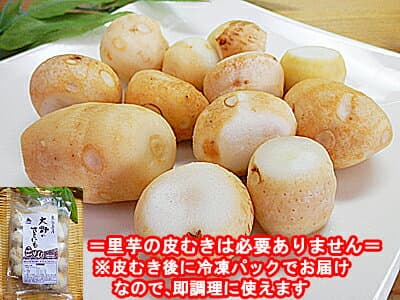
Kamisho Peeled Frozen Satoimo Taro
冷凍 皮むき済みタイプ 里イモ 300g×3袋入福井県大野市上庄産 里芋 さといもを皮むき後里いも サトイモ 洗い子 あらいこ 洗いこ上庄里芋 上庄里芋 上庄さといも 冷凍品 限定 楽天 通販 価格 特価 販売 お土産
300g x 3 bags越前名産工房
4.0 / 2 reviews
Japanese name上庄さといも
In Ono City's Kamisho district, sandy loam, river water, and wide day-night temperatures shape a dense taro that stays firm in simmered dishes.
Information last updated 119 days ago
3 images冷凍 皮むき済みタイプ 里イモ 300g×3袋入福井県大野市上庄産 里芋 さといもを皮むき後里いも サトイモ 洗い子 あらいこ 洗いこ上庄里芋 上庄里芋 上庄さといも 冷凍品 限定 楽天 通販 価格 特価 販売 お土産
300g x 3 bags越前名産工房
4.0 / 2 reviews
3 images冷凍 皮むき済みタイプ 里イモ 300g×5袋入福井県大野市上庄産 里芋 さといもを皮むき後里いも サトイモ 洗い子 あらいこ 洗いこ上庄里芋 上庄里芋 上庄さといも 冷凍品 限定 楽天 通販 価格 特価 販売 お土産
300g x 5 bags越前名産工房
3.5 / 2 reviews
3 images冷凍 皮むき済みタイプ 里イモ 300g×6袋入福井県大野市上庄産 里芋 さといもを皮むき後里いも サトイモ 洗い子 あらいこ 洗いこ上庄里芋 上庄里芋 上庄さといも 冷凍品 限定 楽天 通販 価格 特価 販売 お土産
300g x 6 bags越前名産工房
First time buying on Rakuten? How residents in Japan order →
Kamisho Satoimo grows in the Kamisho district of Ono City, Fukui Prefecture, using the local Ono Zairai taro line. The fields sit in a basin in northeastern Fukui, ringed by mountains such as Hakusan and Arashimadake. Well-drained sandy loam, summer irrigation from river systems including the Kuzuryu and Managawa, and the temperature swing from day to night during the April-to-November growing season all connect to the taro's dense flesh, firm bite, and ability to hold together in the pot.
The name Kamisho Satoimo is tied to the Kamisho district of Ono City. The taro is grown from the Ono Zairai line and is known for dense, firm flesh with a chewy texture after cooking. Its production boundary is concrete: Ono Zairai taro grown in the Kamisho district, with producer standards used to maintain quality at shipment.
The growing area lies in northeastern Fukui, surrounded by mountains including Hakusan and Arashimadake. Soil carried down from the mountains formed fan-shaped land with sandy loam fields and good drainage. River water from systems such as the Kuzuryu and Managawa supports irrigation in dry summer weather, while the basin's wide day-night temperature difference from April to November helps starch accumulate in the tubers.
The continuity of Ono Zairai is described through farm practice rather than a single origin tale. Local households had grown and passed down mixed lines of taro for home use. Beginning in 1972, the Okuetsu Agricultural Extension Center led three years of line selection in the Kamisho district, and farms have continued selecting seed taro to preserve the traits associated with Kamisho Satoimo.
The field calendar starts around April, when child tubers are planted about 30 centimeters apart. Soil is hilled in late June to early July, side shoots are cut in mid to late July, and water is run between ridges during dry summer spells. Harvest and shipment run from October to December; after digging, plants are dried for several hours, child and grandchild tubers are separated, and the crop is sorted by hand for quality and by machine for size.
Kamisho Satoimo is valued for flesh that is dense, firm, and resistant to breaking down during simmering. That quality matters in koroni, a local preparation in which washed taro is often simmered with soy sauce and sugar, sometimes with the thin skin left on. The result keeps the tuber as a distinct piece in the bowl rather than dissolving into the cooking liquid.
Before fresh shipment, producers remove taro with insufficient drying, damage, rot, disease, or other nonconformity. Taro that does not meet fresh standards but is not badly damaged or rotten can be directed to processing. A JA Fukui publication also refers to the Kamisho Satoimo producers' association chair and JA staff speaking about the harvest volume and appeal of the crop, showing a producer community around the taro.
Kamisho Satoimo's character rests in the fields of Ono City's Kamisho district: sandy loam that drains well, river water for summer irrigation, basin temperatures that help starch build, seed taro selected by farms, and autumn-to-winter work that dries, separates, and sorts each harvest. When the taro keeps its shape in a pot of koroni, those local conditions and practices are present in the texture itself.
Compiled from public records and official sources; see the recognition links below. Details may change over time.
Where this product is officially registered, designated, or recognized in Japan.
Geographical Indication (GI)
Registered under Japan's Geographical Indication Protection System, run by the Ministry of Agriculture, Forestry and Fisheries.
Sources1
It is written as 上庄さといも in Japanese. Search Rakuten and other Japanese sites with that spelling — the English name will not bring up the listings.
Kamisho taro is a taro grown in the Kamisho district of Ono City, Fukui Prefecture, using the Ono Zairai line. The fields lie in a mountain basin with well-drained sandy loam, river water from systems including the Kuzuryu and Managawa, and wide day-night temperature swings during the April-to-November growing season, factors linked to starch accumulation and dense, firm flesh. Local cooking includes simmering it in soy sauce and sugar.
Farmers select and save their own seed taro to maintain the Kamisho line's characteristics. Beginning in 1972, the Okuetsu Agricultural Extension Center led three years of Ono Zairai line selection in the Kamisho district. The growing fields sit on sandy loam formed from mountain sediment, which drains well. River water from systems including the Kuzuryu and Managawa supports irrigation during summer.
A common local preparation, koroni, simmers washed taro in soy sauce and sugar. The main harvest and shipping season runs from October to December, with regional collection and sorting continuing from mid-October to late December. Taro that does not meet fresh-grade standards, if not severely damaged or rotten, is often processed or frozen for sale throughout the year.
Storage varies by product — shelf-stable, refrigerated, or frozen — and is stated on the packaging and the Rakuten listing. Shelf-stable processed foods usually need refrigerating once opened and eating within a few days; chilled and frozen items go straight into storage on arrival. Treat the best-before date on the physical packaging as authoritative.
Most options are shelf-stable, boxed, and travel well, so they suit gifting or bringing home. Confirm the final storage and delivery terms on the Rakuten listing.
On Rakuten: the shops listed here right now are 越前名産工房. We don't sell directly; purchase, payment, stock, and delivery are all handled on the Rakuten product page.