 3 images
Kyoto Nishijin-ori Gold Brocade Fabric with Floral Arabesque on Saya Pattern
和柄 生地 金襴生地 京都 西陣織 サヤ型地に花唐草 (全23色) 10cm単位 切り売り
sold in 10 cm increments都香庵
4.8 / 112 reviews
Japanese name西陣織
In northwestern Kyoto, weaving firms gather around Kamigyo and Kita wards, between Marutamachi-dori, Kamigamo, Karasuma-dori, and Nishioji-dori. Nishijin-ori begins with yarn dyed before weaving and develops pattern through charts, heddles, Jacquard instructions, and looms.
Information last updated yesterday
3 images和柄 生地 金襴生地 京都 西陣織 サヤ型地に花唐草 (全23色) 10cm単位 切り売り
sold in 10 cm increments都香庵
4.8 / 112 reviews
 3 images
和柄 生地 金襴生地 京都西陣織 鳳凰唐草 (全8色) 10cm単位 切り売り
sold in 10cm increments都香庵
4.7 / 54 reviews
 3 images
和柄生地 金襴生地 京都 西陣織 龍虎 (全6色) 10cm単位 切り売り
70 cm width, sold by 10 cm都香庵
4.8 / 30 reviews
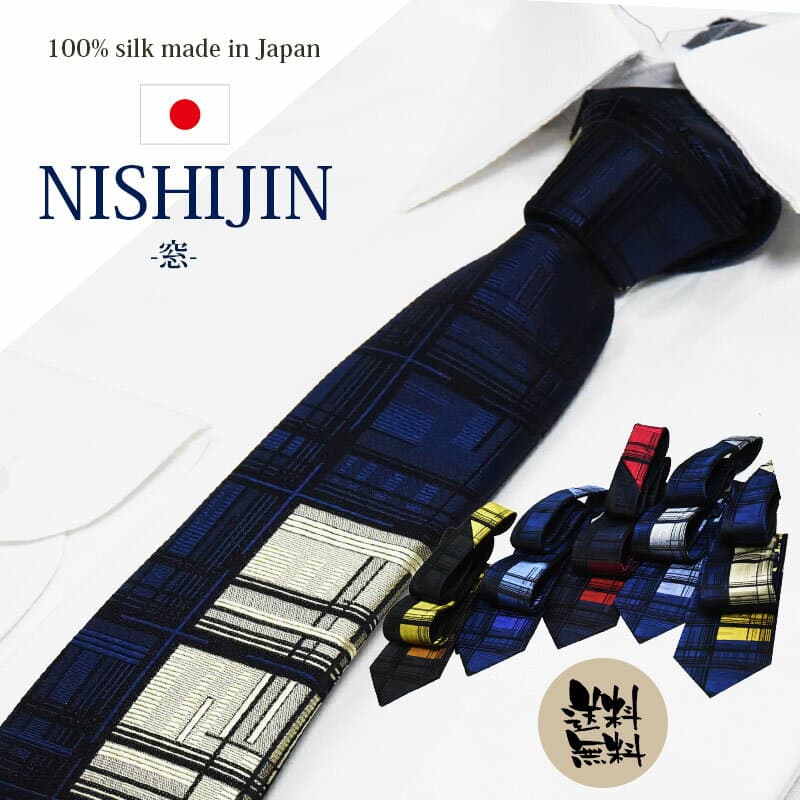 3 images
ネクタイ ブランド 高級 西陣織 シルク100% 高級 窓 パネル おしゃれ 大人 紺/ブルー/グレー/アカ ミックス ギフト プレゼント 御祝 就職祝 誕生日 父の日 昇進祝い
navy/blue/gray/red mixネクタイ専門店 0-STYLE.cravat
5.0 / 2 reviews
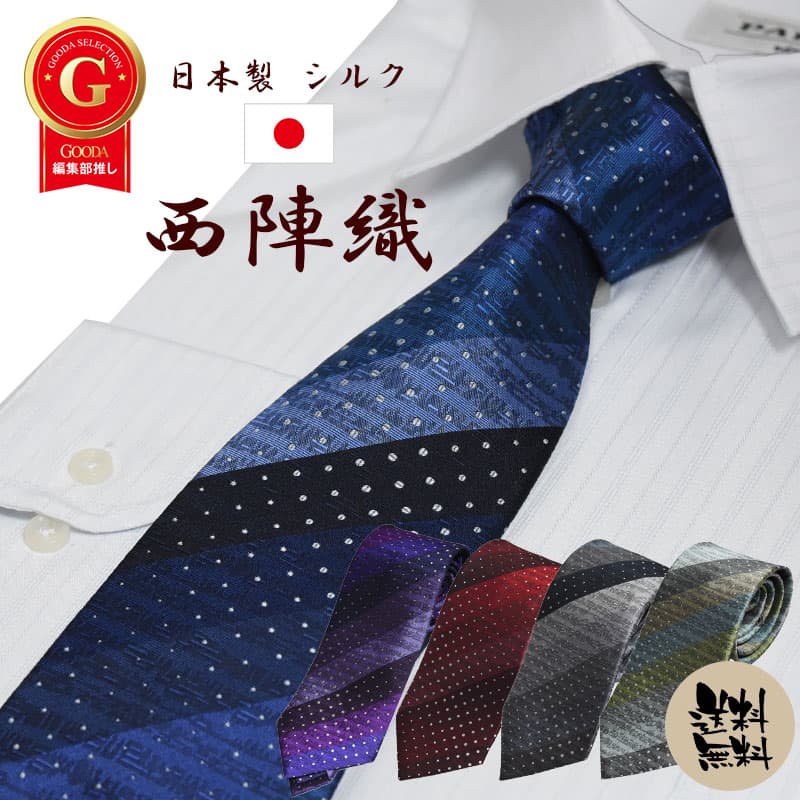 3 images
ネクタイ ブランド 高級 西陣織 ドット 送料無料 ジャガード 伝統工芸 グラデーション 紺 グレー 緑 赤 パープル ギフト プレゼント 御祝 就職祝 誕生日 父の日ギフト 昇進祝い 還暦 ネクタイ 父の日
gradient dot patternネクタイ専門店 0-STYLE.cravat
5.0 / 6 reviews
First time buying on Rakuten? How residents in Japan order →
All 5 listings of this product on Rakuten, lowest price first.
| Listing | Price | Shop | Reviews | Open listing |
|---|---|---|---|---|
Kyoto Nishijin-ori Gold Brocade Fabric with Floral Arabesque on Saya Pattern sold in 10 cm incrementsLowest priceMost reviewed | ¥352 | 都香庵 | 4.8 / 112 reviews | View on Rakuten → |
Kyoto Nishijin-ori Dragon and Tiger Kinran Brocade Fabric 70 cm width, sold by 10 cm | ¥423 | 都香庵 | 4.8 / 30 reviews | View on Rakuten → |
Kyoto Nishijin-ori Kinran Brocade Fabric, Phoenix Arabesque sold in 10cm increments | ¥467 | 都香庵 | 4.7 / 54 reviews | View on Rakuten → |
Nishijin-ori Silk Jacquard Dot Tie gradient dot patternGift-ready | ¥7,200 | ネクタイ専門店 0-STYLE.cravat | 5.0 / 6 reviews | View on Rakuten → |
Nishijin-ori 100% Silk Block Pattern Necktie navy/blue/gray/red mixGift-ready | ¥7,800 | ネクタイ専門店 0-STYLE.cravat | 5.0 / 2 reviews | View on Rakuten → |
Japanese · new tab
The name Nishijin points to a practical production area in northwestern Kyoto, centered on Kamigyo and Kita wards and bounded roughly by Marutamachi-dori, Kamigamo, Karasuma-dori, and Nishioji-dori. The cloth is defined by pre-dyed yarns and figured weaving: color is prepared in the yarn, pattern is planned in drawings and weave-design charts, and the loom turns those instructions into fabric. The same making vocabulary reaches obi and kimono as well as interiors, neckties, shawls, and bags.
Nishijin is a place name used for a weaving area, not an administrative district. In everyday geographic terms it centers on Kamigyo and Kita wards and reaches roughly south to Marutamachi-dori, north to Kamigamo, east to Karasuma-dori, and west to Nishioji-dori. Businesses connected with Nishijin-ori are concentrated in this northwest part of Kyoto city, so the name carries streets, workshops, dyed yarn, warping work, and looms in the same local frame.
Nishijin-ori starts with pre-dyed figured textiles made in Kyoto's Nishijin area. The yarn is colored before weaving, and the pattern appears as the warp and weft are controlled on the loom. Its production character is many varieties in small lots, and Kyoto Prefecture describes the textile as a fine silk fabric nurtured in Kyoto. Within the range are twelve varieties, including tsume-kaki hon-tsuzure-ori, tate-nishiki, yoko-nishiki, donsu, shuchin, shoha, futsu, mojiri-ori, hon-shibo-ori, velvet, kasuri-ori, and tsumugi.
The name also carries a concrete moment in Kyoto history: the Onin War, fought from 1467 to 1477. During the conflict, western army leader Yamana Sozen placed his headquarters to the west, and many weaving workers moved away to places such as Sakai in Izumi. After the fighting ended, workers returned to Kyoto and restarted weaving near Hakumura and the Omiya-Imadegawa area; the former western army headquarters became the place-name root of Nishijin-ori.
The early work begins with a design drawing, then an enlarged weave-design chart that marks the structure on grid paper. Pattern punching follows the chart by opening holes in strips of pattern paper about 33 centimeters by 4.5 centimeters, giving instructions for lifting warp threads; computer graphics and computer Jacquard systems can carry the same patterning work. The yarn work then moves through twisting, dyeing to the weaver's specified color, winding skeins onto frames, preparing warp threads, and kasuri work. Some Nishijin-ori fabrics use about 3,000 warp threads, while larger ones use as many as 8,000.
Before weaving, heddles raise the warp threads so the weft can pass through. The heddles act according to Jacquard instructions, with pattern commands coming from punched paper or digital media. Nishijin-ori uses tsuzure looms, hand looms, and power looms, and some fabrics continue into finishing work such as cutting velvet wires or using steam to set the cloth's surface.
In the Meiji period, Kyoto Prefecture sent Sakura Tsuneshichi and two others to Europe, and Nishijin adopted Western techniques such as the Jacquard from France. That technical change sits beside a wide range of uses: Noh costumes, uchikake, kichō curtains, obi, kimono, and kinran remain within the textile's field, while neckties, interiors, stage curtains, shawls, and bags show how the figured cloth moved into other forms.
To understand Nishijin-ori, start with the concrete sequence: a northwest Kyoto weaving area, yarn dyed before weaving, a drawing expanded onto grid paper, thousands of warp threads prepared for the loom, and Jacquard instructions moving through heddles. The finished fabric then enters forms worn, hung, or carried, from obi and kimono to interiors, shawls, and bags. The name holds together place, technique, and use because each stage leaves a visible trace in the cloth.
Compiled from public records and official sources; see the recognition links below. Details may change over time.
Where this product is officially registered, designated, or recognized in Japan.
Traditional craft
Designated a Traditional Craft (dentō kōgeihin) by Japan's Ministry of Economy, Trade and Industry.
Sources1
It is written as 西陣織 in Japanese. Search Rakuten and other Japanese sites with that spelling — the English name will not bring up the listings.
Nishijin textiles are pre-dyed figured fabrics woven in Kyoto's Nishijin district, centered on Kamigyo and Kita wards, with many varieties made in small lots, including twelve types. The name recalls the western army's headquarters during the Onin War (1467-1477); afterward, weavers returned to Kyoto and resumed work near Hakumura and Omiya-Imadegawa. Production involves design, dyeing, warping, and weaving on tsuzure, hand, or power looms. Uses range from obi and kimono to Noh costumes, interiors, neckties, and bags.
Nishijin-ori was designated a national traditional craft on February 26, 1976. In the Meiji period, Sakura Tsuneshichi and two others studied in Europe, and Nishijin adopted western techniques such as Jacquard from France. Some Nishijin-ori fabrics use about 3,000 to 8,000 warp threads, with heddles raising warp threads according to Jacquard instructions. Nishijin-ori uses tsuzure looms, hand looms, and power looms, with finishing steps such as velvet wire cutting or steam finishing for some fabrics.
Traditionally, Nishijin-ori has been used for obi and kimono, and this remains a core use. Beyond kimono-related fabric, its use has expanded to neckties, shawls, and bags. Interior textiles such as wall hangings have become a significant use, extending to items like stage curtains.
Naturally dyed textiles shed some colour on first wash. Hand-wash separately with a neutral detergent, avoid long soaking and bleach, and dry in the shade to prevent fading. Silk, ramie, and traditionally dyed pieces often need professional cleaning — the care label on the listing takes precedence.
Most options are shelf-stable, boxed, and travel well, so they suit gifting or bringing home. Confirm the final storage and delivery terms on the Rakuten listing.
On Rakuten: the shops listed here right now are 都香庵, ネクタイ専門店 0-STYLE.cravat. We don't sell directly; purchase, payment, stock, and delivery are all handled on the Rakuten product page.