 3 images
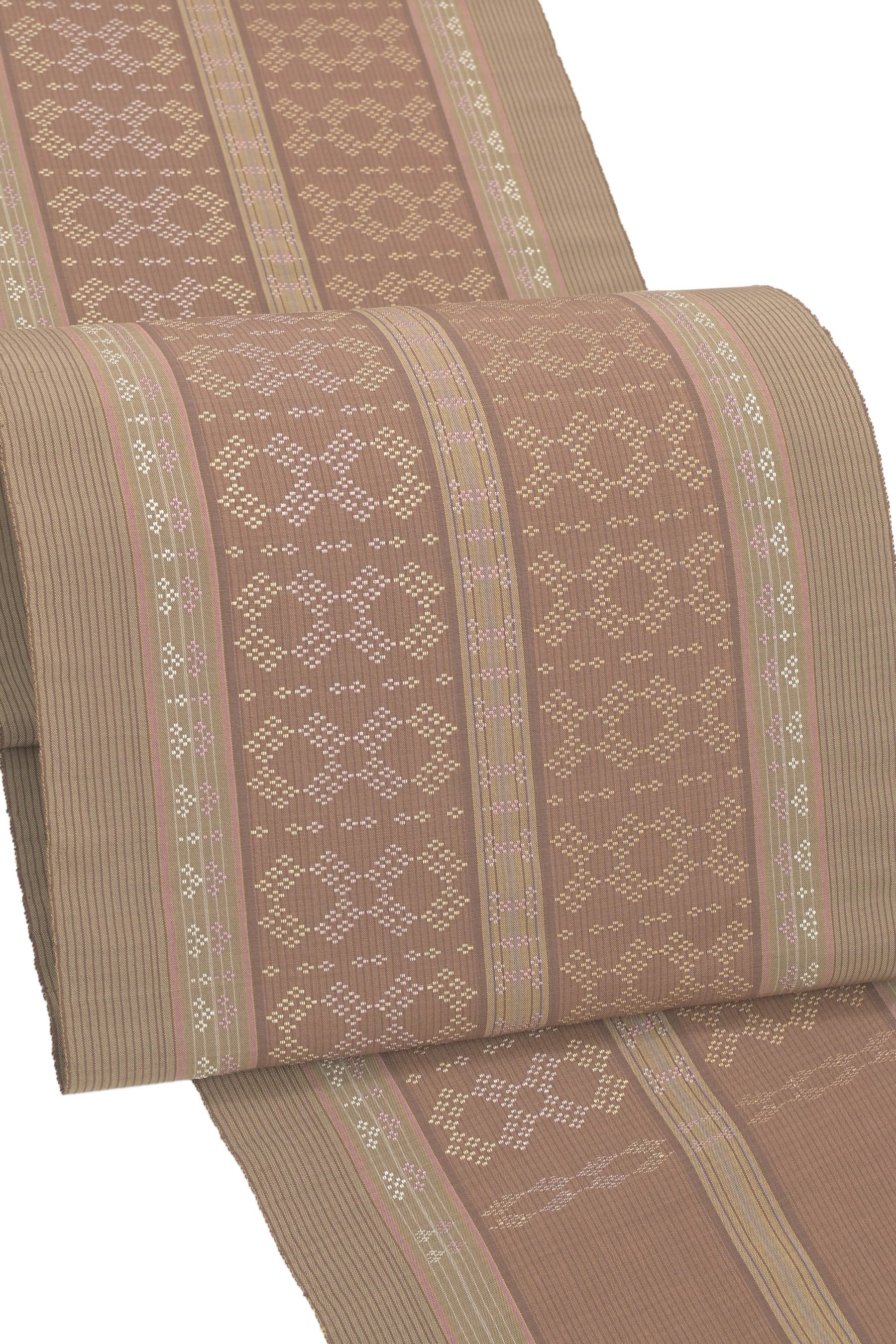
Chibana Hanaori Handwoven Plant-Dyed 9-sun Nagoya Obi
“29日18時迄!” 【週替わりバーゲン第四弾!】 【知花花織】 特選手織り草木染九寸名古屋帯 伝統的工芸品 100年の眠りから醒めて… 現代に蘇った幻の花織。
long length, approx. 3.6m finished京都きもの市場 楽天市場店
Japanese name知花花織
Rooted in methods from Chibana, Noborikawa, and Ikehara, this Okinawa City textile raises red-and-white motifs from a dark blue ground through hand-lifted warp heddles, festival garments, obi cloth, kimono cloth, and kariyushi-wear fabric.
Information last updated 120 days ago
3 images“29日18時迄!” 【週替わりバーゲン第四弾!】 【知花花織】 特選手織り草木染九寸名古屋帯 伝統的工芸品 100年の眠りから醒めて… 現代に蘇った幻の花織。
long length, approx. 3.6m finished京都きもの市場 楽天市場店
 3 images
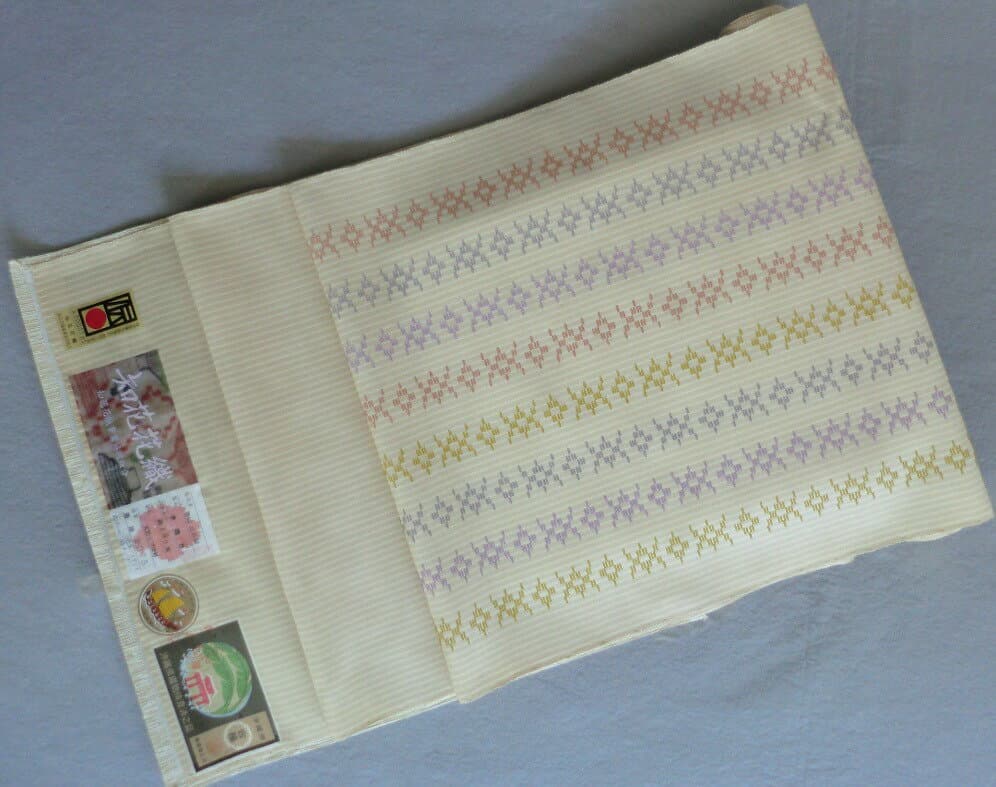
おしゃれ帯知花花織 九寸帯沖縄県伝統的工芸品製造者 兼城由香里 手織り染色 天然・化学染料(渋木・イシダイ 福木・グール)送料無料
beige, approx. 35 cm x 523 cmつむぎ屋
First time buying on Rakuten? How residents in Japan order →
Chibana Hanaori begins with a precise local map: Chibana, Noborikawa, and Ikehara in Okinawa City. The textile is woven through warp-float hanaori, a method that lifts patterned warp heddles by hand so the motif rises from the cloth. A dark blue ground with red-and-white patterning, old-calendar garments, obi cloth, kimono cloth, and kariyushi-wear fabric give the fabric its concrete presence in ritual clothing, kimono-related cloth, and Okinawan dress material.
Chibana Hanaori belongs to a specific part of Okinawa City. The named textile is woven in Okinawa City by methods derived from Chibana, Noborikawa, and Ikehara, while tatami-border cloth sits outside that boundary. The older Misato village area corresponds to present-day Chibana, Noborikawa, Ikehara, and nearby districts, and the cooperative’s address at Chibana 5-6-7 gives the modern work a physical base in the same city. Place here is practical: it marks the method’s roots, the production area, and the community workspace.
The central technique is warp-float hanaori. At the loom, the weaver lifts the heddles for the patterned warp by hand, sets them on a hook, and then weaves in the weft, causing the motif to rise from the fabric. That order of hand, heddle, hook, and weft explains the cloth’s flower-like geometric surface: the pattern is built into the weave, line by line, instead of being added after the cloth is made.
One established visual arrangement is a dark blue ground with red-and-white patterning. The material and process context includes cotton and silk yarns, natural dyes such as indigo, madder, and fukugi, and work on a high loom; the broader workflow can run from yarn preparation, dyeing, warping, and pattern planning to loom setup, weaving, washing, starch removal, shaping, and finishing. The finished surface brings together dark ground, raised motif, yarn, dye, and the measured rhythm of handwoven cloth.
After the Meiji era, Chibana Hanaori continued in ritual Utchaki jackets, Dujin bodices, Tisaji hand cloths, and kimono. On old-calendar 8/14, the garments were connected with Nmaharashii, a Ryukyu horse event that values the beauty of a lateral gait; on old-calendar 8/15, they were connected with Usudeeku, an event tied to prayers for harvest and health. The textile therefore appears on named garments, specific calendar dates, and bodies moving through local observances.
The recent continuity of Chibana Hanaori can be read through dates, people, and shared facilities. After basic training led by Okinawa City, the Chibana Hanaori research group began in December 2000, and the cooperative was formed in 2008 as more people entered the work. The organization has 60 members and handles shared material purchasing, shared inspection, shared facility management, technical education, product development, and successor training. The 2026 training term was scheduled from July 1, 2026 through the end of March 2027 inside the cooperative, for Okinawa City residents expected to join the cooperative and participate in production after completion.
The textile now moves through several concrete formats. The cooperative weaves Chibana Usudeeku costumes, obi cloth, kimono cloth, secondary processed goods, and Western-style cloth for kariyushi wear; additional applications include clothing, obi, small goods, craft goods, and fashion items. Across these forms, the same warp-float technique appears in festival garments, kimono-related cloth, and material for Okinawan everyday dress.
The most direct way to understand Chibana Hanaori is through place, hand movement, and use. Chibana, Noborikawa, and Ikehara define the local method; the hand-lifted heddle, hook, and weft raise red-and-white motifs from a dark blue ground; old-calendar garments, the 2000 research group, the 2008 cooperative, and the 2026 training term carry that woven structure into present-day work in Chibana.
Compiled from public records and official sources; see the recognition links below. Details may change over time.
Where this product is officially registered, designated, or recognized in Japan.
It is written as 知花花織 in Japanese. Search Rakuten and other Japanese sites with that spelling — the English name will not bring up the listings.
Chibana Hanaori is a textile woven in Okinawa City using methods derived from Chibana, Noborikawa, and Ikehara. Its warp-float hanaori technique involves lifting patterned warp heddles by hand, setting them on a hook, and weaving in the weft so the motif rises from the cloth. Contemporary forms include obi cloth, kimono cloth, and fabric for kariyushi wear.
Chibana Hanaori refers only to textiles woven in Okinawa City by methods derived from Chibana, Noborikawa, and Ikehara, and it excludes tatami-border cloth. Chibana Hanaori has an established color arrangement of a dark blue ground with red-and-white patterning. Material and process context includes cotton and silk yarns, natural dyes such as indigo, madder, and fukugi, and steps from yarn preparation through dyeing, warping, pattern planning, weaving, and finishing. The textile was woven into Utchaki jackets, Dujin bodices, and Tisaji hand cloths, as well as kimono, worn for Nmaharashii on old-calendar 8/14 and Usudeeku on old-calendar 8/15.
Chibana Hanaori garments were worn for Nmaharashii on old-calendar 8/14 and Usudeeku on old-calendar 8/15, in forms such as Utchaki, Dujin, and Tisaji. Beyond kimono and obi, the cloth is also woven for kariyushi wear and made into secondary processed goods, craft items, and small goods. The weaving process involves lifting patterned warp heddles by hand, hooking them, and weaving in the weft, following steps from yarn preparation to finishing.
Naturally dyed textiles shed some colour on first wash. Hand-wash separately with a neutral detergent, avoid long soaking and bleach, and dry in the shade to prevent fading. Silk, ramie, and traditionally dyed pieces often need professional cleaning — the care label on the listing takes precedence.
Most options are shelf-stable, boxed, and travel well, so they suit gifting or bringing home. Confirm the final storage and delivery terms on the Rakuten listing.
On Rakuten: the shops listed here right now are 京都きもの市場 楽天市場店, つむぎ屋. We don't sell directly; purchase, payment, stock, and delivery are all handled on the Rakuten product page.