 3 images
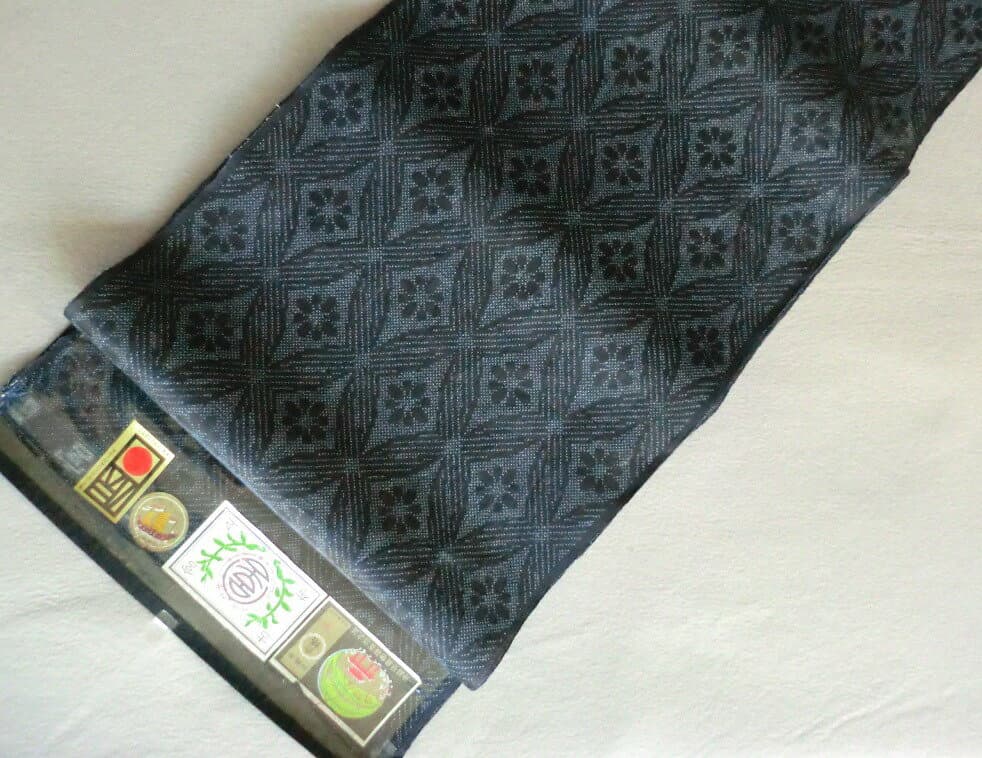
Miyako Jofu Handwoven Kimono Fabric Bolt
きもの宮古上布国指定重要無形文化財着尺 手織り
Indigo cross kasuriつむぎ屋
Japanese name宮古上布
Miyako Jofu is shaped on Okinawa’s Miyako Island through ramie cultivation, hand-spun yarn, kasuri tying, indigo dyeing, weaving, washing, starching, and mallet beating.
Information last updated 120 days ago
3 imagesきもの宮古上布国指定重要無形文化財着尺 手織り
Indigo cross kasuriつむぎ屋
First time buying on Rakuten? How residents in Japan order →
Miyako Jofu begins on Miyako Island in Okinawa. The Miyako Textile Business Cooperative is based in Ueno Nohara, Miyakojima City, and its work links ramie cultivation, hand thread-making, kasuri preparation, dyeing, weaving, and wooden-mallet finishing on the island; in 2009, annual production was about 20 tan, with 92 cooperative members. The cloth moves slowly from plant stem to finished surface: ramie fiber is stripped, split, and joined by hand into warp and weft yarn before the design, Ryukyu indigo dyeing, loom work, washing, starching, stretching, and mallet beating take place.
Miyako Jofu is defined through a chain of work on Miyako Island. The cooperative’s 2009 description ties the name to an island-based system in which ramie cultivation, yarn joining, kasuri tying, dyeing, and mallet finishing are carried out consistently to maintain quality. After washing and finishing, the cloth is inspected by specialist inspectors entrusted by Okinawa Prefecture, and cloth that passes is recognized for circulation as Miyako Jofu. In this setting, quality means a boundary made by place, plant fiber, hand-spun yarn, dyeing and weaving steps, finishing work, and inspection.
The yarn for Miyako Jofu comes from ramie, also called karamushi or mao in Japanese. In Miyako’s warm climate, the plant grows well enough to be cut every 35 to 40 days, with four to five harvests possible in a year; the May to June crop is called urizun-bu and is described as the finest. Harvesting begins at the base of the stem, followed by peeling the outer skin and scraping the inner side with a shell such as abalone shell to remove the fiber. The cloth’s first texture comes from this sequence of stem, skin, shell, and fiber.
Once the ramie fiber has been taken from the stem, both warp and weft are hand-spun. The raw fiber is split finely with fingers and nails, then twisted and joined by fingertip without knots; warp yarn uses a two-strand twist, while weft yarn uses a single-strand twist, and the work is specialized. About 10 yomi of yarn equals 6,000 meters and is finished with a spinning wheel; one kimono-length bolt requires 50 yomi, and if one spinner makes the warp and another makes the weft, each needs about half a year. Miyako Jofu’s fineness is grounded in these lengths, fingers, and months of work.
The pattern begins with cross-kasuri marks drawn into small squares on grid paper; this design is called an ezu and belongs to the kasuri-tying specialist’s field. Kasuri yarn is bleached to sharpen the pattern, bundled in groups of 16 to 18 threads depending on the design, starched, and tied on a tightening machine. Dyeing uses Ryukyu indigo mud pigment in a vat with water, alkaline material, awamori, brown sugar or syrup to help fermentation; after about one week in summer or two weeks in winter, the liquid turns green and becomes ready for dyeing. Good fermentation raises bubbles known as ai no hana, making the color process visible at the surface of the vat.
When the yarn is set on the loom, the warp is coated evenly by palm with jofu starch to reduce fuzz. After the starch dries, a thin layer of pig fat is applied so the yarn can slide more smoothly, and weaving begins. These steps continue on the loom as the cloth advances. The handwoven surface is shaped by a practical rhythm: palm-applied starch, drying, a light oiling, and the crossing of warp and weft.
After weaving, the cloth is washed in hot water, dried in the shade, and coated evenly with sweet-potato starch. Washing and starching make the cloth shrink slightly, so it is then pulled lengthwise and adjusted to the proper width. The folded cloth is placed on an Akagi board and beaten evenly with an Isunoki wooden mallet weighing about four kilograms. The finish of Miyako Jofu is built through water, starch, stretching, wood, and repeated impact.
The Miyako Textile Business Cooperative is located in Ueno Nohara, Miyakojima City. Its listed activities include joint production, joint inspection, successor training, and encouragement of hand-spun ramie yarn; in July 2021, it had 66 members. Its institutional timeline reaches back to the Miyako County Textile Association in 1902, and the current cooperative was established in 1958. Continuity here is concrete: yarn work, dyeing, weaving, inspection, and training remain organized around a local cooperative.
Miyako Jofu connects Miyako Island ramie, Ryukyu indigo, grid-paper kasuri planning, hand weaving, and wooden-mallet finishing into one long process. Each bolt passes through fiber scraping, fingertip yarn joining, fermentation dyeing, repeated loom starching, and beating on an Akagi board. As the cooperative in Ueno Nohara continues joint production, inspection, and successor training, the cloth’s local character rests in specific hands, tools, plants, and island-based steps.
Compiled from public records and official sources; see the recognition links below. Details may change over time.
Where this product is officially registered, designated, or recognized in Japan.
It is written as 宮古上布 in Japanese. Search Rakuten and other Japanese sites with that spelling — the English name will not bring up the listings.
Miyako Jofu is a ramie textile from Miyako Island in Okinawa. The Miyako Textile Business Cooperative in Ueno Nohara, Miyakojima City, keeps an island-based workflow that includes ramie cultivation, hand yarn joining, kasuri tying, dyeing, weaving, and wooden-mallet finishing. Ramie grows in Miyako’s warm climate and can be cut every 35 to 40 days; fiber is scraped from the stem skin with a shell, split by fingers, and joined without knots.
In 2009, the cooperative described annual Miyako Jofu production as about 20 tan and listed 92 cooperative members. In July 2021, the regional craft platform listed 66 members for the Miyako Textile Business Cooperative. Ramie for Miyako Jofu is also called karamushi or mao and can be harvested every 35 to 40 days in Miyako’s warm climate, with four to five harvests possible per year. One kimono-length bolt uses 50 yomi of yarn; if one spinner handles warp and another handles weft, each needs about half a year.
Miyako Jofu is used for summer kimono and fine woven cloth. After washing and finishing, cloth is inspected by specialist inspectors entrusted by the prefecture; only cloth that passes is recognized as Miyako Jofu and distributed as product.
Naturally dyed textiles shed some colour on first wash. Hand-wash separately with a neutral detergent, avoid long soaking and bleach, and dry in the shade to prevent fading. Silk, ramie, and traditionally dyed pieces often need professional cleaning — the care label on the listing takes precedence.
Most options are shelf-stable, boxed, and travel well, so they suit gifting or bringing home. Confirm the final storage and delivery terms on the Rakuten listing.
On Rakuten: the shops listed here right now are つむぎ屋. We don't sell directly; purchase, payment, stock, and delivery are all handled on the Rakuten product page.