 3 images
Sakaida Fruits Ishikawa Hyakuemon Noto Shika Korogaki Noto Kakinosuke Dried Persimmons
≪サカイダフルーツ≫〈石川百右衛門〉能登志賀ころ柿 能登柿之助【石川県能登産ころ柿 志賀町 通販 お取寄せ】
発見!うまうま探検隊+
Japanese name能登志賀ころ柿
Noto-Shika Korogaki begins with Saisho-gaki from Shika Town, then moves through peeling, hanging, sulfur fumigation, slow drying, hand kneading, and cool resting until the fruit becomes soft, amber, and deeply sweet.
Information last updated 119 days ago
3 images≪サカイダフルーツ≫〈石川百右衛門〉能登志賀ころ柿 能登柿之助【石川県能登産ころ柿 志賀町 通販 お取寄せ】
発見!うまうま探検隊+
First time buying on Rakuten? How residents in Japan order →
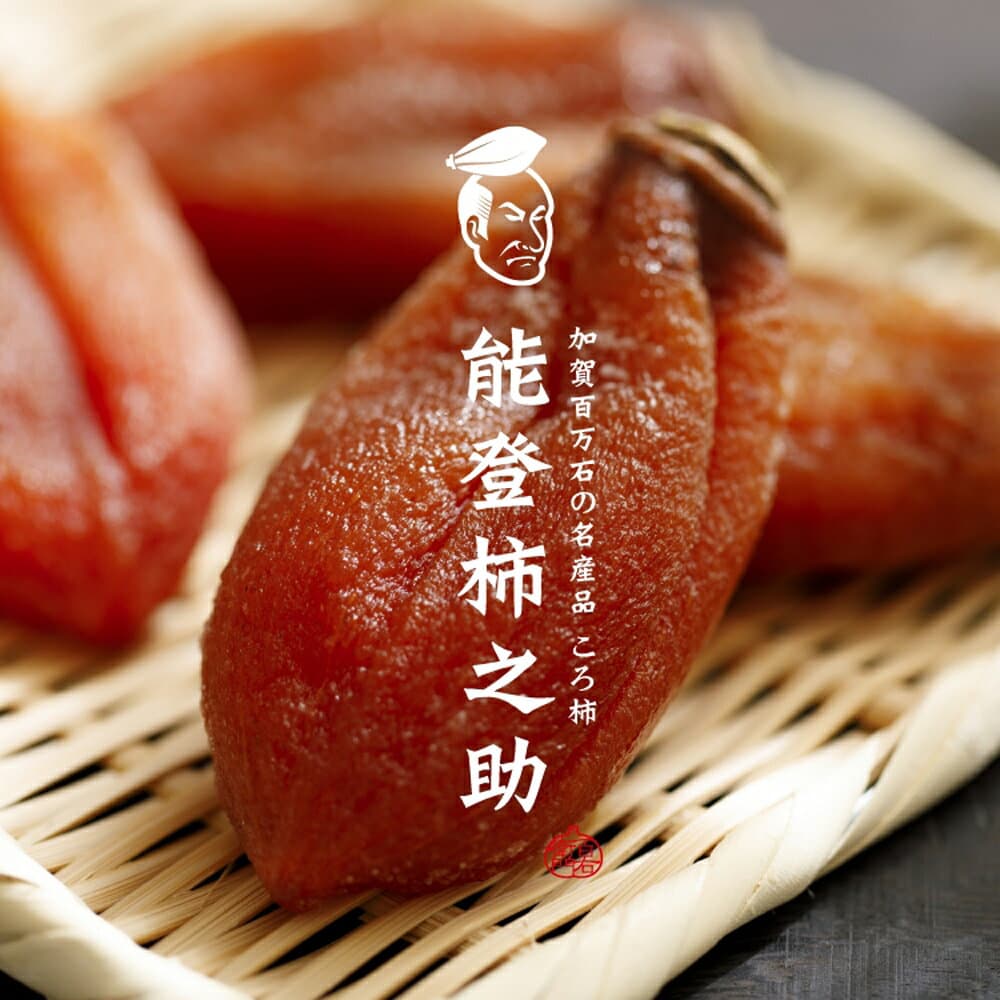
In Shika Town, Hakui District, Ishikawa Prefecture, Noto-Shika Korogaki starts as a fully astringent persimmon. Saisho-gaki originated in Shika Town, grows in a long oval shape of about 200 grams, and is suited to drying. After November, the Noto coast brings temperatures around 10°C, warm days, cool mornings and evenings, and moderate sea-and-land breezes. Through drying and hand kneading, the fruit becomes amber, dense, soft, and sweet at around 20 degrees on average.
The identity of Noto-Shika Korogaki rests on Saisho-gaki, a fully astringent persimmon from Shika Town. The fruit is described as about 200 grams, long oval, and slightly pointed, with traits that suit dried-persimmon making. When finished, the dried fruit is amber, dense, and soft, with average sweetness around 20 degrees. The raw persimmon’s shape, weight, and drying suitability give this Shika Town winter food its starting point.
After November, the outside temperature in the production season is around 10°C. The Noto coast brings warm daytime air, cool mornings and evenings, and moderate sea-and-land breezes. Peeled persimmons dry slowly under those conditions, with wind strength, temperature, humidity, and light helping reduce mold and darkening while the fruit moves toward a clear amber color.
The work begins with removing calyxes and skins. The peeled fruit is tied to strings, sulfur-fumigated, and left for natural drying. One account gives the natural drying period as about 14 to 17 days; another describes it as roughly two to three weeks. After that, makers knead the fruit by hand, breaking down the core and softening the flesh evenly until it approaches the softness of an earlobe. Heated drying then draws moisture out slowly under careful temperature and humidity control.
After kneading and heated drying, the hanging fruit is moved onward and rested in a cool, dark place. As drying and kneading bring sugars toward the outside, white powder appears on the surface. The powder is tied to crystallized glucose and fructose, so the pale surface is a visible result of moisture and sugar moving through the fruit during drying, kneading, and rest.
Dried-persimmon making in the Shika Town area is described as farm household winter work that reaches back about 400 years to the feudal or Edo period. In 1889, farmers selected the Saisho strain as well suited to dried persimmons; around 1932, Saisho-gaki entered commercial production. A 1988 town planting project and the 1993 formation of JA Shika’s korogaki section helped connect cultivation techniques, processing manuals, inspections, and shipment stability across producers.
Noto-Shika Korogaki is eaten plain and served with tea. In winter, it is familiar as a year-end or New Year gift and as a New Year sweet. In home cooking, sliced dried persimmon can go into namasu with daikon and carrot; diced or chopped pieces also appear in jelly and bread. These uses all rely on the same finished texture: amber flesh that is soft, dense, and already concentrated in sweetness.
The character of Noto-Shika Korogaki comes from Saisho-gaki in Shika Town, the coastal drying season after November, the long hanging period, repeated hand kneading, and winter farm work that later became organized producer practice through JA Shika manuals and inspections. Its sweetness builds gradually, from peeled fruit on strings to amber flesh and the white sugar crystals that appear at the surface.
Compiled from public records and official sources; see the recognition links below. Details may change over time.
Where this product is officially registered, designated, or recognized in Japan.
Geographical Indication (GI)
Registered under Japan's Geographical Indication Protection System, run by the Ministry of Agriculture, Forestry and Fisheries.
Sources1
It is written as 能登志賀ころ柿 in Japanese. Search Rakuten and other Japanese sites with that spelling — the English name will not bring up the listings.
Noto Shiga korogaki dried persimmon is made in Shika Town, Hakui District, Ishikawa Prefecture, from Saisho-gaki, a fully astringent persimmon that originated locally and suits drying. The fruit is trimmed, peeled, tied, sulfur fumigated, naturally dried, hand kneaded, heat dried, and rested in a cool dark place until it turns long oval and amber, with dense, soft flesh and an average sweetness of about 20 degrees. Dried persimmon making has continued in the area for about 400 years.
Saisho-gaki is a fully astringent persimmon of about 200 grams, long oval, and suited to drying. After November, temperatures around 10°C, warm days, cool mornings and evenings, and Noto coastal breezes support slow drying and help reduce mold and darkening. White surface powder is linked to crystallized glucose and fructose that move outward during drying and kneading. Saisho was selected in 1889, and commercial production of the dried persimmon began around 1932.
It is eaten as-is, often alongside tea, and given as a gift at year-end and New Year. A namasu-style dish slices the dried persimmon and combines it with daikon, carrot, salt, sugar, and vinegar. Diced korogaki is used in jelly, and chopped firm korogaki is added to bread.
Storage varies by product — shelf-stable, refrigerated, or frozen — and is stated on the packaging and the Rakuten listing. Shelf-stable processed foods usually need refrigerating once opened and eating within a few days; chilled and frozen items go straight into storage on arrival. Treat the best-before date on the physical packaging as authoritative.
Most options are shelf-stable, boxed, and travel well, so they suit gifting or bringing home. Confirm the final storage and delivery terms on the Rakuten listing.
On Rakuten: the shops listed here right now are 発見!うまうま探検隊+. We don't sell directly; purchase, payment, stock, and delivery are all handled on the Rakuten product page.